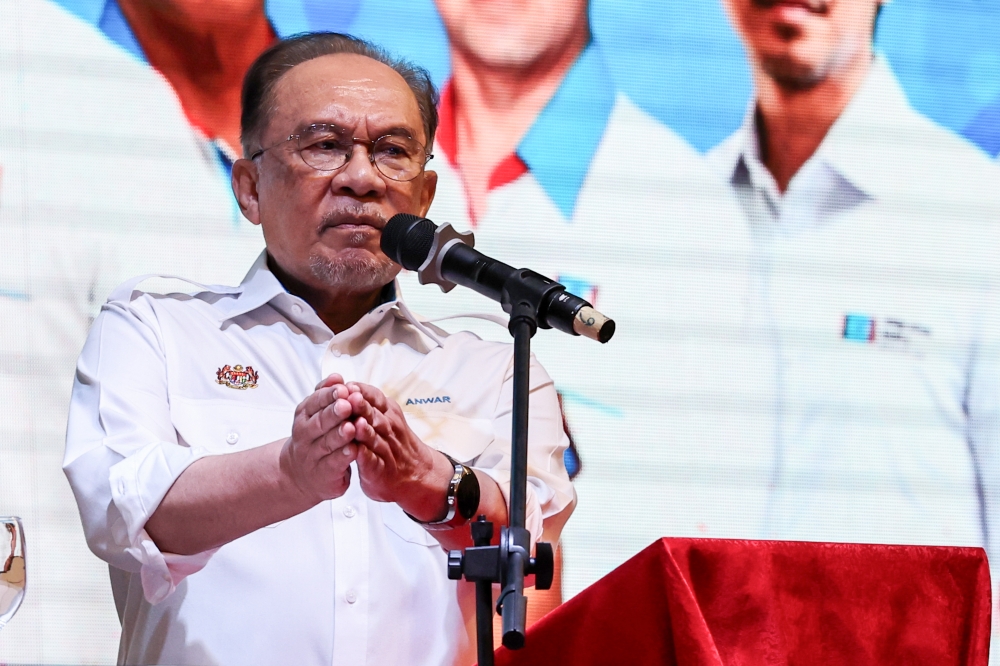
Prime Minister Datuk Seri Anwar Ibrahim has used the colloquial term "sakau"—meaning the siphoning away of funds—to describe the RM12 billion in losses identified by the Royal Commission of Inquiry into Tabung Haji, signalling his determination to hold accountable those involved in what he characterises as brazen misappropriation at the country's pilgrimage savings institution.
Speaking in Melaka on August 15, Anwar expressed incredulity that such a colossal amount had vanished from Tabung Haji without decisive action being taken earlier. His remarks underscore growing political pressure on the government to move beyond investigation and toward prosecution, reflecting public frustration over the scale of financial damage to an institution that manages savings for nearly 8 million Malaysian Muslims preparing for the Hajj pilgrimage. The prime minister's pointed language suggests impatience with bureaucratic processes and a desire to demonstrate that his administration will not tolerate large-scale financial misconduct, particularly involving public funds entrusted to vulnerable groups.
The Tabung Haji affair has emerged as one of Malaysia's most significant financial scandals in recent years. The pilgrimage fund, which collects mandatory savings contributions from Muslims intending to perform the Hajj, had been positioned as a secure repository for one of life's most important religious journeys. The discovery that RM12 billion had been lost through various transactions—including questionable real estate ventures, equity investments, and financial arrangements—has shattered public confidence and raised serious questions about governance and oversight mechanisms that failed to prevent such erosion of depositors' savings.
The Royal Commission of Inquiry, which completed its investigation into Tabung Haji's operations, has provided detailed findings about how the fund's assets deteriorated. The investigation examined decisions made by successive boards and management teams, tracing how large sums were deployed into investments that either underperformed significantly or resulted in direct losses. The scale of the shortfall suggests systemic failures rather than isolated instances of mismanagement, with structural weaknesses in corporate governance and accountability appearing to have persisted over an extended period.
Anwar's intervention represents a significant political signal. As prime minister, he has positioned his administration as committed to tackling financial impropriety and strengthening institutional accountability—cornerstones of his electoral promises to Malaysians weary of governance failures under previous administrations. By publicly characterising the losses as "sakau" and questioning how such a situation was permitted to develop unchecked, Anwar is establishing a clear expectation that consequences will follow for those responsible. This approach also reflects his awareness that the Tabung Haji scandal touches upon religious trust and community welfare, making it a particularly sensitive issue that demands visible leadership.
The implications extend beyond Tabung Haji itself. Malaysians have grown increasingly alert to financial mismanagement within public institutions and sovereign wealth vehicles. The pilgrimage fund scandal, coming amid broader concerns about the governance of government-linked companies and statutory bodies, reinforces perceptions that institutional safeguards require urgent strengthening. For depositors—millions of ordinary Malaysians whose Hajj savings have been affected—the losses represent not merely a financial setback but a breach of trust in an institution established specifically to serve their religious aspirations and financial security.
Moving forward, several questions demand resolution. Investigation findings must be translated into concrete actions: which individuals and entities bear responsibility, and what legal consequences will follow? Will senior management and board members face prosecution? Additionally, what reforms will prevent similar scenarios from unfolding in other government-controlled funds and institutions? These questions carry weight not only for Tabung Haji depositors but for Malaysians broadly, given the prevalence of statutory bodies managing public resources across sectors ranging from infrastructure to healthcare.
The government must also address compensatory measures. Whether through reserve funds, asset recovery, or restructuring arrangements, some mechanism should restore confidence among affected depositors. This is particularly critical given Tabung Haji's role in enabling Muslims of modest means to fulfill the Hajj obligation—a fund that should represent security and facilitation, not risk and loss. The RM12 billion shortfall cannot be erased, but transparent communication about recovery efforts and future safeguards can partially rehabilitate institutional credibility.
Regionally, Malaysia's experience carries lessons for other Southeast Asian nations managing sovereign funds and public savings vehicles. The Tabung Haji case demonstrates how institutional frameworks can deteriorate when oversight mechanisms weaken or when investment decisions become disconnected from conservative fiduciary principles. Neighbouring countries reviewing their own governance structures will likely draw cautionary insights from Malaysia's experience.
Anwar's rhetoric about "sakau" also signals a shift in how Malaysian political leadership publicly discusses institutional failures. Rather than adopting bureaucratic language that obscures accountability, the prime minister is employing vernacular that resonates with ordinary citizens, making clear that losses of this magnitude are intolerable. This accessibility of language, combined with genuine determination to pursue remedies, may help restore public faith—though only if backed by substantive action, transparent proceedings, and demonstrable consequences for wrongdoing.

