Prime Minister Datuk Seri Anwar Ibrahim is poised to intensify Pakatan Harapan's campaign machinery in Negeri Sembilan this Wednesday, bringing high-level party backing to crucial swing constituencies as the coalition seeks to consolidate support ahead of the state election. According to PH Negeri Sembilan chairman Datuk Seri Aminuddin Harun, the party leader will participate in a series of major campaign events scheduled for Sikamat and Paroi, two constituencies that strategists view as central to PH's electoral prospects in the industrial heartland state.
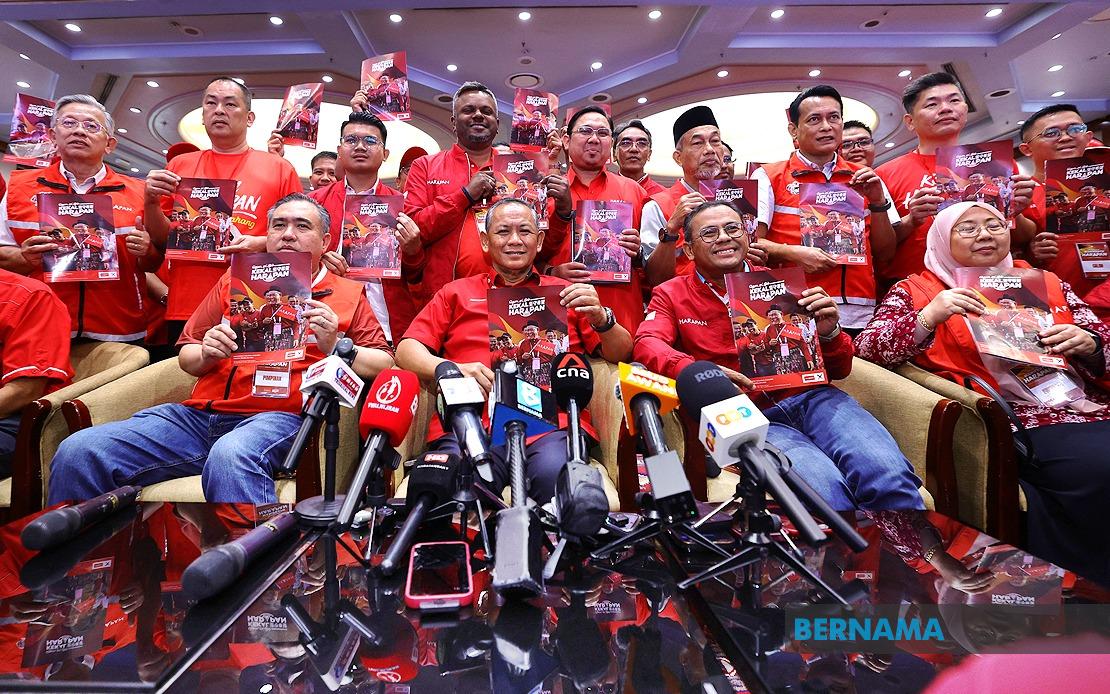
Aminuddin's announcement comes after the Pakatan Harapan coalition formally launched its campaign manifesto in Seremban, outlining an ambitious policy roadmap centred on economic competitiveness, social welfare improvements, and administrative stability. The timing of Anwar's planned visit underscores the national leadership's commitment to the Negeri Sembilan contest, sending a signal to both grassroots supporters and fence-sitting voters that the coalition views this state election as strategically significant within the broader context of PH's political consolidation across Malaysia's key regions.
Anwar's absence from the manifesto launch event on Sunday evening was offset by a roster of senior coalition figures who addressed the gathering, including DAP secretary-general Anthony Loke, Selangor Menteri Besar Datuk Seri Amirudin Shari, and PKR secretary-general Datuk Dr Fuziah Salleh. Aminuddin, simultaneously campaigning as the PH candidate for the Linggi seat, dismissed concerns about the Prime Minister's non-attendance at the manifesto unveiling, emphasising instead that Anwar's substantive engagement through Wednesday's campaign blitz represents the commitment that matters most to voters confronting concrete electoral choices.
The manifesto itself reflects PH's attempt to address the diverse priorities animating Negeri Sembilan's electorate. Beyond conventional pledges on infrastructure development and fiscal prudence, the coalition's platform encompasses housing affordability, youth employment pathways, educational quality, women's empowerment, and cultural heritage preservation—a comprehensive agenda designed to resonate across rural, suburban, and urban voter segments. The inclusion of provisions for customary heritage and social harmony signals PH's sensitivity to the state's distinct communal composition and historical identities, particularly important in a state where traditional governance structures remain culturally significant.
For Malaysian political observers, the Negeri Sembilan contest represents a critical test case for PH's sustainability following the coalition's comeback in Selangor's 2023 state election and amid ongoing competition from Perikatan Nasional-aligned parties. The state's relatively compact electoral geography and mixed demographic profile make it a microcosm of broader national voting trends. A strong PH performance would reinforce the coalition's narrative of recovery and broad-based support; conversely, any significant losses could signal erosion in constituencies the coalition traditionally dominated or expansion of opposition influence in previously marginal areas.
The electoral calendar compounds the stakes. Early voting is scheduled for July 28, with the general election occurring August 1, a compressed timeframe that requires both incumbent and challenger machinery to operate at peak efficiency. For Anwar's Wednesday campaign visit to generate meaningful momentum, it must translate into visible enthusiasm among party volunteers, media coverage that frames the narrative favourably, and conversion of undecided voters in targeted constituencies. The sequential concentration of leadership appearances typically indicates internal PH polling data suggesting particular constituencies require top-level intervention to ensure victory.
Amiruddin's dual role as Selangor Menteri Besar and PH's national election director positions him as a central architect of the coalition's multi-state electoral strategy. His presence at the Negeri Sembilan manifesto launch alongside Anwar's scheduled Wednesday appearance reflects a coordinated approach to resource allocation, where senior figures rotate through constituencies according to calculated political prioritisation. This choreography, while standard in electoral campaigns, carries real implications for which constituencies receive maximum leadership amplification and which settle for lower-tier party engagement.
The manifesto's emphasis on economic competitiveness and infrastructure development reflects PH's attempt to reclaim ownership of the development agenda against Perikatan Nasional competitors who have sought to position themselves as guardians of prosperity and state advancement. In Negeri Sembilan, where manufacturing and commerce remain central to local economic life, messages about job creation and industrial modernisation carry particular salience. By framing these priorities alongside social welfare commitments, PH aims to construct a coalition capable of transcending class-based voting patterns that have historically fragmented Malaysian electorates.
The inclusion of Anthony Loke, DAP's national leadership, at the Seremban event underscores the coalition's multi-ethnic character and DAP's continued role as a stabilising force within PH despite periodic tensions over power-sharing and policy differences. Loke's candidacy in the Chennah seat signals DAP's direct contestation for legislative seats, maintaining the coalition's tradition of multi-party participation in state governments rather than sole-party domination. This inclusive architecture, while sometimes masking internal disagreements, remains central to PH's electoral appeal among Malaysia's diverse voter communities.
For Negeri Sembilan residents, the state election represents an opportunity to evaluate incumbent performance and alternative governance visions. The coalition's manifesto commitments on housing affordability and youth development address authentic grievances that have shaped local political conversations, particularly among younger voters navigating Malaysia's challenging property and employment landscapes. However, manifesto promises require credible implementation pathways and adequate resource allocation, conditions that depend partly on fiscal performance and partly on bureaucratic capacity in a state government context.
Anwar's scheduled Wednesday campaign engagement carries symbolic weight beyond tactical electoral considerations. His visible presence in campaign settings reinforces perceptions of national leadership invested in state-level outcomes and signals to PH's grassroots machinery that the general election framework encompasses serious competition at all governmental levels. For opposition parties, Anwar's mobilisation of resources and platform attention in Negeri Sembilan represents a target for counter-messaging and evidence they cite regarding alleged PH overconfidence or resource inequities.
The Negeri Sembilan state election ultimately tests whether PH can sustain electoral momentum beyond the 2022 federal comeback and whether the coalition can maintain legislative majorities across multiple states simultaneously. Anwar's Wednesday campaign visit functions as both genuine electoral engagement and symbolic statement about PH's commitment to governing Malaysia comprehensively rather than concentrating power in select jurisdictions. The results on August 1 will provide voters and political analysts with empirical data about whether the coalition has successfully consolidated its support base or whether opposition parties have eroded PH's advantages in previously secure constituencies.

