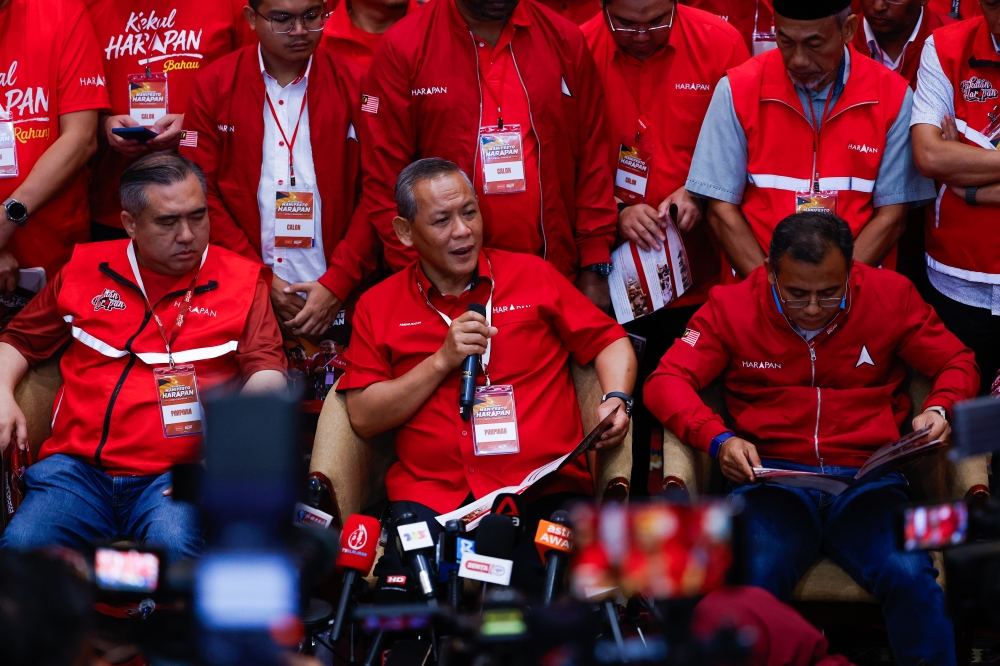
Prime Minister Anwar Ibrahim will campaign with Pakatan Harapan (PH) in Negeri Sembilan this week, according to an announcement from state PH leadership, underscoring the coalition's commitment to securing electoral gains in one of Malaysia's more competitive state battlegrounds. The move signals a carefully orchestrated strategy by the ruling alliance to deploy its highest-profile figure in a targeted manner, focusing on constituencies and issues that could prove decisive in determining the state's political composition.
Pakatan Harapan has increasingly recognised the importance of direct prime ministerial engagement in state-level contests, particularly in territories where the coalition holds the state government or seeks to consolidate power. Negeri Sembilan's political dynamics have shifted considerably over recent election cycles, making it a focal point for both ruling and opposition forces. By committing Anwar's schedule to campaign activities in the state, PH is demonstrating that party leadership views the forthcoming contest as sufficiently significant to warrant investment of executive bandwidth typically reserved for federal matters.
The Negeri Sembilan state elections carry particular importance within the broader Malaysian political landscape. The state has historically served as a bellwether for regional sentiment, and its composition in the state assembly influences voting patterns in nearby constituencies. A strong performance here could bolster PH's confidence heading into any subsequent federal electoral contests, while a weakened showing might raise questions about the coalition's capacity to maintain its present federal majority. This electoral mathematics explains why senior leadership personnel are being deployed to canvas support.
Anwar's campaign involvement reflects a deliberate communications strategy by the federal administration. Rather than appearing preoccupied exclusively with national governance, the Prime Minister's participation in state-level politics demonstrates responsiveness to local concerns and validates PH's organisational machinery at all levels of government. Such visibility also allows Anwar to deliver messaging on development projects, economic policies, and governance initiatives that resonate with Negeri Sembilan voters while reinforcing the federal government's role in advancing regional prosperity.
Pakatan Harapan's current state government in Negeri Sembilan faces its own set of electoral pressures and competitive dynamics. The coalition leadership has signalled through multiple channels that retaining state control remains a priority, and Anwar's campaign schedule reflects this assessment. The timing of his visit—announced well in advance—permits party machinery to maximise the publicity benefits and coordinate volunteer efforts around the Prime Minister's public appearances.
Campaign activity in Negeri Sembilan also allows PH to communicate broader federal policy achievements and future plans to voters at the state level. Anwar can discuss infrastructure development, social welfare programmes, economic initiatives, and governance reforms that have direct relevance to constituents' daily lives. This integration of federal and state messaging strengthens the coalition's narrative and positions PH as a unified political force rather than a collection of fragmented parties competing separately.
The opposition landscape in Negeri Sembilan remains complex, with multiple political configurations and factional considerations potentially influencing voting behaviour. By deploying Anwar to campaign directly, PH seeks to consolidate support among coalition supporters while attempting to persuade swing voters and constituencies where electoral outcomes remain uncertain. The Prime Minister's personal reputation and popularity metrics become relevant variables in this calculus, and his campaign appearances can either energise the base or fail to shift marginal votes depending on prevailing sentiment.
For Malaysian political observers and analysts tracking the health of the ruling coalition, Anwar's Negeri Sembilan campaign engagement offers insights into PH's internal confidence levels and resource allocation priorities. The decision to commit prime ministerial time suggests leadership believes the state contest warrants intervention at the highest levels, rather than being left primarily to state-level party machinery and junior federal figures. This confidence assessment may reflect polling data, organisational readiness evaluations, or strategic calculations about opposition weakness.
The campaign visit also demonstrates how Malaysian political parties continue to blur boundaries between federal and state governance when electoral interests align. Prime Ministers increasingly serve dual roles as national executives and chief party operatives, and this duality intensifies during election seasons when party interests and state interests become synonymous. For Malaysian voters in Negeri Sembilan, Anwar's participation offers direct access to federal leadership and an opportunity to evaluate the Prime Minister's engagement with state-specific concerns beyond the customary federal portfolio.
Pakatan Harapan's broader electoral strategy appears to emphasise comprehensive engagement across multiple state contests simultaneously, with resource deployment calibrated according to each territory's strategic importance. Negeri Sembilan's inclusion in Anwar's campaign schedule reflects PH calculations that the state represents an opportunity for consolidation or expansion rather than a defensive battleground requiring damage control. This forward-looking orientation shapes how the coalition allocates its most valuable campaigning assets and communicates priorities to the electorate.

