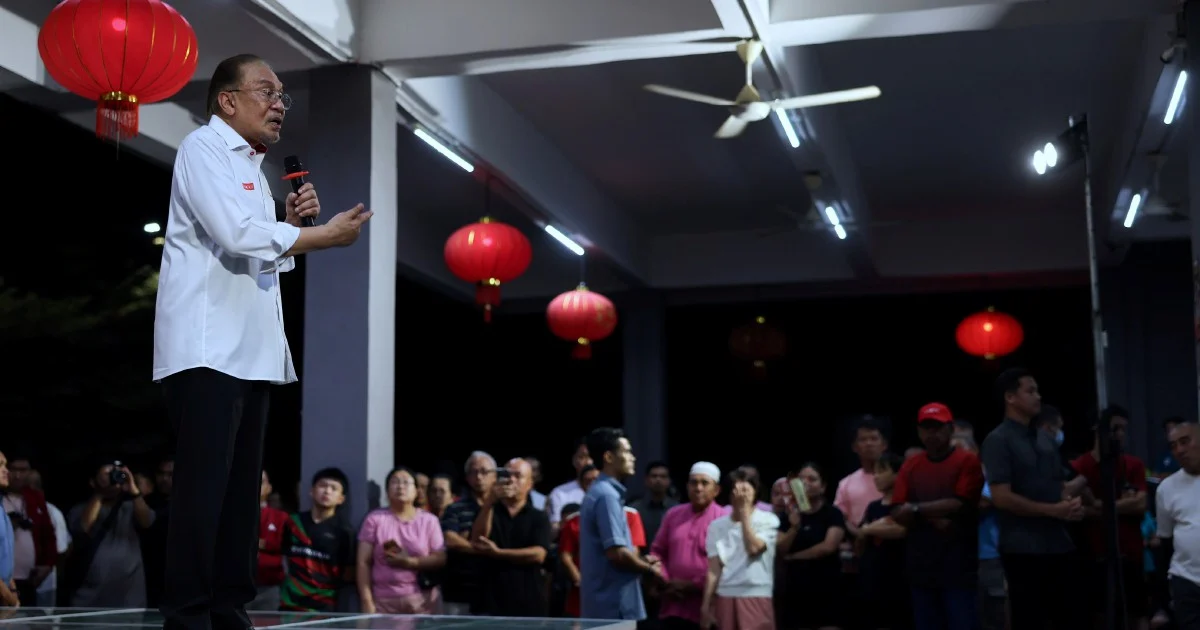
Prime Minister Datuk Seri Anwar Ibrahim has committed to placing Malaysia's durian crisis squarely on the agenda during his forthcoming diplomatic visit to Beijing, signalling the government's determination to mobilise high-level political engagement in support of the nation's embattled fruit sector. In remarks made at Tangkak, Anwar pledged to broach the subject of collapsing durian valuations directly with Chinese Premier Li Qiang, recognising that China represents not merely an important market but the primary destination for Malaysian durian exports and consequently the linchpin of any strategy to stabilise farm incomes.
The intervention reflects the severity of the crisis confronting Malaysia's durian growers, who are contending with a perfect storm of overcapacity and weakened demand. Domestic production has surged across the country's traditional growing regions, particularly in the southern states, flooding the market with fruit at precisely the moment when international purchasers are proving more selective. The resulting price compression has eroded profit margins to critical levels, forcing many farmers into financial distress and threatening the viability of operations that have been in families for generations. With harvest seasons overlapping across Southeast Asia and global supply chains now characterised by fierce competition, Malaysian growers have found themselves in an increasingly marginal position within their own primary market.
China's role in this equation cannot be overstated. The nation has emerged as the dominant consumer of premium durians in recent years, driven by rising living standards among urban middle classes and a cultural embrace of the fruit as a luxury commodity. Malaysian durians, particularly premium varieties cultivated in Johor and Pahang, command premium valuations within Chinese markets due to their reputation for quality and taste profiles preferred by discerning consumers. However, even this erstwhile advantage has been complicated by expanded regional production and the emergence of Thai and Vietnamese durians as increasingly competitive alternatives. When Chinese demand softens or purchasing patterns shift, Malaysian growers lack alternative markets of comparable scale, creating profound vulnerability.
The timing of Anwar's initiative underscores the political dimensions of agricultural support in Malaysia. Durian cultivation represents a significant economic activity in rural constituencies that remain electorally important, and farmer distress translates directly into political pressure on government. By elevating the issue to the level of a prime ministerial discussion with a senior Chinese official, the administration signals its responsiveness to rural concerns whilst simultaneously attempting to convert bilateral diplomatic channels into tools of agricultural advocacy. This approach reflects a recognition that commodity markets, whilst influenced by global forces beyond Malaysia's unilateral control, can be shaped through strategic government-to-business-to-government engagement.
The proposed discussions with Premier Li Qiang potentially encompass several substantive initiatives. Greater tariff predictability or reduced non-tariff barriers on Malaysian durians could ease entry into Chinese markets and stabilise prices through expanded volume. Enhanced marketing support for Malaysian varieties within China, perhaps through government-sponsored promotion or e-commerce partnerships, might revitalise consumer interest and differentiate Malaysian fruit from competitors. Furthermore, discussions might explore supply-chain efficiencies or logistical improvements that would lower costs and expand margins, addressing structural vulnerabilities in how Malaysian fruit reaches consumers.
Regional dynamics add texture to this bilateral initiative. Thailand, which has positioned itself as a major durian exporter, maintains similarly strong relationships with China and has invested substantially in promoting its varieties to Chinese consumers. Vietnam has likewise expanded production and export capacity. Malaysia's diplomatic overture therefore occurs within a context of increasingly intense regional competition for access to China's affluent consumers. The outcome of Anwar's discussions could influence not merely prices received by Malaysian growers but also the trajectory of regional export competition over the medium term.
Domestically, the government faces complementary policy challenges beyond diplomatic engagement. Supporting the durian sector requires attention to production efficiency, varietal diversification to spread harvest seasons, investment in cold-chain infrastructure to preserve product quality, and development of secondary markets to absorb surplus production when primary demand falters. Processing durians into value-added products such as frozen paste, powder, or confectionery could create revenue streams less volatile than fresh fruit exports and provide revenue stability across harvest cycles.
The forthcoming Beijing visit thus represents both opportunity and test case. Success in securing concrete improvements to market access or establishing mechanisms for price stabilisation would vindicate a diplomatic approach to agricultural crisis management and build political capital with rural constituencies. Conversely, failure to translate high-level engagement into tangible benefits for growers would underscore the limits of diplomatic intervention in commodity markets driven by fundamental supply-demand dynamics and consumer preference shifts. Either way, the initiative illuminates how Southeast Asian governments are increasingly weaponising bilateral relationships to address domestic sectoral challenges, particularly when farming communities face structural pressures.

