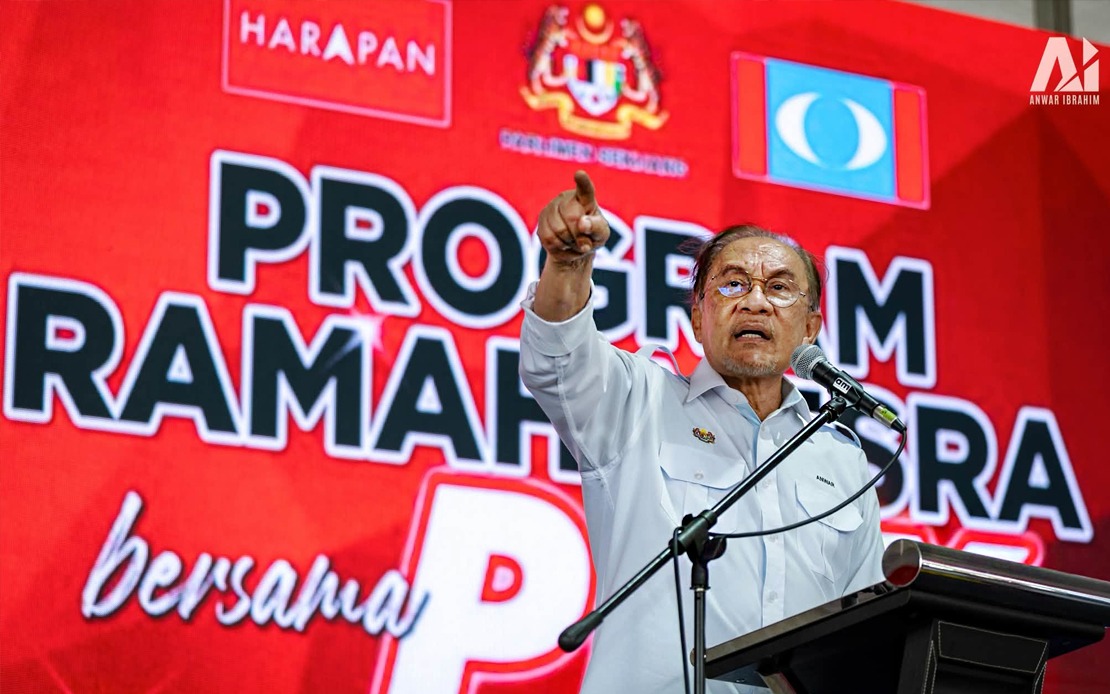
Prime Minister Datuk Seri Anwar Ibrahim has pledged to tackle the deteriorating financial circumstances facing Malaysia's durian producers by leveraging high-level diplomatic engagement with Beijing. Speaking at a constituency meet-in Tangkak in Johor on July 5, Anwar identified the synchronized fruiting season across Peninsular Malaysia as the root cause of the current price downturn, which has significantly eroded farmer revenues. The premier indicated that he would personally raise the matter during an upcoming visit to China next month, where he intends to press Premier Li Qiang for improved market conditions and access arrangements.
The strategy Anwar outlined centres on breaking through China's stringent regulatory barriers to create expanded pathways for Malaysian durian exports. He acknowledged that the world's second-largest economy maintains exceptionally rigorous quality and safety standards that have historically constrained market entry. Nevertheless, he expressed determination to initiate negotiations aimed at facilitating greater trade flows, framing the effort as essential to alleviating the current oversupply situation and restoring price stability for producers. The proposed diplomatic approach reflects an understanding that demand-side solutions require engagement at the highest governmental levels, particularly given China's role as a crucial consumer market for the commodity.
This price crisis has emerged precisely when Malaysian durian cultivation has matured significantly across the peninsula's growing regions. The convergence of harvests from multiple estates within a short timeframe has flooded markets, creating a classic agricultural oversupply scenario where increased production paradoxically reduces rather than enhances farmer income. Anwar's commitment to use bilateral relations as a tool for resolving this market dysfunction underscores the government's recognition that individual farmers lack the capacity to address structural supply-demand imbalances unilaterally. By framing the issue within the context of Malaysia-China economic partnership, the government signals that agricultural stability is a legitimate foreign policy concern.
The political dimensions of this engagement are also noteworthy. Anwar's visit to Gambir in Johor accompanied by fellow Pakatan Harapan figures including Deputy Natural Resources and Environmental Sustainability Minister Syed Ibrahim Syed Noh reflects the coalition's investment in rural constituencies where agricultural interests predominate. The presence of PH's Johor election director Datuk Seri Amirudin Shari and the party's state-level candidate underscores the electoral significance of demonstrating responsiveness to farmer grievances. For constituencies dependent on durian cultivation and trade, the government's willingness to intervene diplomatically carries immediate political resonance ahead of state elections.
Beyond the durian question, Anwar used the platform to highlight broader economic policy positioning, drawing particular attention to Malaysia's fuel subsidy regime. The premier claimed that Malaysia maintains among the world's lowest retail fuel prices through deliberate government intervention, a achievement he attributed to political will rather than market forces. Under the BUDI MADANI initiative, consumers currently access RON95 petrol at RM1.99 per litre and diesel at RM2.10 per litre, considerably below market rates of RM3.37 and RM3.97 respectively. These subsidized levels persist despite acknowledged pressures from Middle Eastern geopolitical tensions and associated supply disruptions that typically drive global petroleum costs upward.
Anwar's assertions about Malaysian fuel pricing warrant careful contextual analysis for regional audiences. The premier positioned the government's refusal to permit price increases as a moral choice reflecting concern for ordinary citizens, framing resistance to market-driven pricing as a fundamental policy principle. He emphasized that standard economic doctrine would normally dictate fuel price rises during supply-disruption periods, but that the administration has deliberately overridden such considerations. The rhetorical framing presents subsidies as humanitarian interventions rather than fiscal decisions, appealing to voters' pocketbook concerns while implicitly suggesting that competing administrations would be less protective.
However, the sustainability of such subsidies represents an ongoing fiscal challenge for the Malaysian government. Maintaining significant price gaps between international crude costs and domestic retail rates requires substantial budgetary allocations, particularly during periods of elevated global petroleum prices. The apparent stability of fuel pricing for consumers masks considerable government expenditure devoted to absorbing the differential. For Malaysian readers and policymakers, understanding these hidden fiscal costs is crucial context for evaluating the government's broader economic management and fiscal sustainability claims.
The dual emphasis on durian market expansion and fuel price protection reflects the government's attempt to address distinct but overlapping constituencies through targeted interventions. Durian producers represent a specific, geographically concentrated interest group whose financial distress has visibility within rural Johor politics. The fuel subsidy programme, by contrast, benefits all consumers across Malaysia's socioeconomic spectrum, making it a broadly popular policy despite its budgetary implications. By highlighting both commitments, Anwar signals that the government engages with diverse economic challenges affecting different population segments.
For Southeast Asian context, Malaysia's agricultural export challenges with China mirror broader regional patterns where countries face pressure to meet increasingly sophisticated Chinese quality and safety requirements. Thailand, Vietnam, and Indonesia have similarly grappled with gaining reliable access to Chinese agricultural markets despite geographic proximity and established trade relationships. Anwar's proposed diplomatic approach acknowledges that market access requires sustained high-level negotiation rather than being automatically granted by proximity or trade agreements. The durian issue thus exemplifies a wider regional dynamic where agricultural producers must navigate regulatory complexity and political prioritization in their largest consumer market.
The government's commitment to address farmer income volatility through demand expansion rather than supply management also carries implications for how Malaysia approaches agricultural modernization. Rather than encouraging production restraint or diversification into alternative crops, the preferred strategy involves securing external demand. This approach assumes that Chinese consumer preferences for durian will continue expanding and that regulatory barriers are negotiable obstacles rather than expressions of fundamental market preferences. For farmers considering long-term investment decisions, however, such government assurances may provide insufficient certainty regarding future price stability.
Anwar's statements ultimately reflect a government seeking to balance multiple economic constituencies and policy objectives within resource constraints. The commitment to raise durian matters diplomatically demonstrates responsiveness to producer distress, while the emphasis on maintaining fuel subsidies appeals to broader voter interests. Whether diplomatic engagement yields tangible improvements in Chinese market access for durian remains uncertain, as does the long-term affordability of fuel price ceilings. For Malaysian observers and regional analysts, these announcements signal governmental priorities while leaving fundamental questions about economic sustainability and policy trade-offs unresolved.

