Prime Minister Anwar Ibrahim will unveil Pakatan Harapan's full roster of candidates for the Negeri Sembilan state election during a public announcement ceremony at Dataran Melang in Kuala Pilah on Tuesday, July 14, marking a key milestone in the opposition-turned-ruling coalition's campaign preparations. The development signals that months of internal negotiations among the three-party alliance have concluded, with party leadership locked in on their electoral strategy just days before the nomination period opens.
Negeri Sembilan PKR chairman Datuk Seri Aminuddin Harun, who doubles as the state's Menteri Besar, confirmed that the coalition's candidate list has been finalised and formally submitted to party headquarters. The timing of the announcement is deliberate, coming four days before the Election Commission's nomination deadline on July 18, giving chosen candidates minimal time to prepare for the campaign proper and giving rival coalitions limited opportunity to respond to PH's strategic positioning in each contested seat.
The candidate allocation reflects a careful balancing act among coalition partners based on their respective electoral strength in the state. PKR, which commands the largest representation within PH's Negeri Sembilan machinery, will contest 16 of the 36 state seats, while the Democratic Action Party fields 11 candidates across its traditional strongholds and newly competitive areas. Amanah, the smallest partner, will field nine candidates, a distribution agreed upon in June after weeks of internal deliberation over seat divisions and candidate suitability.
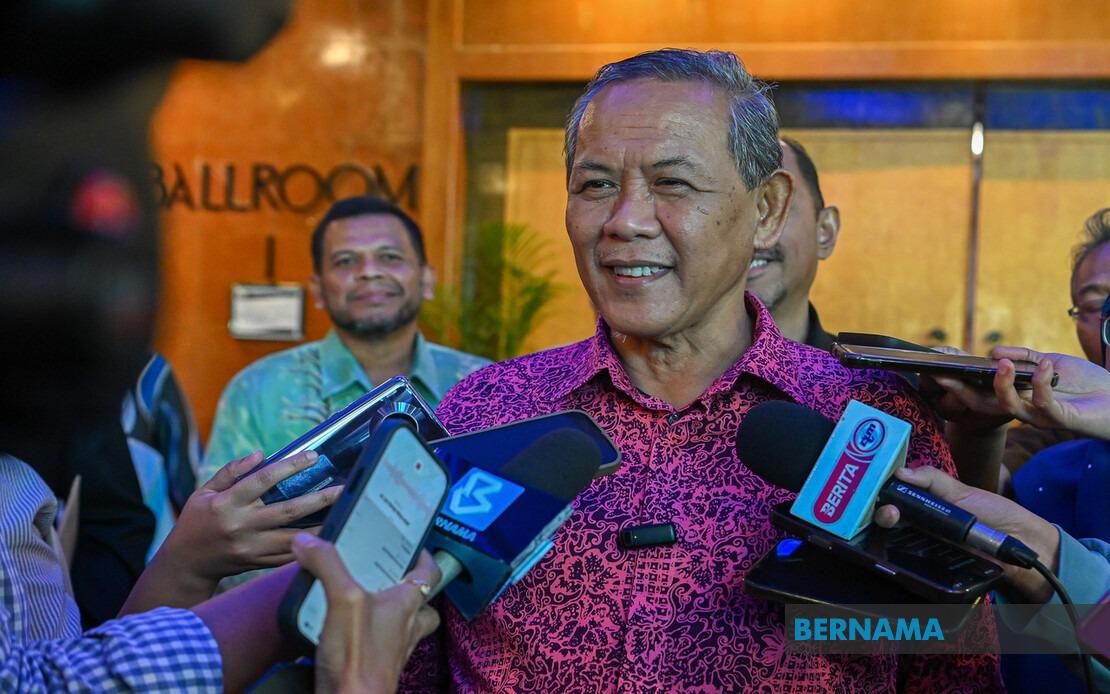
Speculation has swirled around whether Aminuddin himself will seek re-election, with observers closely watching whether the Sikamat assemblyman and sitting Menteri Besar will defend his seat or contest elsewhere. When approached by journalists, he firmly deflected questions about his personal political plans, insisting that all eyes should remain fixed on the official unveiling. His measured response reflects the delicate dynamics within a coalition where state leaders must balance personal ambitions with party strategy and coalition harmony. The mystery surrounding his candidacy is emblematic of larger questions voters harbour about whether existing state leadership will continue under a PH-led government.
The Negeri Sembilan election represents a significant test for Anwar's government at the state level, where PH currently lacks formal control and must prove its appeal to voters beyond Putrajaya's corridors of power. Unlike the previous state election, this contest occurs in a politically reshaped Malaysia where PH operates from a position of federal authority rather than opposition status. This reversal carries both advantages—access to state-level resources and the ability to highlight federal accomplishments—and risks, as voters may hold the ruling coalition accountable for broader economic and governance concerns.
The electoral calendar compressed into a remarkably tight timeframe underscores the Election Commission's efficiency and the parties' limited preparation window. With nomination day set for July 18 and polling scheduled for August 1, campaigns will effectively span just two weeks of intensive activity between candidate registration and voting. This compressed schedule benefits better-organised parties with existing ground infrastructure, potentially disadvantaging challengers seeking to build momentum from a standing start. PH's decision to announce candidates nearly a week before nomination suggests confidence in their preparedness and possibly aims to dominate early media coverage and shape the narrative before rivals formally enter the race.
Aminuddin's comments about focusing campaign efforts on securing coalition victory underscore the consensus that unity among PKR, DAP, and Amanah remains paramount. The three parties have managed their differences over seat allocations and candidate selections without public acrimony, a notable achievement given the historically fractious nature of coalition politics in Malaysia. Maintaining that unity through the campaign will be essential, as any visible cracks could be exploited by Barisan Nasional and other opposition groups contesting the election.
The decision to hold the announcement ceremony in Kuala Pilah's Dataran Melang carries symbolic weight, as the Menteri Besar represents a central region constituency and the location signals that PH's campaign will span the state's diverse districts rather than concentrating narrowly on urban centres. Kuala Pilah has historically been politically competitive, making it a suitable venue for projecting the coalition's confidence and reach across Negeri Sembilan's varied constituencies.
With polling set for August 1, the election serves as a crucial barometer of voter sentiment toward PH governance roughly a year and a half into Anwar's tenure as Prime Minister. Regional governments in Malaysia often function semi-autonomously from federal authority, yet state-level election results significantly influence perceptions of a ruling party's broader legitimacy and popularity. A strong showing would provide political capital for upcoming federal initiatives, while disappointing results could embolden internal critics within PH and strengthen opposition claims that the government has lost public confidence.
The candidate announcement also marks the formal completion of internal party processes that have consumed considerable leadership attention in recent weeks. With candidates named, party machinery can shift entirely toward mobilisation, voter engagement, and translating party positioning into electoral gains. The weeks ahead will reveal whether PH's three-party formula, workable at the federal level, can translate effectively into state-level governance messages and whether voters view the coalition favourably enough to extend control over another state assembly.

