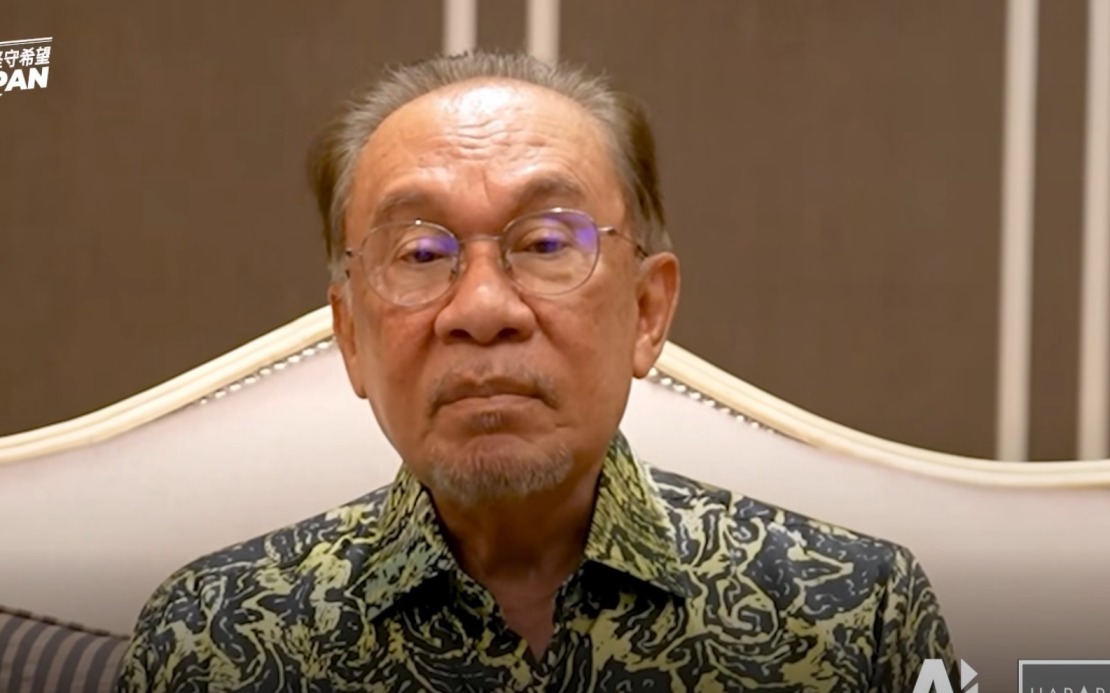
Prime Minister Datuk Seri Anwar Ibrahim has made a direct appeal to members of the Malaysian Armed Forces (ATM) and Royal Malaysia Police (PDRM), along with their families, to cast their votes in favour of Pakatan Harapan candidates in the forthcoming 16th Negeri Sembilan State Election. Speaking through a video message shared on social media ahead of early voting on Tuesday, the PH chairman framed the electoral choice as an opportunity for security personnel to extend their confidence in a government that has prioritised their interests.
Anwar's pitch centred on substantive improvements the coalition government has secured for uniformed services over its tenure. He highlighted initiatives spanning salary enhancements, provision of residential facilities, educational support for children of military and police staff, and healthcare access for their parents. The Prime Minister also referenced cash assistance programmes including Sumbangan Tunai Rahmah (STR) and Sumbangan Asas Rahmah (SARA), welfare measures designed to ease the financial burden on lower and middle-income households, including those headed by security personnel.
The appeal carries strategic weight given the concentrated voting bloc represented by these personnel in Negeri Sembilan. Approximately 16,884 military personnel and their spouses, alongside 5,455 police officers, will participate in early voting across 38 designated centres throughout the state. This combined group exceeds 22,000 voters—a potentially decisive force in a state election where individual constituency margins can be narrow. The early voting mechanism, typically reserved for security and essential services personnel, provides an additional organisational advantage for political outreach.
Anwar's messaging strategy reflects a broader PH approach to consolidating support among state institutions and public sector workers ahead of polling day on August 1. By personally engaging with security personnel, the Prime Minister underscores the government's acknowledgement of their pivotal role in national stability and governance. The framing also implicitly argues that continued political support translates into tangible resource allocation—a connection that resonates particularly within hierarchical organisations accustomed to recognising leadership commitment through concrete benefits.
The timing of this appeal merits consideration within Malaysia's political calendar and the specific dynamics of Negeri Sembilan politics. State elections in individual states can serve as barometers of national sentiment, and a loss in a traditionally significant state would carry symbolic weight regardless of numerical representation in Parliament. For PH, maintaining control in Negeri Sembilan preserves continuity of state governance while signalling to the federal electorate that coalition unity remains intact since the 2022 general election.
The welfare narrative advanced by Anwar addresses persistent grievances within the armed forces and police establishments. These personnel, operating under strict hierarchies and regulatory frameworks, have historically advocated for parity with private sector compensation and improved career infrastructure. Educational facilities and housing provisions represent particularly contentious issues, given that military and police families often relocate frequently and face distinct challenges in accessing quality schooling. By explicitly committing to ongoing improvement in these areas, the government positions itself as responsive to institutional needs.
However, the appeal also reflects underlying political competition for security sector endorsement. The Opposition maintains its own messaging channels to these voters, typically emphasising concerns about operational autonomy, politicisation of appointments, and resource allocation priorities. By personalising his appeal through a direct video address, Anwar attempts to transcend institutional channels and create a direct relationship between political leadership and personnel conscience. This approach recognises that despite hierarchical structures, individual voting decisions ultimately remain private and personal.
The welfare support mechanisms referenced—STR and SARA particularly—represent flagship government programmes designed to address cost-of-living pressures affecting lower-income segments of the population. Military and police personnel, especially junior ranks and enlisted personnel, fall squarely within these income bands. By linking welfare delivery to electoral support, Anwar subtly positions government assistance not as entitlement but as contingent on political mandate continuation. This framing, while standard in campaign rhetoric, carries heightened salience for disciplined, institutionalised voter blocs accustomed to understanding reward systems as hierarchically mediated.
For Malaysian voters and political observers, this appeal illuminates several dimensions of contemporary politics. First, it demonstrates the continued importance of organised voting blocs in state-level contests, where security personnel remain significant but not overwhelming demographic factors. Second, it reveals how welfare state expansion and targeted assistance programmes have become central to political competition and legitimacy claims. Third, it underscores persistent concerns about electoral politics in institutions traditionally positioned as apolitical—a tension that periodic appeals like Anwar's inevitably highlight regardless of their benign intent.
The outcome of Negeri Sembilan polling will indicate whether such targeted outreach to security personnel proves efficacious. If PH maintains or improves its position, the government and coalition partners will likely interpret this as validation of their welfare and institutional support narrative. Conversely, if security personnel vote significantly against PH candidates, it would suggest that welfare initiatives, however comprehensive, do not automatically translate into electoral behaviour—a finding with implications for how governments construct political appeals to institutional constituencies across Southeast Asia and beyond.
As the election approaches, these appeals to armed forces and police personnel will continue from competing political camps. The underlying question, for policymakers and analysts alike, concerns whether electoral appeals based on welfare provision and institutional recognition represent appropriate political engagement with security forces or constitute problematic instrumentalisation of state institutions. In Malaysia's evolving democracy, this tension remains productively unresolved, with each election cycle renegotiating the terms through which security personnel and their families engage with political choice.

