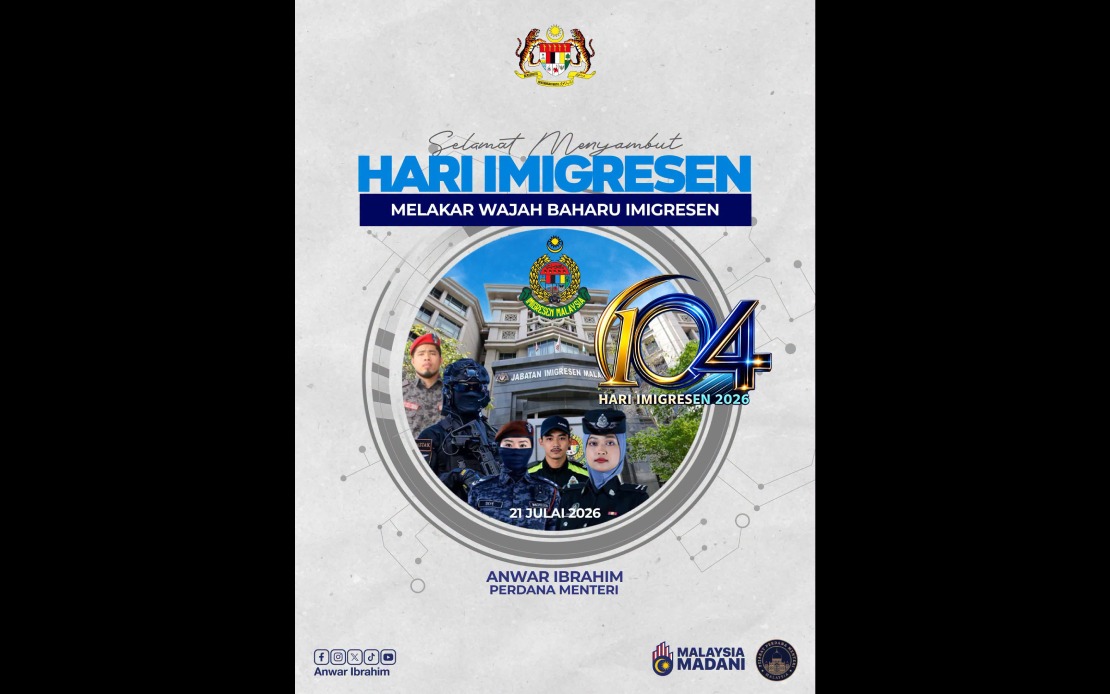
Prime Minister Datuk Seri Anwar Ibrahim has delivered a pointed message to the Immigration Department (JIM), calling on its entire workforce to discharge their duties with unwavering integrity whilst firmly rejecting any form of misconduct or corrupt practices. The appeal came during celebrations marking Immigration Day, with Anwar using the occasion to reinforce expectations of ethical behaviour across the nation's border control and immigration machinery.
Corruption within immigration agencies has long been a concern in Malaysia, where officers control critical gatekeeping functions affecting travel, settlement, and business movement. By publicly emphasizing integrity during an official day of recognition, Anwar has signalled that the government views ethical standards not as optional guidelines but as fundamental to departmental operations. This messaging addresses persistent challenges the immigration sector faces, where vulnerable travellers and businesses may be subject to informal levies or expedited processing in exchange for payments.
Beyond anti-corruption rhetoric, Anwar's statement encompassed a broader vision for service delivery. The Prime Minister stressed that JIM personnel must balance strict border management with compassion, ensuring that security imperatives do not override courtesy or professionalism. This dual emphasis reflects growing recognition that immigration agencies serve a public-facing function and that their reputation affects both national security and Malaysia's standing as a travel and business destination.
The 2026 Immigration Day theme, "Charting a New Face for Immigration," suggests an institutional commitment to modernization and reform. This framing implies recognition that immigration management must evolve beyond traditional enforcement approaches, potentially encompassing digitalization, streamlined processes, and customer-centric practices. For Malaysia, which seeks to attract skilled migrants, tourists, and international investment, immigration efficiency directly impacts competitiveness within Southeast Asia.
An immigration agency rebuilt on integrity foundations carries tangible economic implications. Investors conducting business across borders report that unpredictable or corrupt immigration procedures create operational friction and increase transaction costs. By publicly demanding ethical standards, Anwar is signalling to both domestic and international stakeholders that Malaysia intends to professionalize its immigration apparatus, potentially differentiating the country from regional competitors with similar bureaucratic challenges.
The emphasis on sovereignty protection alongside service delivery reflects a careful balance. Immigration departments worldwide face tension between openness and security. Anwar's phrasing—asking JIM to "safeguard the nation's sovereignty" whilst "serving the people"—acknowledges both imperatives. This suggests a vision where border control and public service are complementary rather than contradictory, a message particularly relevant for ASEAN nations managing porous borders and significant cross-border movement.
For regional observers, Anwar's stance on immigration integrity aligns with broader anti-corruption positioning his government has pursued since taking office. By naming immigration specifically, he acknowledges this sector as particularly vulnerable to institutional decay. Historical cases across Southeast Asia demonstrate how immigration corruption networks can become entrenched without sustained political pressure and institutional oversight. Public pronouncements from heads of state, whilst not sufficient alone, establish political cover for internal reform efforts and signal priority to enforcement bodies.
The specific timing during Immigration Day allows Anwar to combine recognition of personnel contributions with accountability messaging. This approach potentially maintains morale among honest officers whilst pressuring those tempted by informal gain to reconsider. For JIM workforce members committed to professional standards, the Prime Minister's public backing may strengthen their position when resisting corrupt solicitation from colleagues or external actors.
Malaysia's immigration environment involves transit through Kuala Lumpur International Airport and land borders with Thailand and Singapore, making the department operationally significant and structurally vulnerable to corruption. The volume of daily transactions—visa approvals, entry stamp issuances, permit renewals—creates numerous decision points where integrity can be compromised. Anwar's call for systemic ethical standards addresses this vulnerability directly, signalling that individual officer decisions matter to national leadership and are subject to scrutiny.
The broader implication for Southeast Asia centres on how regional governments are increasingly confronting immigration sector corruption as part of wider governance agendas. As ASEAN nations compete for regional influence and investment, immigration performance becomes a soft-power factor. Countries that successfully reduce border-related corruption gain reputational advantages in attracting multinational corporations, skilled workers, and tourists. Anwar's public commitment thus positions Malaysia within this competitive context, potentially shaping perceptions among international stakeholders evaluating regional stability and business environment quality.

