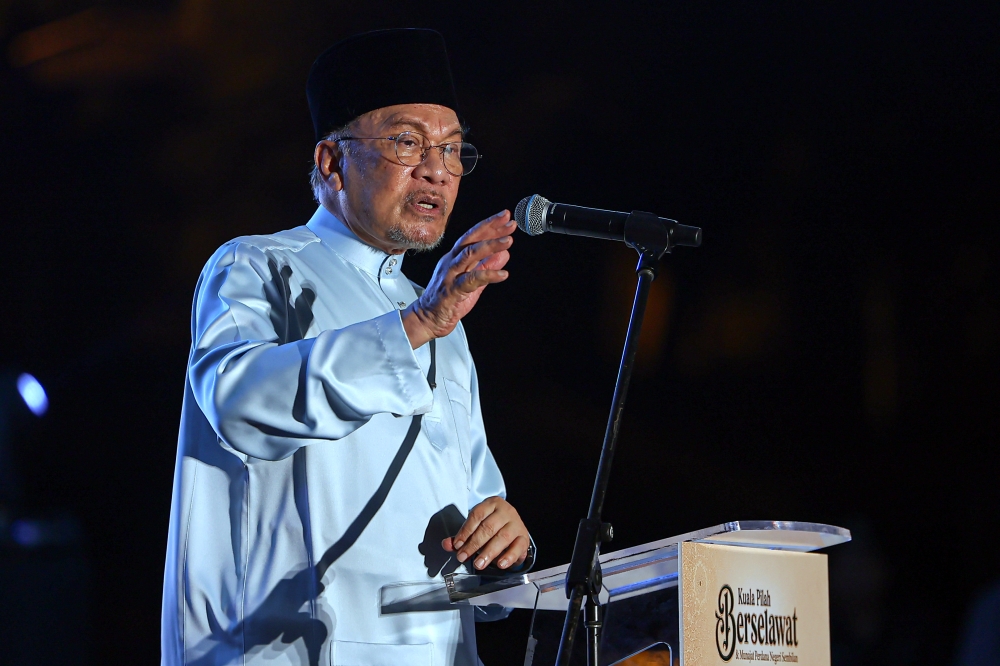
Anwar Ibrahim has sounded a clarion call for Parti Keadilan Rakyat to recalibrate its purpose, warning that the party risks losing its foundational identity if it becomes preoccupied solely with electoral victories. Speaking in Kuala Lumpur on August 15, the party president articulated a vision extending beyond the machinery of winning seats and securing power, instead emphasising PKR's obligations as a movement grounded in principled governance and public accountability.
The remarks carry particular weight given PKR's trajectory since the 1998 Reformasi movement, when the party emerged as a grassroots coalition demanding systemic change. Over two decades, the party has evolved from an opposition force challenging institutional power to a component of Malaysia's ruling coalition following the 2022 general election. This transformation has inevitably raised questions about whether the party's original mission—championing transparency, opposing corruption, and empowering ordinary Malaysians—remains central to its operations, or whether institutional consolidation has diluted those ideals.
Anwar's intervention suggests internal tensions within PKR regarding its priorities. As a mass movement, PKR presumably derives legitimacy from its capacity to mobilise supporters around shared values and substantive policy positions. This mandate differs fundamentally from treating party membership and organisational resources as tools for capturing electoral advantage. The distinction matters because movements typically command voluntary participation and moral engagement, whereas electoral machines operate through incentive structures and patronage networks. When parties blur these lines, they risk losing the ideological coherence that distinguishes them from purely transactional political entities.
The integrity dimension that Anwar emphasised speaks directly to PKR's historical brand and its appeal to educated, reform-minded constituencies. From its inception, the party positioned itself as an alternative to what it characterised as endemic corruption and institutional capture elsewhere on Malaysia's political landscape. Voters and activists who joined PKR often did so motivated by normative commitment to cleaner governance rather than mere tribal loyalty or material incentives. For the party to maintain this constituency and its internal morale, demonstrably living those values remains essential. When party leadership appears primarily concerned with electoral calculations, confidence erodes among members who perceive themselves as serving a higher cause.
Contextually, Anwar's message addresses a challenge facing PKR as it navigates coalition governance. Governing coalitions inevitably demand compromises, coalition-building across ideological boundaries, and accommodation with diverse partners. The Pakatan Harapan and later Madani coalitions have forced PKR to collaborate with partners whose records and priorities do not perfectly align with traditional Reformasi values. Managing these tensions—remaining an ideologically distinctive force while participating constructively in coalition governance—presents genuine difficulty. Anwar's statement suggests he recognises this tension and is attempting to articulate principles that should anchor PKR's behaviour regardless of coalition pressures.
For Malaysian observers, this intervention illuminates broader questions about how opposition-turned-ruling parties maintain democratic dynamism and policy innovation. International experience shows that movements often lose energy and purpose upon gaining power. The instinct to consolidate office and distribute benefits can overtake the imperative to deliver substantive reform. PKR, having participated in government and experienced both success and setback through the Harapan experiment and subsequent political volatility, faces this classic challenge. Anwar appears to be arguing for renewal of purpose rather than mere institutional management.
The grassroots component merits particular attention for Southeast Asian readers. In Malaysia's context, maintaining authentic connections with ordinary party members and broader civil society constituencies grounds political legitimacy in ways that Malaysian institutional structures often do not guarantee. A mass movement orientation implies systematic engagement with communities, responsiveness to constituent concerns, and programmes designed to address material grievances. This differs markedly from top-down political machinery where central leadership determines direction without meaningful consultation. Anwar's framing thus advocates for democratic participation within PKR's own structures and decision-making processes.
For regional context, PKR's experience resonates across Southeast Asia, where several transition democracies grapple with similar dynamics. Parties founded as reform movements—in Indonesia, Thailand, and the Philippines—have wrestled with maintaining ideological distinctiveness while governing. The institutional pressures of ministerial responsibility, coalition politics, and resource distribution test whether founding principles survive contact with state power. Anwar's explicit defence of movement characteristics suggests PKR leadership recognises these risks and seeks to inoculate the party against them through deliberate recommitment.
The timing of this statement also warrants consideration. Coming in August, outside immediate election cycles, it appears intended as internal messaging rather than campaign rhetoric. This suggests genuine concern about party culture and member perception rather than expedient positioning. PKR's strategic positioning in Malaysia's evolving coalition landscape—with Pakatan Harapan facing pressure from different directions and uncertainty about future election outcomes—makes maintaining internal cohesion and ideological distinctiveness increasingly valuable. A demoralised, materially-focused membership base provides weaker foundation than an engaged, principled one.
Moving forward, the substance of Anwar's challenge involves concrete institutional practices. Whether PKR actually implements internal democratic processes that meaningfully incorporate grassroots voices, whether party resources prioritise long-term community engagement over short-term electoral advantage, and whether party leadership demonstrates personal commitment to integrity standards—these observable behaviours will determine whether the mass movement ethos endures or becomes rhetorical flourish. For Malaysian democracy more broadly, PKR's success or failure in this endeavour has implications extending beyond the party itself, influencing whether Malaysia's political landscape can sustain movements grounded in principle alongside competitive electoral dynamics.

