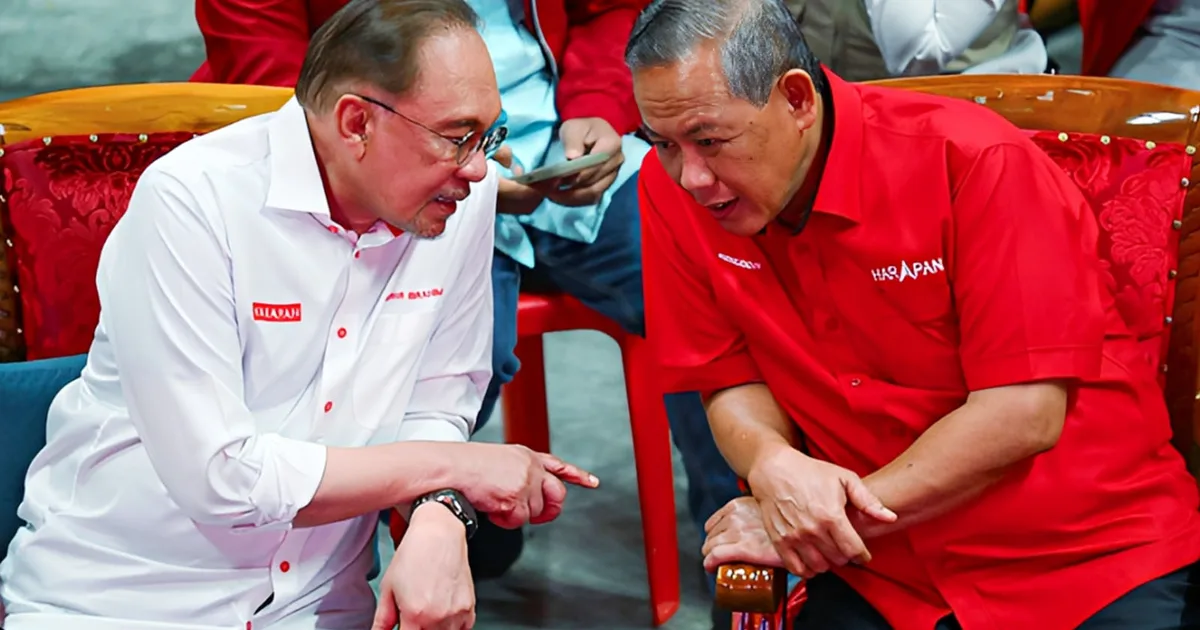
Anwar Ibrahim has underscored the continued relevance of former Negeri Sembilan menteri besar Aminuddin Harun within PKR's organisational structure, positioning the senior politician as an essential guide for the party's newer generation of leaders seeking direction in a highly competitive political landscape.
The PKR president's remarks reflect a broader strategic effort to retain institutional knowledge and experience within the party hierarchy, even as electoral fortunes shift. Aminuddin's trajectory within Malaysian politics offers valuable lessons about navigating setbacks with composure and maintaining principled conduct when facing public disappointment. Such qualities, Anwar suggested, carry particular weight in an environment where younger politicians often encounter intense pressure and external scrutiny.
What distinguishes Aminuddin's approach, according to Anwar's assessment, is his refusal to attribute his defeat to external scapegoats or systemic conspiracies. In Malaysian political culture, where losing candidates frequently engage in recriminations and finger-pointing exercises, this restraint represents a notable departure from conventional practice. The willingness to accept electoral outcomes without deflecting blame or making accusations demonstrates a maturity that Anwar believes should resonate with party members striving to build credibility and earn public trust over the long term.
For PKR, a party that has experienced significant internal turbulence alongside its rapid electoral ascent over recent years, mentorship from experienced figures carries strategic importance. The party's expansion from opposition movement to governing coalition member has created substantial organisational demands, with numerous elected representatives requiring guidance on legislative procedure, constituency management, and the political ethics expected of public servants. Aminuddin's willingness to shoulder such responsibilities—despite no longer holding executive office—suggests a commitment to party development that transcends personal ambition.
The emphasis on gracious defeat also addresses practical concerns within PKR's membership. Political parties frequently splinter when disappointed candidates or officials harbour resentments or feel marginalised following electoral losses. By elevating Aminuddin's example, Anwar signals that the party values continuity and loyalty across changing electoral cycles. This messaging becomes particularly relevant as Malaysia approaches future electoral contests, where maintaining cohesion among diverse party factions will prove essential to competitive performance.
Aminuddin's profile within Negeri Sembilan politics had been substantial prior to his recent defeat. As menteri besar, he oversaw state administration and served as a visible representative of PKR's capacity to govern effectively at sub-national level. His transition to a mentorship role, though less prominent than executive position, allows the party to retain his political capital and institutional relationships without requiring him to step entirely from public life. This arrangement often proves more sustainable than forcing experienced politicians into complete retirement, which can breed resentment or encourage opposition politicians to poach restless figures.
From a Southeast Asian perspective, Malaysia's political parties continue experimenting with different models for succession planning and leadership development. Democratic systems across the region struggle with the challenge of integrating experienced politicians with younger aspirants while maintaining organisational stability. PKR's approach—leveraging Aminuddin's experience as a teaching resource—offers one practical response to this recurring challenge.
The broader implication of Anwar's comments concerns institutional maturity within Malaysian politics. Political organisations with sustainable competitive advantage typically establish mechanisms for retaining expertise across electoral cycles and creating pathways for senior figures to contribute meaningfully without dominating decision-making. Aminuddin's transition into a mentoring capacity, if effectively implemented, could model such an approach for other Malaysian parties facing similar generational transitions.
Anwar's remarks also suggest recognition that electoral losses, though disappointing, need not represent terminal political conclusions. In systems where party cohesion determines electoral competitiveness, demonstrating that capable leaders retain valued roles despite specific defeats encourages broader party members to persist through their own disappointments. This psychological dimension of party management often receives insufficient attention in political analysis, yet substantially influences whether political organisations can maintain momentum across multiple election cycles.
The timing of Anwar's comments reflects PKR's current consolidation phase. As the party settles into governing responsibilities at federal level while competing across multiple state jurisdictions, establishing strong internal mentorship networks becomes strategically advantageous. Experienced figures like Aminuddin, who have demonstrated both competence in executive roles and dignity in accepting electoral reversal, provide institutional glue that can help prevent the factional conflicts that have historically weakened Malaysian political coalitions.
Moving forward, whether Aminuddin's mentorship role translates into tangible impact on younger PKR leaders' political development remains to be observed. However, the symbolic importance of Anwar's endorsement is clear: the party is signalling that electoral losses need not translate into political exile, provided leaders maintain principled conduct and remain committed to collective party success. In Malaysian politics, where personality-driven factional conflicts frequently undermine coalition stability, such messaging carries considerable weight.

