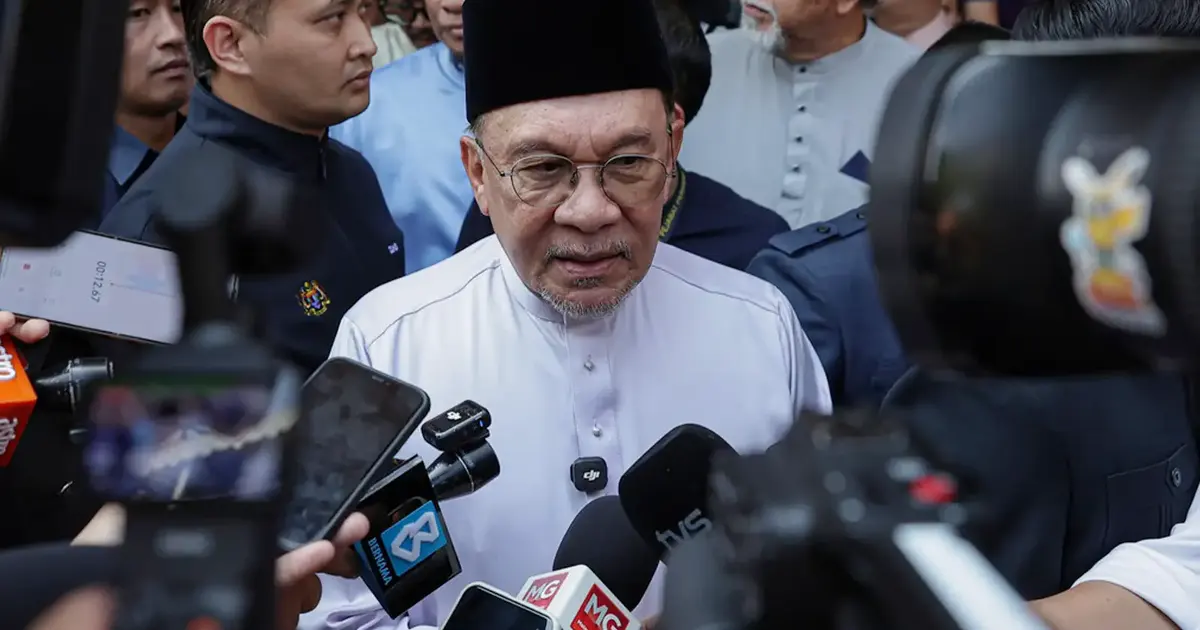
Prime Minister Anwar Ibrahim has struck a cautionary note following his government's strong showing in the latest Merdeka Center public opinion survey, warning that favourable polling numbers must serve as motivation rather than permission to ease off the pace of reform and delivery.
The survey results, which placed Anwar's administration atop approval rankings, have prompted the prime minister to reframe the significance of such measures within the broader political and social context facing Malaysia. Rather than treating the numbers as vindication of existing performance, Anwar has chosen to interpret public support as a mandate demanding intensified effort from his cabinet and wider administration.
This framing reflects a calculation familiar to Malaysian political leaders: public approval, while valuable, remains fragile and contingent on continued demonstration of competence and responsiveness. Anwar's comments underscore the understanding that Malaysian voters, having experienced multiple changes of government over the past five years, maintain heightened expectations of tangible improvement in governance quality, service delivery, and transparent administration.
The Merdeka Center, respected as an independent polling institution, has tracked Malaysian political sentiment with considerable credibility among analysts and policymakers. Its surveys have become important barometers of public mood, particularly during periods of significant political transition. That Anwar's government now leads such measurements represents a shift from the fractious period following the 2022 general elections, when his administration inherited substantial institutional and fiscal challenges.
Anwar's emphasis on sustained effort carries implications beyond rhetoric. Malaysian governments have historically encountered difficulties maintaining momentum once initial political capital accumulates. The prime minister's public insistence on not resting on approval ratings may signal internal pressure being applied to cabinet members to demonstrate concrete achievements in priority areas including economic management, subsidy rationalization, and anti-corruption efforts.
The Malaysian business community and international observers have closely watched whether the current administration can maintain policy consistency while managing competing demands from its political coalition partners. Anwar's statement potentially reflects attempts to hold his cabinet accountable to reform commitments made during the election period, particularly regarding fiscal discipline and structural economic improvements.
Public approval surveys in Malaysia's contemporary political environment serve functions beyond simple measurement of satisfaction. They establish benchmarks against which governments will be judged during subsequent election cycles and influence calculations by coalition partners regarding the durability of political arrangements. Anwar's determination to keep momentum suggests awareness that complacency could provide openings for political opponents to regain ground.
The context of Malaysian economic challenges—including persistent fiscal pressures, inflation concerns, and the need for productive investment—makes Anwar's emphasis on continued exertion strategically significant. High approval ratings carry limited value if they do not translate into improvements in living standards, employment opportunities, or business confidence. The prime minister appears to be signalling that his administration understands this distinction.
For Malaysian policymakers and analysts, Anwar's response illustrates how contemporary political leaders navigate the tension between celebrating measurable achievements and sustaining momentum toward longer-term objectives. The statement also reflects broader Southeast Asian patterns wherein governments seeking to maintain legitimacy increasingly depend on demonstrated economic performance rather than ideology alone.
The relationship between public opinion and government performance in Malaysia has particular relevance for broader regional stability. A government perceived as energized and responsive carries greater credibility in pursuing complex reforms, including those affecting subsidy structures, tax policy, and investment frameworks—changes that typically generate initial public friction before yielding benefits.
Anwar's framing of the survey results as catalyst rather than conclusion positions the government to avoid the political vulnerabilities that emerge when administrations become defensive or disconnected from implementation challenges. By publicly committing to sustained effort, the prime minister has raised the performance bar by which his government will be assessed—a strategic choice reflecting confidence in the administration's capacity to deliver.
Looking ahead, the test of Anwar's commitment will emerge through cabinet-level actions, budget allocations, and measurable policy outcomes in coming months. Whether elevated approval ratings translate into concrete improvements in service delivery, economic indicators, or institutional quality will ultimately determine whether current sentiment represents sustainable political capital or temporary respite from public skepticism.

