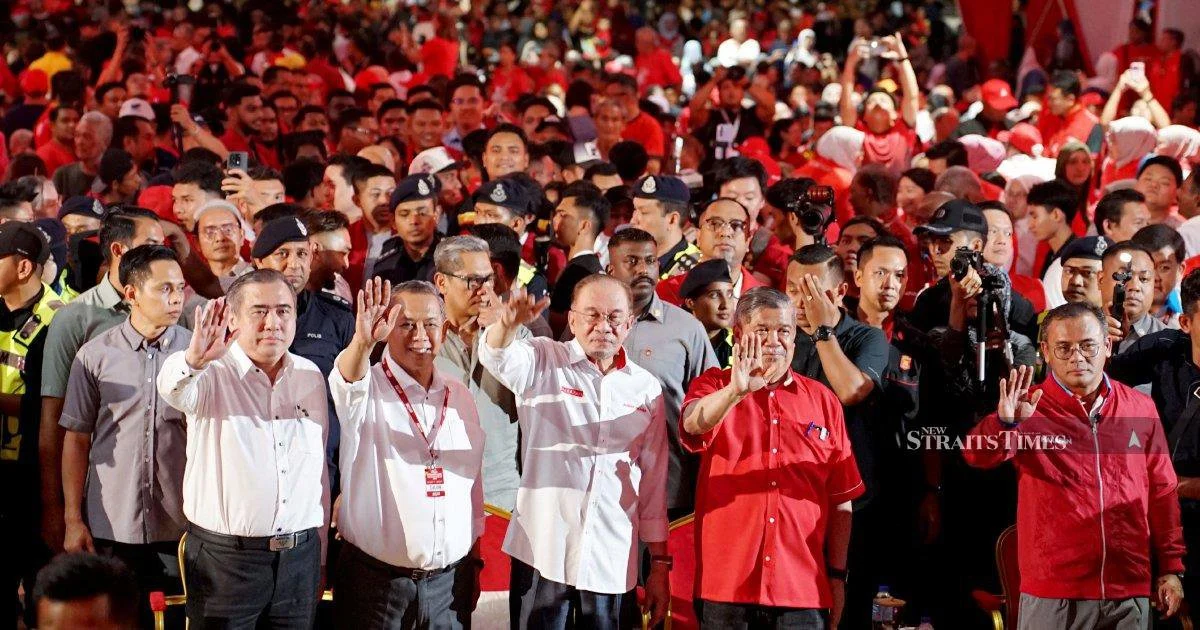
Prime Minister Datuk Seri Anwar Ibrahim has issued a pointed reminder to all political parties and their leaders that the royal institution must remain insulated from electoral campaigns, particularly during the ongoing Negri Sembilan state election push. Speaking at Kuala Pilah, Anwar underscored the importance of maintaining the constitutional and ceremonial sanctity of the monarchy whilst parties vie for voter support across the state.
The caution reflects growing concerns about the intersection of electoral politics and revered national institutions in Malaysia's political landscape. The Negri Sembilan election campaign has intensified competition among rival coalitions, and Anwar's intervention signals the federal government's determination to ensure that boundaries between legitimate political discourse and institutional respect remain clearly delineated. This distinction carries particular weight in Malaysia, where the constitutional monarchy occupies a central pillar in the fabric of national governance and social cohesion.
Anwar's remarks carry implicit acknowledgment that campaign dynamics occasionally push political actors to invoke symbolic authority or institutional imagery to bolster their messaging. In a state like Negri Sembilan, where the Sultan wields considerable ceremonial and constitutional significance, the temptation to reference or align electoral narratives with royal prerogatives can prove considerable. The Prime Minister's statement therefore represents a preventative measure designed to establish clear expectations before such infractions might occur.
Maintaining the depoliticisation of royal institutions serves multiple governance functions in Malaysia. Foremost among these is the preservation of national unity and cohesion at a time when electoral competition naturally amplifies partisan divisions. The monarchy stands above the political fray as a unifying symbol accessible to all Malaysians regardless of their electoral allegiances. When political actors instrumentalise this institution, they risk eroding the neutrality that allows the Crown to serve as a stabilising force across the nation's diverse constituencies.
The institutional framework governing Malaysia's constitutional monarchy provides clear parameters for political engagement. The royal institutions operate within defined constitutional boundaries that distinguish their ceremonial functions from the operational mechanics of electoral politics. By reminding politicians of these distinctions, Anwar reinforces the separation of powers and institutional autonomy that undergird Malaysia's political system. This separation becomes especially critical during election periods when institutional neutrality faces its greatest tests.
Anwar's position as Prime Minister grants him particular standing to articulate standards of political conduct across the country. His intervention in Negri Sembilan affairs, though ostensibly directed at state-level actors, reflects a federal government commitment to upholding constitutional norms across all electoral contests. This approach acknowledges that individual state campaigns occur within a larger national framework where established conventions regarding institutional respect must prevail regardless of local political dynamics.
The warning also reflects lessons learned from previous electoral cycles where the politicisation of institutional symbols created complications for governance. Malaysia's political history demonstrates that once boundaries blur between electoral campaigns and respected institutions, the consequences extend beyond a single election cycle. Public confidence in both the political system and the institutions themselves can suffer long-term damage when voters perceive that revered bodies have been compromised for partisan advantage.
For political parties operating in Negri Sembilan, Anwar's statement establishes explicit expectations about acceptable campaign conduct. Parties that respect this boundary demonstrate maturity in their approach to democratic competition and signal recognition that certain institutional red lines exist for legitimate reasons. Conversely, any party that attempts to leverage royal symbolism or invoke institutional authority for electoral purposes would directly contravene the Prime Minister's clearly articulated position, potentially inviting federal-level scrutiny and reputational consequences.
The Negri Sembilan election itself occurs within a broader context of Malaysian politics where institutional strength and public confidence matter substantially. The state possesses particular historical significance in the Malaysian federation, and its electoral processes carry symbolic weight beyond the immediate distribution of state-level offices. By securing agreement that royal institutions remain outside the campaign arena, Anwar helps ensure that Negri Sembilan's election unfolds in a manner consistent with national standards of political conduct.
Understanding this issue requires recognition that electoral campaigns naturally generate pressure to deploy available symbols and authorities persuasively. Political leaders seek advantage through every legitimate means at their disposal. The royal institution represents perhaps the most potent and broadly respected symbol in Malaysia's political culture, making it a tempting resource for ambitious politicians. Yet precisely because it holds such significance for national cohesion, the monarchy must remain protected from partisan exploitation.
Anwar's intervention also speaks to the broader maturation of Malaysian democracy. Established democracies typically develop strong conventions—formal and informal—that restrict how political actors can engage various institutions and symbols. These conventions often matter more than explicit legal prohibitions in maintaining institutional integrity. By articulating such conventions clearly and publicly, Anwar contributes to strengthening Malaysia's democratic culture and establishing shared understandings about appropriate political behaviour.
Looking forward, the effectiveness of Anwar's warning depends partly on political parties' willingness to internalise these expectations and adjust their campaign strategies accordingly. The Negri Sembilan election thus becomes a test case for whether Malaysia's political actors can conduct vigorous electoral competition whilst respecting fundamental boundaries around national institutions. Success in this regard would reinforce positive precedents for future elections and strengthen public confidence that constitutional norms remain robust even under electoral pressure.

