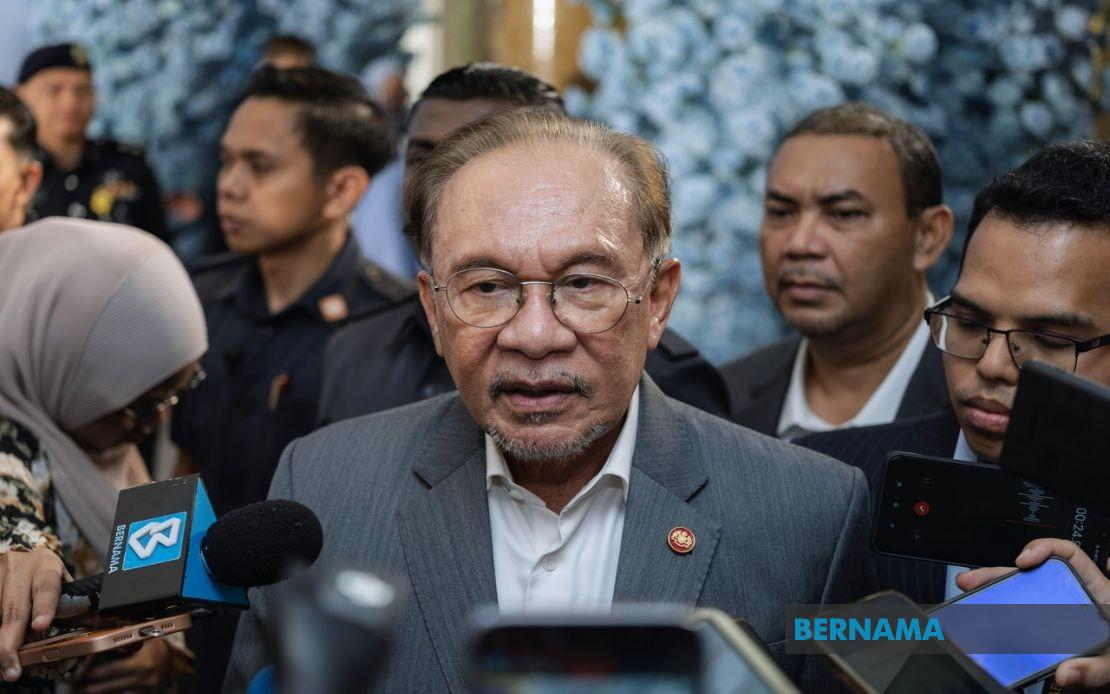
Prime Minister Datuk Seri Anwar Ibrahim remains unbriefd on the circumstances that prompted four Melaka DAP state assemblymen to abruptly exit the state government, a development that has stirred internal tensions within the ruling coalition. Speaking to reporters in Kuala Lumpur on July 15, Anwar indicated that Pakatan Harapan's leadership would soon conduct a comprehensive review of the unexpected departures and determine an appropriate response to the situation.
The four assemblymen—Allex Seah Shoo Chin from Kesidang, Low Chee Leong from Kota Laksamana, Leng Chau Yen from Banda Hilir, and Kerk Chee Yee from Ayer Keroh—collectively announced their resignations from the state government just one day prior. Their decision came immediately after the Melaka State Legislative Assembly enacted amendments to the state constitution that would enable the appointment of nominated assemblymen to the chamber. The constitutional changes represented a significant shift in how state representation might be structured going forward.
As chairman of Pakatan Harapan, Anwar's acknowledgment that he had not yet received comprehensive briefings on the matter underscores the complexity of managing coalition dynamics, particularly when individual component parties make major political moves without apparent coordination at the highest levels. The absence of prior consultation with the prime minister's office suggests either a communication breakdown within the coalition or a deliberate decision by the Melaka DAP leadership to act independently and then seek dialogue afterwards.
The constitutional amendments that triggered the withdrawals represent a contentious issue within Malaysian politics, where the balance between elected and nominated representation remains deeply contested. The ability to appoint unelected assemblymen has long been seen by critics as a mechanism that potentially diminishes democratic accountability and can be weaponised for political advantage. For DAP, a party that has historically championed electoral democracy and transparency, supporting such amendments would have appeared contradictory to its core principles and voter expectations.
Anwar's call for the Melaka DAP to reconsider its withdrawal decision, issued on the same day as the announcements, reflected an attempt to minimise disruption within the coalition and maintain focus on governance priorities. The Prime Minister's appeal emphasised continuity of development initiatives and public service delivery in Melaka, suggesting that internal political disputes should not distract from administrative responsibilities. This pragmatic stance reflects the broader challenge facing Pakatan Harapan: balancing factional interests with the need to present a united front to the electorate.
The situation in Melaka carries implications beyond that state's borders. As one of Malaysia's component states, developments there have repercussions for how Pakatan Harapan coordinates its operations nationally. If four assemblymen from a single party can withdraw from government without advance consultation with coalition leadership, it raises questions about the mechanisms for internal coordination and decision-making. Such lapses could potentially embolden similar moves in other states or at the federal level.
DAP's position within Pakatan Harapan has been a source of occasional friction, particularly regarding issues where the party's urban, Chinese-Malaysian-majority voter base differs from the broader coalition's positions. The Melaka situation may reflect deeper disagreements about governance principles, representation, or the party's role within the broader coalition structure. Understanding these underlying tensions will be crucial for Anwar's leadership team as they conduct their promised follow-up review.
The timing of these developments is also noteworthy, occurring during a period when Pakatan Harapan is navigating broader challenges to its political cohesion. Managing coalition partners with distinct ideological orientations and voter bases remains one of the primary tests of the federal government's stability. When individual parties make unilateral moves that undermine coalition unity, even if motivated by principle, they risk destabilising the broader administration.
For Malaysian voters, particularly those in Melaka who supported DAP candidates in recent elections, the situation raises questions about representation and the extent to which their elected representatives should prioritise state-level party interests against coalition loyalty. The constitutional amendments themselves merit scrutiny, as they represent a significant expansion of appointed, rather than elected, representation—a development that warrants public debate regardless of which party's representatives raise concerns.
Looking ahead, the promised briefings and follow-up actions from Pakatan Harapan's leadership will determine whether this episode becomes merely an internal skirmish or signals deeper fractures within the coalition. Anwar's response will be instructive for understanding how the Prime Minister intends to exercise authority over component parties and whether coalition discipline can be maintained when individual parties take significant political decisions. The resolution of the Melaka situation may also establish precedents for how similar disputes are handled in other states where Pakatan Harapan governs.

