Prime Minister Datuk Seri Anwar Ibrahim's track record in steering Malaysia's economy and attracting foreign investment has garnered approval from multiple stakeholders, his political secretary indicated on Monday, presenting the MADANI Government's credentials ahead of the next general election cycle.
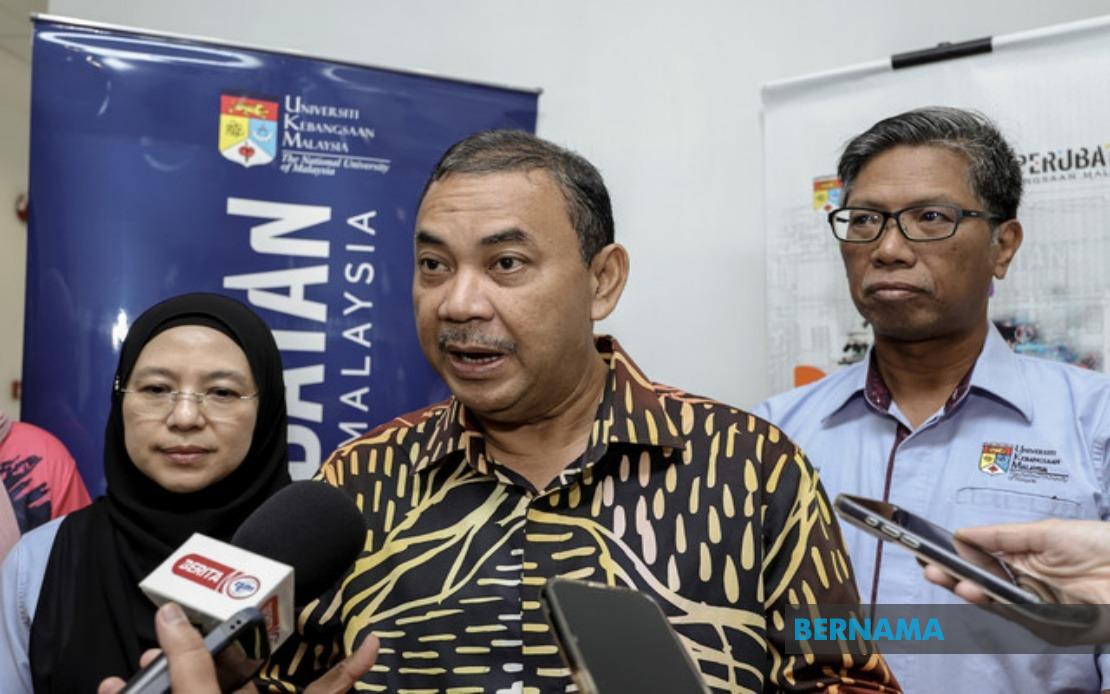
Datuk Azman Abidin made the assertion while launching a youth science education initiative at Universiti Kebangsaan Malaysia in Kuala Lumpur. The statement underscores the administration's desire to centre its electoral narrative around tangible economic gains rather than political messaging alone. According to Azman, the government's performance across three critical areas—investment inflows, overall economic trajectory, and currency stability—has earned endorsement from observers across the political spectrum.
The emphasis on economic credentials reflects a deliberate strategic positioning as Malaysia enters the period when general elections become constitutionally feasible. By highlighting achievements in these domains, the administration attempts to translate macroeconomic indicators into voter confidence, particularly among middle-class and business communities that depend on exchange rate stability and investment certainty. Azman's framing suggests the government believes these metrics provide sufficient justification for continued governance, positioning performance as more persuasive than party loyalty alone.
The political secretary indicated that further initiatives and policy announcements would follow before Malaysia celebrates both National Day and Malaysia Day, with the 2027 federal budget serving as another platform to showcase the government's economic management philosophy. This sequencing indicates a calculated effort to maintain positive headlines and policy momentum throughout the remainder of the year, creating a drumbeat of accomplishment rather than allowing attention to drift toward opposition narratives or emerging criticisms.
Azman expressed conviction that Malaysian voters would rationally assess the administration's achievements when casting ballots in the subsequent general election, implicitly suggesting that clear-eyed evaluation of economic data would favour the incumbents. This appeal to voter rationality represents both confidence in public judgment and an acknowledgment that electoral outcomes ultimately depend on citizen perception rather than government claims alone. The statement carries an inherent risk: should economic conditions deteriorate before elections occur, such appeals to rational assessment could backfire dramatically.
While discussing economic performance formed the primary thrust of his remarks, Azman also addressed the nation's scientific and educational priorities through his role inaugurating the STEM Exploration 2.0 programme. The initiative targets Form Three students across the Klang Valley and Selangor regions, identifying emerging scientific talent while exposing young people to medical and technology career pathways. By personally launching this programme, the political secretary connected the administration's development agenda to youth empowerment, a constituency increasingly pivotal in Malaysian electoral mathematics.
The STEM initiative carries significance beyond immediate educational outcomes. It reflects government recognition that Malaysia's long-term competitiveness depends on building human capital in technology and science sectors where regional competition intensifies annually. By visibly supporting such programmes, the administration signals investment in future productivity and innovation capacity, not merely current consumption or immediate welfare measures. The initiative's expansion from 200 students across three regions to a nationwide footprint represents an implicit acknowledgment that current capacity remains insufficient to meet the nation's talent development needs.
Azman urged that science and technology education transition from optional enrichment into foundational curriculum components, framing STEM literacy as essential for Malaysia's survival amid accelerating global technological transformation. This argument resonates beyond educational circles, connecting skill development to broader national competitiveness anxieties shared across Southeast Asia. Malaysia faces particular pressure as Chinese and South Korean investments in domestic innovation continue expanding, potentially siphoning technological leadership that the country once commanded in the region.
The programme itself provided participants with practical laboratory experiences encompassing microbiology, immunology, circulatory system studies, and medical applications of three-dimensional printing technology. Such hands-on exposure proves more effective than classroom instruction alone in converting abstract scientific concepts into tangible career possibilities. By facilitating direct engagement with cutting-edge medical technology, the initiative attempts to inspire lasting commitment to STEM disciplines among cohorts whose decisions about university specialisation and career direction will shape Malaysia's technical workforce composition across the following decade.
The government's multi-pronged approach—combining economic achievement narratives with investments in youth talent cultivation—suggests recognition that electoral support requires simultaneously addressing voter expectations around prosperity and future opportunity. Economic growth statistics prove insufficient alone; voters increasingly expect evidence that prosperity translates into expanded possibilities for succeeding generations. By emphasising both current economic performance and future-oriented educational initiatives, the administration constructs a more comprehensive legitimacy narrative than focusing exclusively on either dimension would permit.
For Malaysian observers and regional analysts, Anwar's government clearly believes that the next electoral cycle will turn substantially on economic judgments rather than demographic, ethnic, or religious voting patterns that dominated earlier elections. This represents a significant shift in how the administration frames its appeal, suggesting either confidence that economic results transcend traditional political dividing lines or anxiety that conventional political bases have grown insufficiently reliable. Time will reveal whether this calculus correctly assesses voter priorities and whether the administration's economic achievements prove as widely acknowledged beyond official circles as Azman's remarks suggest.

