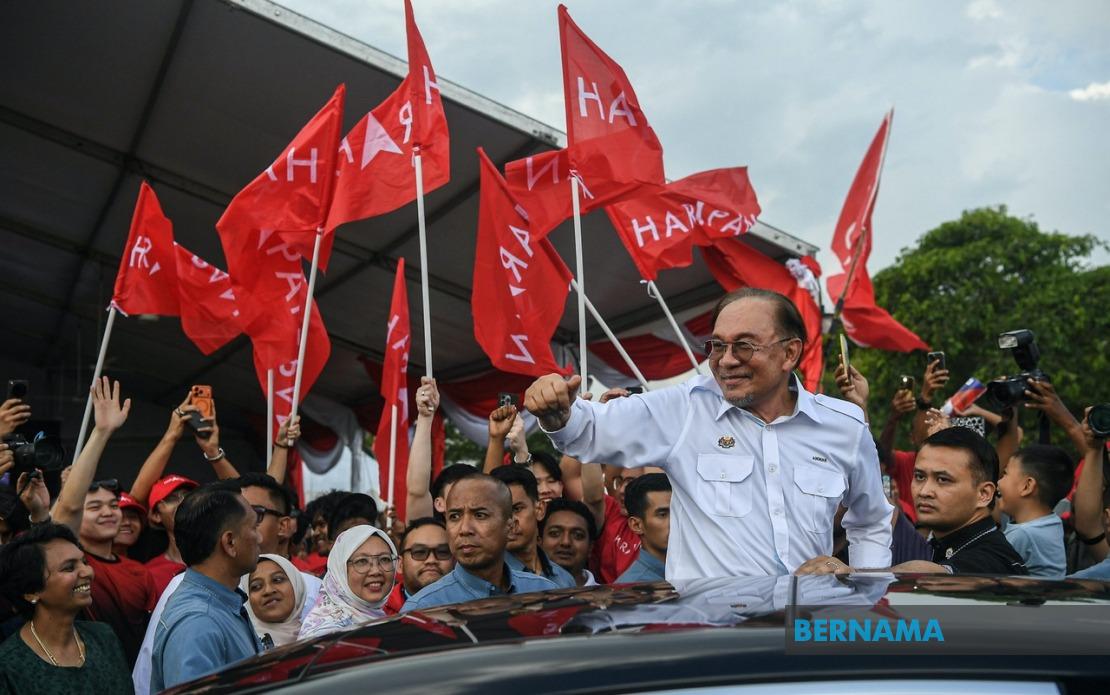
Prime Minister Datuk Seri Anwar Ibrahim's personal campaign efforts across Johor have galvanised the Pakatan Harapan coalition's bid to retain control of Malaysia's southernmost peninsula state, generating palpable momentum among voters as the 16th Johor State Election draws near. Communications Minister Datuk Fahmi Fadzil highlighted the extraordinarily positive reception the premier has received during campaign stops, describing the grassroots response as both spontaneous and encouraging—a critical indicator of the coalition's electoral prospects in a state where PH currently holds significant sway.
Fahmi, who accompanied Anwar during campaign programmes in Senggarang and Semerah within the Batu Pahat district, painted a vivid picture of the enthusiasm witnessed on the ground. He recalled an elderly voter who organised transport via trishaw specifically to encounter the Prime Minister, exemplifying the level of personal engagement mobilised by Anwar's presence. These observations carry weight beyond mere anecdote; they signal genuine voter interest in PH's campaign message and suggest that the coalition's messaging resonates with constituencies across different demographics and geographic areas.
The strategic value of Anwar's direct involvement in the campaign cannot be understated. Over the weekend of July 4 and 5, the Prime Minister conducted a punishing schedule, participating in 15 campaign events throughout Johor to reinforce party messaging and demonstrate solidarity with PH candidates. This intensive effort reflects the coalition's understanding that leadership visibility during state-level contests can measurably influence voter sentiment, particularly among undecided voters and those considering switching allegiances. Anwar's willingness to commit significant personal time to the campaign underscores PH's determination to secure a decisive mandate.
Pakatan Harapan has committed substantial resources to this election, fielding candidates across the entire slate of 56 State Legislative Assembly seats. This comprehensive approach signals confidence that the coalition can compete effectively in every corner of the state, from urban Johor Bahru and Kota Tinggi to rural areas and smaller towns. The breadth of PH's candidate deployment suggests sophisticated electoral strategy rather than selective focus on winnable seats—an approach that could expand the coalition's territorial gains if the campaign momentum translates into ballot box results.
The broader electoral context adds urgency to PH's campaign push. With 172 candidates contesting the 56 available seats, competition remains fierce across multiple parties and independent candidates. The fragmentation of opposition forces, combined with PH's united approach, potentially creates openings for the coalition to capture seats previously held by other parties. The intensity of Anwar's campaign engagement reflects these calculations; his presence simultaneously energises party machinery, provides media coverage advantages, and sends a message to wavering voters that the coalition takes the contest seriously.
Fahmi's observations about community response carry implications beyond Johor's borders. The Malaysian political landscape has shifted markedly since the 2020 federal election and subsequent defections that destabilised earlier coalitions. Voter sentiment toward established political figures and their perceived accessibility has become increasingly consequential. Anwar's visible engagement in retail politics—meeting constituents directly, attending ground-level campaign events, and demonstrating accessibility—represents a deliberate cultivation of democratic legitimacy that contrasts with the more insulated approach of previous administrations.
The early voting process, conducted on the day Fahmi made his observations at Bernama's operations centre, provided an initial gauge of voter turnout and enthusiasm. These figures would have offered campaign strategists real-time data on mobilisation effectiveness, allowing PH operatives to calibrate their final push toward polling day on July 11. The coalition's focus on communicating its campaign narrative consistently throughout the state election period, as Fahmi emphasised, suggests coordinated messaging discipline designed to create a coherent platform rather than fragmented local appeals.
For Malaysian political observers, the Johor election serves as a significant bellwether. The state has historically influenced national political dynamics; a strong PH performance would validate the coalition's strategies and provide momentum for upcoming contests. Conversely, any significant losses could prompt recalibration within PH's leadership and offer openings to opposition parties seeking to reverse recent electoral setbacks. Anwar's intensive campaign engagement thus carries stakes transcending Johor itself.
The spontaneous nature of the community responses that Fahmi witnessed—elderly voters organising transport to meet the PM, people turning out hoping to encounter the Prime Minister—suggests that PH's campaign has successfully converted abstract political messaging into personal connection. This represents a shift from purely institutional or party-based appeals toward leadership personality and accessibility. Whether this translates into sustained electoral advantage depends on whether voter enthusiasm hardens into committed political support rather than remaining ephemeral admiration.
As polling day approached, the trajectory established by Anwar's campaign blitz positioned PH to contest the Johor election from a position of considerable momentum. The coalition's investment in comprehensive candidate deployment across all seats, combined with the Prime Minister's visible and energetic campaign presence, created multiple reinforcing advantages. The coming election results would reveal whether the grassroots enthusiasm observed during the campaign period had sufficiently moved voter preference to secure PH's continued dominance of Johor's political landscape.

