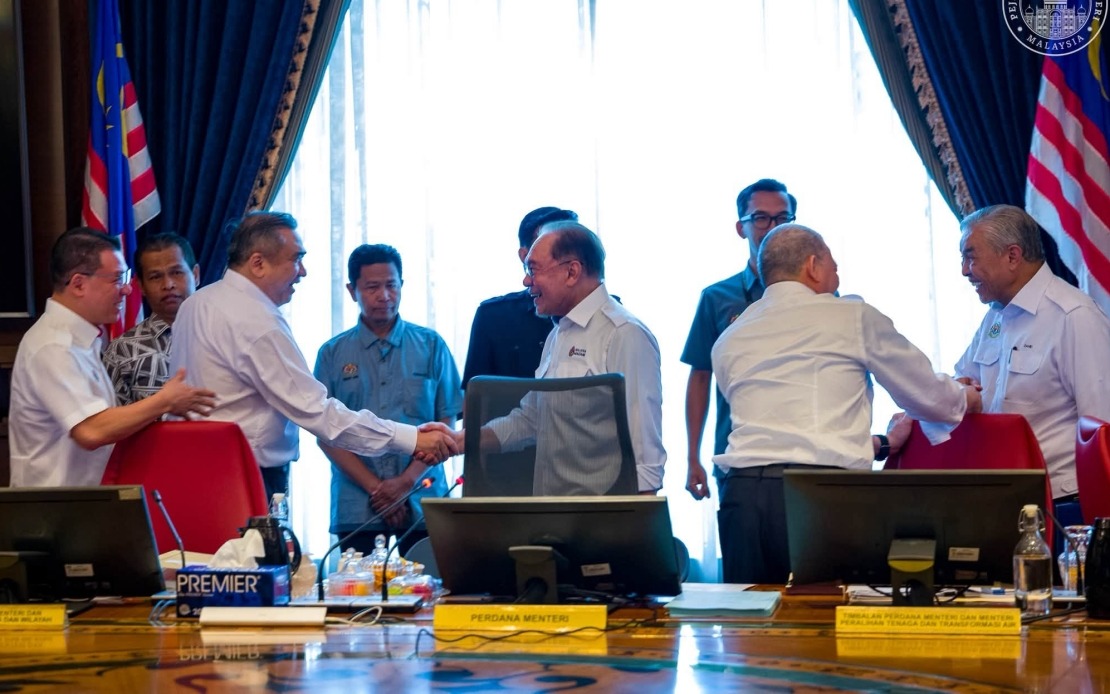
Prime Minister Datuk Seri Anwar Ibrahim has used poetry and symbolism to underscore the importance of maintaining solidarity within Malaysia's Federal Government, posting a traditional four-line Malay pantun on his Facebook page that celebrates friendship and consensus. The move represents a carefully calibrated attempt to remind the public of the coalition's underlying unity even as its component parts engage in vigorous electoral combat across Negeri Sembilan, where voters will head to the polls on August 1.
The posting, which accompanied photographs from a recent Cabinet meeting and a nostalgic 1980s song, generated substantial online engagement, accumulating more than 11,500 likes within two hours. The comments section similarly overflowed with responses, including several users who matched the Prime Minister's poetic tone by composing their own pantun in reply. Many observers interpreted the contribution as a demonstration of statesmanship and a conciliatory signal at a moment when tensions between coalition partners risk overshadowing the government's broader agenda.
The Cabinet photographs accompanying the post featured Deputy Prime Minister Datuk Seri Dr Ahmad Zahid Hamidi and Transport Minister Anthony Loke, both depicted in relaxed conversation. The visual presentation of harmony among senior figures carried its own message: despite the electoral competition unfolding in Negeri Sembilan, the machinery of government continues to function smoothly and cooperation between coalition parties remains operational at the highest levels. This dual messaging—acknowledging electoral competition while emphasizing governmental continuity—reflects the delicate balancing act required to sustain the Federal Unity Government.
The timing of Anwar's post deserves careful consideration given the electoral context. Pakatan Harapan, which the Prime Minister chairs, is contesting all 36 state seats in Negeri Sembilan. Meanwhile, Barisan Nasional, led by Deputy Prime Minister Ahmad Zahid, is fielding candidates in 25 constituencies and has negotiated an alliance with Perikatan Nasional in others. The arrangement means that in multiple constituencies, candidates from the two government coalitions will face off directly, potentially fragmenting votes and creating openings for opposition parties.
This electoral arrangement has generated scrutiny and concern within Malaysian political circles about the viability of the Federal Government itself. When coalition partners compete against each other in state elections, questions inevitably arise about whether the partnership can withstand such direct competition and maintain unity on national issues. The relationship between Pakatan Harapan and Barisan Nasional has always been pragmatic rather than ideological, rooted in mutual interest in maintaining the current federal structure rather than shared philosophical principles. Anwar's emphasis on unity and friendship can be read as an attempt to reinforce this transactional understanding before electoral fever fully takes hold.
The Negeri Sembilan State Assembly was dissolved on June 5, with the Election Commission subsequently scheduling early voting for July 28 and the main polling day for August 1. The compressed timeline means that both coalitions have limited opportunity to campaign intensively, though this may paradoxically reduce the risk of excessive antagonism between partners. Nonetheless, the state election represents a genuine test of the Federal Government's internal cohesion, particularly if results prove disappointing for either component.
Anwar's pantun approach demonstrates an understanding of Malaysian cultural and political communication. The traditional verse form carries weight and carries distinctly Malaysian connotations, appealing to nationalist sentiments and evoking shared cultural heritage. By framing his message in this idiom rather than issuing a stern political statement, the Prime Minister invited engagement and participation rather than demanding compliance. The enthusiastic response, including from social media users who composed their own pantun, indicates that this softer approach resonated more effectively than a direct admonishment might have.
The broader implications for regional observers involve understanding how Southeast Asian governments navigate the tension between electoral competition and coalition governance. Malaysia's Federal Unity Government remains a relatively novel arrangement, still evolving mechanisms for managing internal disagreements while maintaining external unity. Other regional democracies facing similar coalition challenges may look to how this particular arrangement withstands electoral pressures. The Negeri Sembilan election will provide valuable data about whether such partnerships can genuinely compete internally while remaining cohesive nationally.
For Malaysian voters and businesses, the stability signalled by Anwar's message matters considerably. Economic confidence depends partly on the perception that government will remain functional and predictable regardless of electoral outcomes. If investors become concerned that Negeri Sembilan results might precipitate a broader federal crisis, asset prices and foreign direct investment could suffer. Conversely, if the election proceeds smoothly and the government demonstrates resilience, such concerns will dissipate. Anwar's preemptive emphasis on unity serves the practical purpose of managing expectations and reassuring stakeholders about institutional continuity.
The immediate online reception to the posting suggests that ordinary Malaysians appreciate and value the sentiment expressed. The presence of over 1,700 comments, many offering encouragement and praise for the Prime Minister's tone, indicates public appetite for political messaging that emphasizes shared identity and common purpose rather than division. Whether this sentiment will prove sufficient to maintain coalition discipline throughout the campaign period remains to be determined, but the positive response offers Anwar some political capital to draw upon if tensions escalate.

