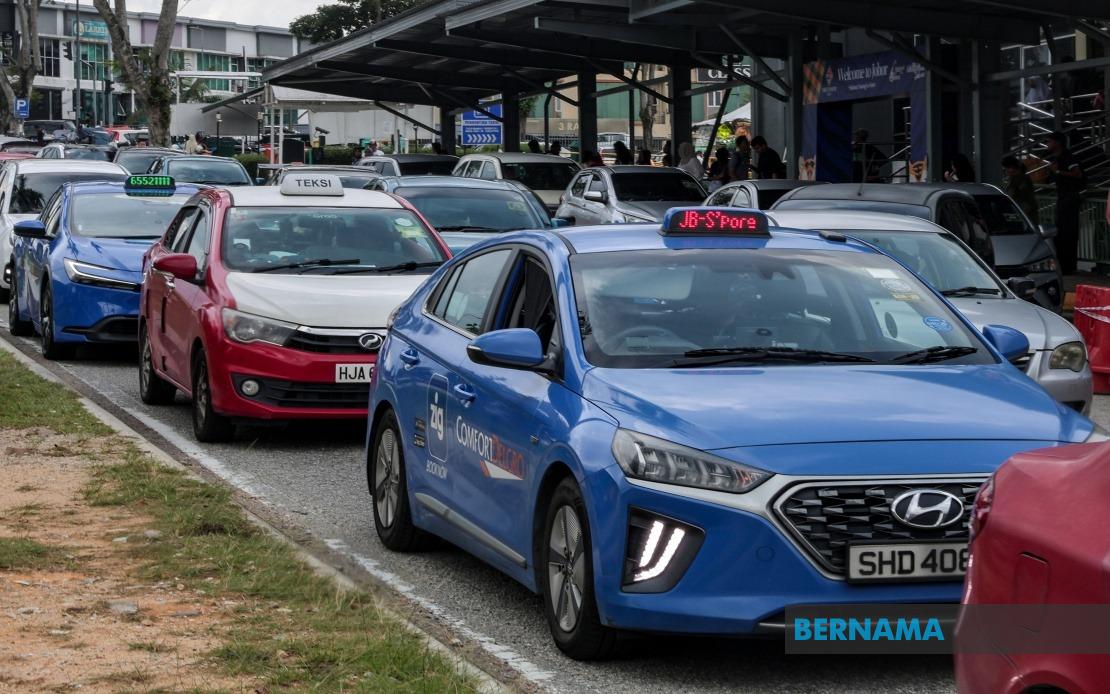
The Land Public Transport Agency (APAD) has unveiled a significant policy adjustment to the National MADANI Taxi Renewal Programme (Teksi MADANI), permitting taxi drivers to licence or replace their vehicles with models other than the Proton S70, marking a pragmatic shift in implementation strategy despite the government's initial framework announced in April.
This accommodation addresses the practical challenges encountered by drivers who either already operate existing vehicles or have struggled to secure hire-purchase financing approval for the programme's flagship Proton S70 sedan offering. The concession demonstrates APAD's recognition that a one-size-fits-all approach may inadvertently exclude deserving participants from benefiting under the broader transformation initiative designed to modernise Malaysia's taxi industry.
When Transport Minister unveiled the programme's framework on April 23, the policy clearly indicated that new applications and replacement vehicles would be voluntary, yet exclusively centred on acquiring the specially designed Proton S70 taxi package. However, this later clarification acknowledges that administrative rigidity could undermine the programme's inclusive ambitions, particularly for drivers facing financing hurdles or those already committed to alternative vehicle arrangements.
Taxi drivers are actively encouraged to transition into Teksi MADANI to access the comprehensive incentive package embedded within the programme. Nonetheless, APAD's statement emphasises that for applicants confronting barriers—whether prior vehicle ownership or unsuccessful hire-purchase applications—the agency maintains an accommodating stance permitting alternative vehicle selections beyond the Proton S70 specification.
Existing taxis not exchanged under the programme retain operational validity until reaching their designated vehicle age limits, ensuring that drivers face no sudden prohibitions if they choose not to participate or cannot immediately do so. This measured approach prevents disruption to the livelihoods of drivers navigating the transition period.
Prime Minister Datuk Seri Anwar Ibrahim formally launched Teksi MADANI on July 3, establishing a revolutionary framework wherein taxi drivers transition from the traditional leasing model to become outright vehicle proprietors. This structural shift represents one of the most significant policy transformations affecting Malaysia's taxi sector in decades, dismantling the long-entrenched leasing relationships that have characterised the industry's operational model.
The Proton S70 sedan was deliberately selected as the programme's standardised taxi model, embodying contemporary design aesthetics and operational efficiency. Notably, this model dispenses with conventional rooftop identification signage, projecting a modern appearance whilst utilising a distinctive vehicle registration series commencing with the letters "GET"—a distinctive identifier that will transform taxi visibility on Malaysian roads.
Recognising the substantial uptake and positive reception of the initial framework, Prime Minister Anwar announced a supplementary allocation of RM10 million designated specifically for the Old Vehicle Replacement Matching Grant Programme benefiting taxi drivers. This additional funding commitment, announced following Budget 2026's initial RM10 million allocation for Teksi MADANI implementation, underscores the government's determination to facilitate smoother industry transition and remove financial impediments confronting participating drivers.
For Malaysian taxi drivers and the broader transportation sector, this clarification carries significant implications. The flexibility provision acknowledges economic realities: many drivers operate within constrained financial parameters where securing fresh hire-purchase agreements proves challenging, whilst others have invested substantially in existing vehicles they wish to retain. By permitting alternative vehicle selections, APAD effectively broadens the programme's accessibility without abandoning the modernisation objectives embodied in the Proton S70 specification.
The policy adjustment also reflects sophisticated implementation management. Rather than rigidly enforcing the original mandate, APAD has calibrated its approach to balance programme integrity—encouraging adoption of the standardised Proton S70—with pragmatic inclusivity. This flexibility potentially accelerates driver participation rates by removing institutional barriers that would otherwise exclude otherwise-eligible candidates.
From a sectoral perspective, the modified framework demonstrates how transformative government initiatives must maintain adaptive capacity when confronted with ground-level implementation realities. Whilst the Proton S70 remains the preferred option, offering alternative pathways ensures that drivers representing Malaysia's estimated 60,000-plus taxi workforce can transition toward vehicle ownership without sacrificing existing arrangements or facing insurmountable financing obstacles.
Looking forward, this policy clarification may also influence wider regulatory frameworks governing Malaysia's taxi industry. As the Teksi MADANI programme matures, APAD's demonstrated flexibility could establish precedents for balancing standardisation with operational flexibility—a tension that frequently emerges when government initiatives attempt reconciling national modernisation objectives with heterogeneous stakeholder circumstances.

