Cairo's Arab League leadership has escalated its diplomatic pressure on the Trump administration, with Secretary-General Nabil Fahmy issuing an urgent appeal for the United States to intervene in Israeli government conduct toward Palestinians. Speaking ahead of a Washington meeting between Trump and Israeli Prime Minister Benjamin Netanyahu, Fahmy painted a grim picture of a region careening toward unprecedented conflict, describing the current trajectory as approaching "a moment of explosion on more than one level."
The Arab League chief rooted his concerns in what he characterised as a comprehensive failure to advance Palestinian interests. The stalled Palestinian question sits at the heart of regional instability, Fahmy argued, compounded by what he termed "reckless escalation and brinkmanship policies" tied to the broader Gulf crisis. His statement reflects growing frustration among Arab states that Washington's Middle East strategy has insufficiently prioritised restraint on Israeli actions that Arab leaders view as destabilising and counterproductive to any eventual settlement.
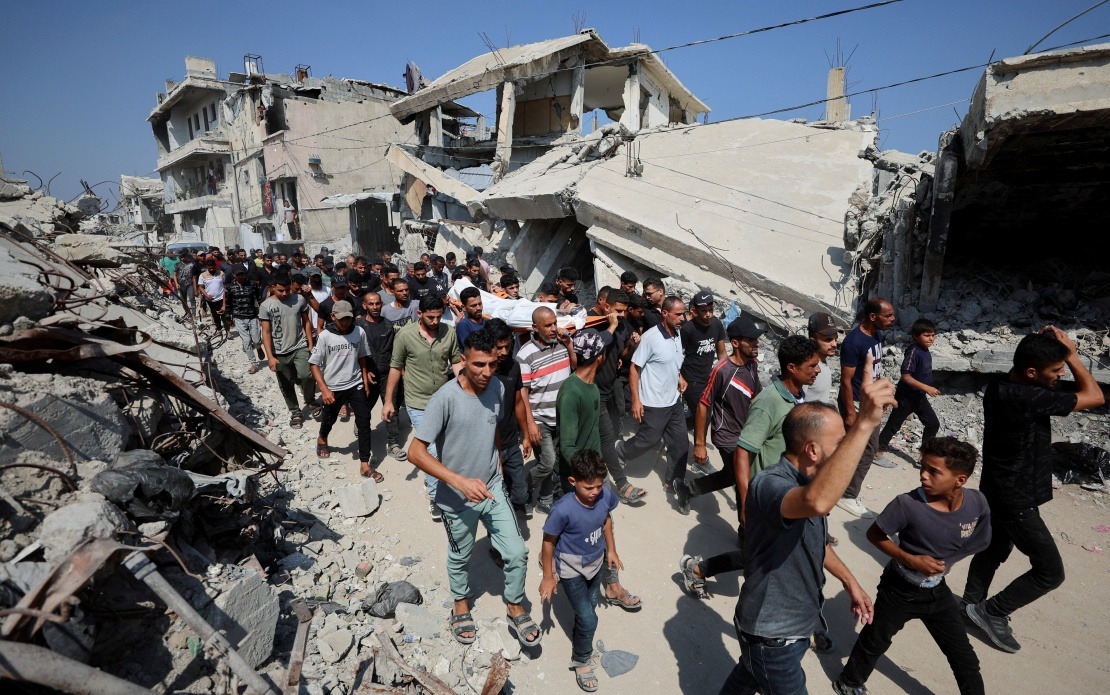
The scale of the humanitarian toll underlying these political warnings is substantial. Israeli military operations in Gaza have resulted in more than 73,000 deaths and 174,000 injuries since October 2023, according to casualty figures cited by the Arab League. Simultaneously, Israeli forces have intensified operations in the occupied West Bank, where nearly 1,200 Palestinians have been killed during the same timeframe. These figures underscore the urgency animating Fahmy's rhetoric—for Arab League members, the human cost of prolonged conflict threatens to become irreversible.
The regional security architecture has grown more fraught following direct military confrontation between the United States and Iran. A February joint US-Israeli military campaign targeting Iranian positions prompted Tehran to launch retaliatory strikes against Gulf states hosting American military infrastructure. This tit-for-tat escalation exemplifies how interconnected Middle Eastern flashpoints have become, with developments in one theatre rapidly triggering responses across the region's broader security environment.
Fahmy's appeal to Trump carries particular weight given the incoming administration's stated interest in reviving peace negotiations. The Arab League chief explicitly referenced Trump's September 2025 twenty-point Gaza proposal, which envisions a phased approach including an initial ceasefire, coordinated prisoner exchanges, incremental Israeli military withdrawal, establishment of transitional Palestinian governance structures, and international-backed reconstruction efforts. For Arab leaders, this framework represents a viable pathway if the Trump administration can effectively pressure Israeli policymakers to accept its terms.
Central to the Arab League's grievances is the Israeli settlement expansion programme in occupied territory, which Fahmy characterised as part of a deliberate campaign to "completely eliminate the Palestinian presence." Arab states view illegal settlement construction as incompatible with any two-state solution and as evidence of Israeli government rejection of genuine Palestinian sovereignty. The Arab League leader urged Washington to enforce consequences against what he called "repeated Israeli violations in East Jerusalem" and to curtail military operations against West Bank Palestinian communities.
The Arab League's intervention also signals concern about potential spillover effects into other regional conflicts. Fahmy called for urgent restoration of US-Iran diplomatic channels and resumption of negotiations aimed at de-escalating tensions, securing respect for neighbouring countries' sovereignty, and reopening critical maritime passages. The reference to the Bab el-Mandeb Strait in the Red Sea underscores Arab anxiety about how Middle Eastern instability affects global shipping and energy security—consequences that extend beyond the immediate conflict zone.
For Southeast Asian observers and policymakers, the Arab League's warning carries implications for regional stability beyond the Middle East. Many Southeast Asian nations maintain significant economic ties to Gulf states and depend on uninterrupted maritime passage through Middle Eastern waters for trade and energy imports. Prolonged Israeli-Palestinian tensions that trigger broader regional warfare could disrupt shipping corridors, elevate global energy prices, and create refugee flows that eventually affect Asian nations. Malaysia, with its significant Arab diaspora and Islamic identity, faces particular pressure to balance humanitarian concerns against economic interests.
The Arab League's appeal also highlights the limits of Arab institutional power in shaping great power decisions. While Fahmy speaks for 22 member states representing over 400 million people, historical experience suggests Arab League statements carry less weight in Washington than direct negotiations between individual Arab governments and American leadership. The effectiveness of this collective Arab position therefore depends on whether key Gulf states—particularly Saudi Arabia and the UAE—amplify these concerns through bilateral channels with the Trump administration.
Trump's forthcoming meeting with Netanyahu will be closely monitored across the Arab world as an indicator of whether the new American administration intends to exert meaningful leverage on Israeli policymaking. Arab governments fear that Trump's historically pro-Israel positioning and his incoming administration's hawkish Middle East team may result in a green light for further Israeli military escalation. Fahmy's pre-meeting statement represents an attempt to establish red lines before such discussions occur, positioning the Arab League as a concerned stakeholder that cannot be ignored in any serious peace initiative.

