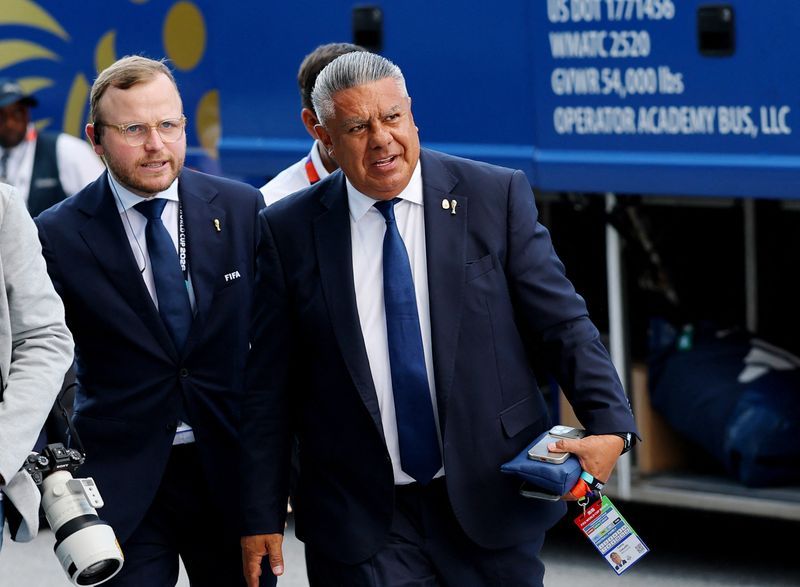
Argentina's football association moved swiftly on Wednesday to dispel mounting reports that its president Claudio Tapia and treasurer Pablo Toviggino had been compelled by United States courts to provide testimony in an ongoing investigation. The AFA issued a categorical denial, characterising claims about judicial summonses as entirely without foundation. The emphatic response came as media outlets across Argentina and internationally amplified allegations that federal agents had detained both officials at New York's JFK Airport, an incident that allegedly unfolded as the national squad prepared to depart following the World Cup final.
While the AFA categorically rejected suggestions that its two senior executives had been formally summoned, the organization did acknowledge that a third party had been ordered to appear before a US grand jury. This distinction proves significant: the AFA's statement explicitly stressed that US authorities had not directed any legal action at Tapia or Toviggino personally, and crucially, had not seized any electronic devices or personal property from either man. The association's carefully worded response attempted to separate fact from what it characterized as unfounded speculation dominating local and international media coverage.
Accounts from those present at the airport painted a more dramatic picture of the Monday morning incident. According to witnesses, federal agents questioned both Tapia and Toviggino for approximately thirty minutes aboard a bus stationed on the tarmac as the Argentine team prepared for departure. The length and circumstances of this questioning fuelled speculation about the nature and scope of US government interest in the football association's operations. Such an encounter, regardless of its formal legal status, would understandably prompt concern among football officials already facing heightened scrutiny of their administrative practices.
The broader context involves substantial questions about Argentine football finances. Infobae, a prominent local news outlet, reported that US authorities are examining commercial contracts linked to the AFA valued at more than $300 million. This investigative focus does not emerge in isolation. Rather, it forms part of a wider examination of financial irregularities within Argentine football that intensified following December raids conducted as part of a money-laundering investigation. Such probes, when they involve federal agents from major financial centres like the United States, typically signal serious concerns about cross-border fund flows or potential violations of international financial regulations.
The timing of these developments carries particular significance for Argentine football's international standing. The nation had just completed its participation in the World Cup final, a moment of national sporting pride that now became entangled with criminal investigation proceedings. The convergence of these events—triumphant sporting achievement immediately shadowed by federal scrutiny—created an uncomfortable situation for both the football association and the national government, raising questions about the governance structures within one of world football's most prominent institutions.
For Malaysian and Southeast Asian observers, the case underscores how sports organisations with significant commercial operations face increasingly sophisticated international regulatory oversight. Football associations throughout the region, many managing television rights, sponsorship agreements, and betting-related revenue streams worth hundreds of millions of dollars annually, should note the willingness of US authorities to investigate financial arrangements that may involve American companies, investors, or financial institutions. The globalisation of football finance means that even domestic matters can trigger international legal proceedings.
The AFA's formal statement went further than merely denying the summons claims. The association specified that the disputed document imposed no personal obligations on either Tapia or Toviggino, ordered no appearance before judicial authorities, created no procedural requirements for either official, and contained no record of property seizures or confiscations affecting them personally. This detailed enumeration suggested that the association possessed knowledge of what the document actually contained and was directly refuting point-by-point what it described as mischaracterisations in media reports.
Yet the very necessity of such an elaborate denial raised questions about what precisely had occurred at the airport. If the encounter was routine and informal, why did it require such extensive clarification? The existence of documented governmental interest—even if not framed as a formal summons—indicated that US authorities possessed information warranting further investigation into AFA operations. The distinction between being summoned personally and being questioned regarding an investigation targeting the organization proved thin in practical terms.
The investigation's focus on commercial contracts worth more than $300 million points toward allegations of financial impropriety on a substantial scale. In the context of Argentine football's governance challenges, such amounts represent enormous sums that could involve sponsorship agreements, television broadcasting rights, merchandise licensing, or other revenue-generating arrangements. The involvement of US authorities suggests potential violations of American export controls, financial regulations, or laws governing money laundering and sanctions compliance.
For the AFA and Tapia specifically, managing this international legal exposure while leading South America's most successful football nation presents considerable challenges. The organization must simultaneously maintain credibility with global football governing bodies, satisfy domestic stakeholders including players and fans, and cooperate with investigating authorities across multiple jurisdictions. The denial statement represented an attempt to contain reputational damage while signalling full transparency to international oversight mechanisms.
The broader implications extend beyond individual personalities or single incidents. As football's commercial value has expanded exponentially over recent decades, governance structures within national associations have struggled to keep pace with regulatory expectations in major financial markets. The US investigation into Argentine football finances reflects a global trend toward greater scrutiny of sports organisations' financial dealings, particularly where government agencies or international bodies suspect irregular fund flows or opacity in commercial arrangements.
Moving forward, the outcome of any US grand jury proceedings will significantly influence how football associations throughout the region manage their financial operations and contractual arrangements. Enhanced regulatory attention, whether from American authorities or other international bodies, increasingly shapes the operational environment for sports organisations worldwide. For Southeast Asian football associations managing substantial commercial interests, the Argentine situation serves as a cautionary case study regarding the importance of transparent financial governance and meticulous record-keeping in an era of intensifying international regulatory oversight.

