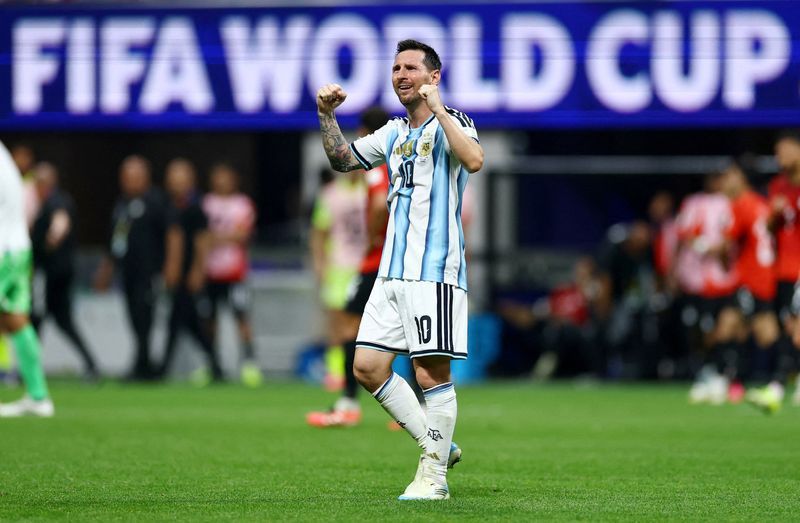
Argentina's passage through the knockout rounds of the World Cup has proven far more treacherous than their commanding group-stage performance suggested, yet the defending champions have discovered an unexpected source of strength in adversity. Following a dramatic 3-2 victory over Egypt in Atlanta on Tuesday, Lionel Scaloni's squad remains in contention for back-to-back titles, now preparing for a Saturday quarter-final clash against Switzerland in Kansas City. The recovery from two goals down with merely eleven minutes on the clock represents the kind of mental fortitude that championship teams must possess, even if the route to this point has exposed concerning defensive fragilities.
The contrast between Argentina's group-stage dominance and their subsequent struggles in knockout football has been striking. During the preliminary rounds, the holders navigated past Algeria, Austria and Jordan with the kind of efficiency expected of favourites, conceding just one goal across three matches when Scaloni chose to rotate his starting eleven and preserve key players. That defensive solidity has evaporated in the knockout phase, where Argentina have now shipped four goals across two matches, a deterioration that demands immediate tactical reassessment ahead of Switzerland's visit. Yet rather than viewing these adversities as harbingers of premature elimination, the Argentine squad has embraced the narrative that struggle breeds resilience in tournament football.
Lionel Messi's inspiration in directing the comeback against Egypt crystallised the fighting spirit that has defined this Argentina side throughout their campaign. The Barcelona legend was instrumental in orchestrating a recovery that seemed improbable when Egypt's lead stretched to two goals with the clock running down. Former striker Carlos Tevez, commenting for ESPN Argentina, captured the essence of the team's mentality after the match, emphasising that their true assessment rested not in statistical dominance but in the unwavering refusal to surrender—a quality that often separates champions from merely capable sides in knockout tournaments.
Messi himself articulated the collective mindset during post-match interviews, acknowledging that Argentina's journey thus far had been consistently demanding whilst emphasising that his squad possessed the conviction required to overcome any deficit. The midfielder's philosophy reflected a team conditioned by recent experiences to maintain belief regardless of circumstances on the pitch. Leandro Paredes amplified this sentiment, insisting that even when Egypt's advantage seemed insurmountable, the players harboured genuine conviction in their capacity to alter the match's trajectory through sustained effort and cohesion.
Scaloni's assessment of the performance suggested that while Egypt presented different challenges than Cape Verde in the previous round, Argentina had actually demonstrated improved football in the latter stages. The coach noted that his side created multiple scoring opportunities throughout the opening half, though Messi squandered a penalty that could have altered the match's complexion significantly. This perspective reframes the victory not merely as an escape but as evidence of Argentina's capacity to control matches whilst simultaneously needing to improve their clinical finishing and conversion rates when opportunities present themselves.
The defensive vulnerabilities exposed across two knockout encounters cannot be dismissed as inconsequential matters. Conceding four goals in quick succession represents a marked deterioration from the group stage's solidity, suggesting either tactical adjustments by opponents or concentration lapses that Scaloni must address before Switzerland, a team renowned for their organised and methodical approach to tournament football. Yet Scaloni's public comments indicate confidence that his team's overall system remains sound, with the lapses attributable to specific moments rather than systemic collapse.
Swiss football carries considerable pedigree in World Cup tournaments, a fact Scaloni acknowledged when describing his approaching opponents as possessing an incredible tradition and outstanding players seasoned by extensive international experience. The quarter-final will test not only Argentina's defensive fortifications but also their ability to impose their attacking philosophy against a team unlikely to grant them the space and opportunities that weaker opponents might afford. Switzerland's methodical approach and defensive discipline suggest Argentina cannot rely upon the kind of dramatic late interventions that carried them past Egypt.
Argentina's training schedule in Kansas City ahead of the Swiss encounter will prove crucial in addressing the specific vulnerabilities that knockout football has exposed. Scaloni will need to balance his public confidence in the team's capabilities with honest assessment of the defensive frailties and the marginal conversion efficiency that nearly cost his side dearly against Egypt. The intensity with which Argentina can reinforce their defensive organisation whilst maintaining the attacking thrust that defines their identity will largely determine whether they progress deeper into the tournament.
The broader context of Argentina's World Cup campaign suggests that championship sides need not play flawless football throughout their journey, provided they possess sufficient character to overcome inevitable setbacks. The comebacks against Cape Verde and Egypt, whilst uncomfortable for supporters, may ultimately be remembered as the moments when this Argentina team's resolve was truly tested and validated. Should Scaloni's squad ultimately reclaim the World Cup trophy, analysts will likely point to these tense knockout encounters as the crucible in which their second consecutive title was forged, rather than the group stage's more comfortable victories.

