As Argentina prepared for a crucial World Cup semi-final encounter with England in Atlanta, the nation's war veterans stepped into the spotlight with an unusual plea: keep the football pitch free from geopolitical tensions and historical grievances. The April 2 War Veterans Federation issued a carefully worded statement cautioning supporters and the broader public against weaponising the sporting contest as a vehicle for sovereignty claims over the South Atlantic islands known as the Falklands to Britain and the Malvinas to Argentina. The intervention underscored the deep emotional currents that continue to flow beneath this particular fixture, even four decades after the armed conflict that scarred both nations.
The 1982 war between Argentina and Britain over the disputed territory remains etched into national memory on both sides. That brief but brutal conflict claimed 649 Argentine military personnel and 255 British combatants, leaving families across both countries bereaved and communities marked by loss. For many Argentines, the islands represent an unfinished chapter in the nation's territorial story, while for Britain they remain an overseas territory whose sovereignty is fiercely defended. This historical wound means that whenever the two nations meet on the football field, there exists an undercurrent of tension that transcends the sport itself. The veterans' federation recognised this reality and sought to navigate it with nuance, acknowledging the legitimate claims while firmly distinguishing between sporting rivalry and national causes.
The federation's statement articulated a sophisticated position that honoured fallen soldiers without channelling that memory into anti-British sentiment. "Sovereignty is defended in international forums through diplomacy, historical truth and the peaceful, non-negotiable claim enshrined in our national constitution," the group declared, drawing a clear demarcation between diplomatic channels and football grounds. This framing represented an appeal to reason at a moment when passion threatened to overtake pragmatism. The federation recognised that Argentine pride in the national colours could coexist with a commitment to avoiding xenophobia or hatred directed at English supporters and players. Their memorable phrase—"The ball rolls, pride in our colours multiplies, but memory remains intact"—captured this balancing act, suggesting that one need not diminish either sporting enthusiasm or historical remembrance to maintain them as distinct spheres.
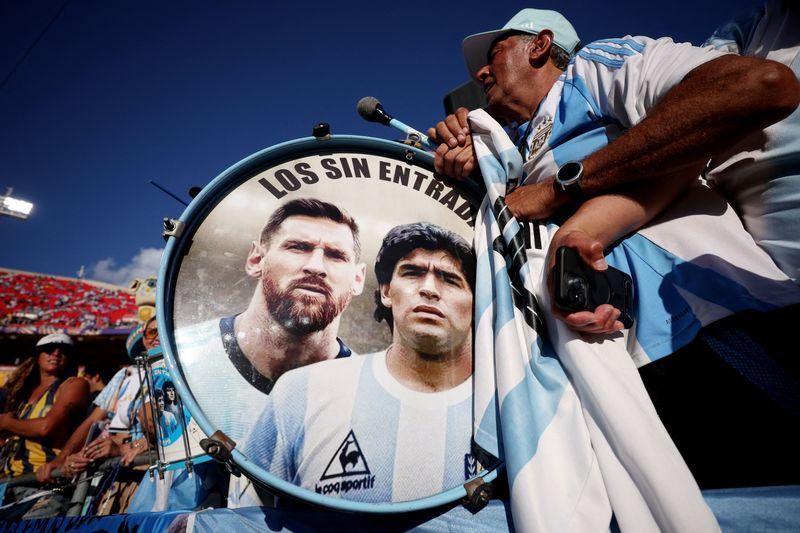
During the tournament in the United States, Argentine fans and players had already begun incorporating references to the Malvinas into their chants, blending football celebration with nationalist messaging. Supporters also wove mentions of the late Diego Maradona into their songs, alongside acknowledgment of Lionel Messi's quest to claim a second World Cup title before his international retirement. These artistic expressions, while natural outlets for supporter sentiment, risked transforming a sporting encounter into something more politically charged. The war veterans' federation sought to prevent such a transformation not by asking fans to suppress their feelings but by asking them to channel their passion into football rather than historical reclamation.
Argentina's official football establishment appeared aligned with this message of restraint. Manager Lionel Scaloni had already begun tempering expectations and statements about the contest, repeatedly emphasising that football remained the sole focus of his team's preparation. Scaloni's approach reflected both prudent leadership and an understanding that allowing political dimensions to dominate the narrative could distract his squad from their primary objective. The coaching staff's determination to keep the team mentally anchored on tactical considerations and sporting performance rather than historical context suggested a mature approach to managing the inherent sensitivities surrounding this fixture.
England's representatives echoed this sentiment with equal clarity. Goalkeeper Jordan Pickford, speaking to reporters on the eve of the semi-final, stressed that the match represented "just a game of football." His observation that "two proud nations" would meet but "the football will do its talking" reflected the English team's desire to let their performance on the pitch communicate their capability. Pickford's words carried particular weight because goalkeepers occupy a unique position in team culture, often serving as stabilising figures whose pronouncements can either calm or inflame team morale and public sentiment. His measured tone contributed to the collective effort by both sporting establishments to prevent the match from becoming a proxy war for unresolved historical grievances.
The Argentina-England rivalry carries layers of complexity that extend well beyond the Malvinas dispute, rooted instead in World Cup history and football culture. The two nations had met memorably in the 1986 quarter-final, a match forever defined by Diego Maradona's infamous "Hand of God" goal, where his deliberate handball went undetected by match officials. That incident crystallised the tension and drama that characterises their encounters, creating a rivalry narrative that modern players and supporters inherit. Each subsequent meeting carries echoes of that moment, adding psychological dimension to an already emotionally charged fixture. Yet this sporting history, while intense, operates within the accepted boundaries of competition and could be discussed without the added weight of unresolved territorial disputes.
Argentina continues to pursue its claim to the Malvinas through diplomatic and international mechanisms, including formal appeals to the United Nations. Britain maintains military presence on the islands and shows no signs of negotiating over sovereignty. This impasse means that the territorial dispute will remain active in Argentine political discourse regardless of sporting outcomes. The war veterans' federation appeared to recognise this permanent tension and sought to establish a principle: that the football stadium need not serve as an arena for expressing this dispute. Their intervention suggested that the maturity of a nation can be measured partly by its capacity to compartmentalise different domains of national life—keeping diplomatic and military matters separate from sporting contests, even when the latter involve a historic rival.
The federation's call for restraint also reflected broader concerns about xenophobia and social toxicity in football. In contemporary sport, tensions between nations can rapidly escalate into concerning expressions of hatred, harassment, and sometimes violence among supporter bases. By encouraging supporters to distinguish between sporting passion and national grievance, the veterans effectively advocated for a more civilised expression of football fandom. Their appeal implied that supporting Argentina and desiring victory need not require denigrating England or English supporters. This framing represented a subtle but significant cultural intervention, attempting to reshape how a particular section of Argentine society understood their relationship to the upcoming match.
For Southeast Asian observers and commentators, Argentina's internal debate offers instructive lessons about managing sports rivalries in regions where historical disputes and contemporary geopolitical tensions intersect. Several nations in this region maintain overlapping territorial claims, historical grievances, and recurring diplomatic tensions that sometimes threaten to colour sporting encounters. The model Argentina's war veterans have outlined—distinguishing clearly between legitimate national interests pursued through proper channels and the separate realm of sporting competition—provides a template for mature international sporting relationships. Their intervention suggests that acknowledging historical wounds and legitimate claims need not require transforming football matches into expressions of grievance or platforms for political messaging.
As Wednesday's semi-final approached, both Argentina and England had explicitly positioned themselves on the side of sporting purity. Yet the very fact that war veterans felt compelled to issue their statement underscored how easily this match could tip into becoming something beyond football. The federation's words represented a cultural intervention from those who had lived through the actual conflict, lending them particular moral authority. They had seen firsthand the cost of armed confrontation and possessed standing to speak about the importance of channelling national passion into diplomatic rather than hostile venues. Their call suggested that in the modern era, true strength lies not in conflating historical disputes with sporting contests but in maintaining the discipline to keep them separate.

