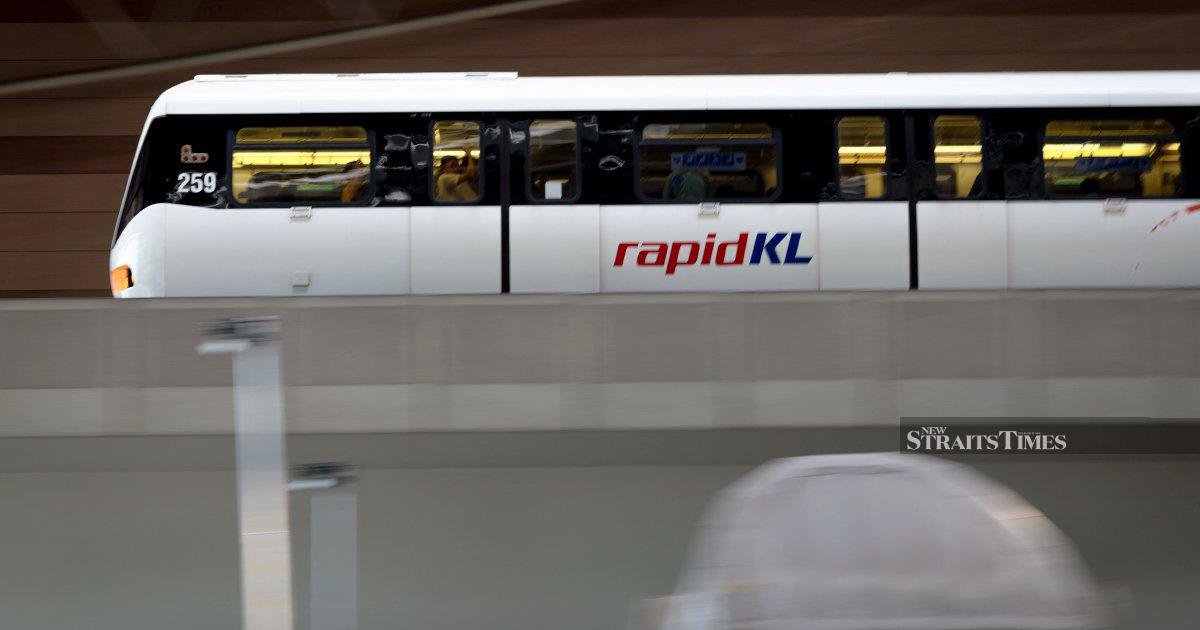
A 38-year-old man was taken into custody by authorities following an unauthorised incursion onto the railway tracks at Jalan Meru Station on the Rapid KL Shah Alam Line, which prompted a temporary halt to train operations in the affected area. The incident, which unfolded in the early hours of the morning, prompted an immediate response from Rapid KL and transport officials who work to maintain service reliability across the greater Klang Valley commuter network.
The Shah Alam Line, one of three lines comprising Rapid KL's rail system alongside the Kelana Jaya Line and Ampang Line, serves a critical role in connecting residential areas and employment centres throughout the Selangor region. Service disruptions on this corridor affect tens of thousands of daily commuters who depend on the system to reach offices, educational institutions, and shopping centres. The line's importance to regional transport infrastructure underscores the operational challenges that unauthorised track access presents to the broader commuting public.
Rapid KL responded swiftly to contain the impact of the trespass. Engineering teams assessed the safety of the tracks and station facilities following the intrusion, a standard protocol to ensure that resumed operations would not pose additional risks to passengers and staff. The investigation into how the individual gained access to restricted railway areas is ongoing, raising questions about perimeter security at station facilities throughout the Rapid KL system.
This incident highlights the recurring challenge of railway intrusions across urban transit networks in Malaysia. Track trespassing poses severe hazards not only to the trespasser but also to train operators and other commuters who depend on rail services. Rapid KL and authorities regularly emphasise that railway tracks are dangerous restricted zones where electrified rail and moving trains create life-threatening conditions. Public awareness campaigns have sought to deter such behaviour, yet incidents continue to disrupt services and strain operational resources.
The specific location, Jalan Meru Station, sits within the Sungai Petani corridor and serves as a transit hub for connections throughout the northern Selangor region. The station's design and access points are typical of intermediate stops along the Shah Alam Line, where foot traffic during peak hours substantially exceeds evening and night-time usage. Early morning hours when this incident occurred typically see lower passenger volumes but heightened vulnerability to unauthorised access when station staffing may be reduced.
Police investigations are examining the circumstances leading to the trespass. Questions under examination likely include whether the individual entered deliberately or inadvertently, whether mental health or distress was a contributing factor, and how institutional security procedures either facilitated or failed to prevent the intrusion. Such investigations serve a dual purpose: they address the immediate criminal conduct while providing data that informs broader station security protocols across the Rapid KL network.
Transport authorities nationwide face mounting pressure to balance operational efficiency with passenger safety and security. Enhanced monitoring systems, better fencing, restricted-access gates, and increased personnel presence at vulnerable points have been advocated by safety experts. However, implementing such measures across an extensive network requires sustained investment and coordination between transport operators, local authorities, and law enforcement agencies. The costs must be weighed against the frequency and severity of incidents, a calculation that continues to evolve as urban rail networks expand.
The broader implications for Rapid KL extend beyond this single incident. Pattern analysis of trespass events can reveal systemic vulnerabilities that, when addressed, prevent future disruptions. Commuters whose journeys are derailed by such incidents often experience cascading delays affecting work schedules, educational commitments, and personal appointments. The cumulative economic impact across the Klang Valley extends to employers, educational institutions, and the broader regional economy that depends on reliable commuter transport.
Rapid KL has not disclosed whether additional security measures will be implemented specifically at Jalan Meru Station or whether this incident triggers network-wide protocol reviews. Communications from transport authorities following such events typically balance transparency with operational security, avoiding the disclosure of specific vulnerability details that might inadvertently invite further incidents. The arrested individual remains in custody pending further investigation and potential charging under relevant transport legislation.
The Shah Alam Line serves approximately 150,000 daily passengers, making it one of Malaysia's busier commuter rail corridors. Service reliability remains critical to urban mobility in Selangor, where alternative transport options during rail outages remain limited. As the Klang Valley continues to develop and commuter demand intensifies, preventing disruptions from preventable causes—including unauthorised track access—becomes increasingly important to maintaining public confidence in transit systems.

