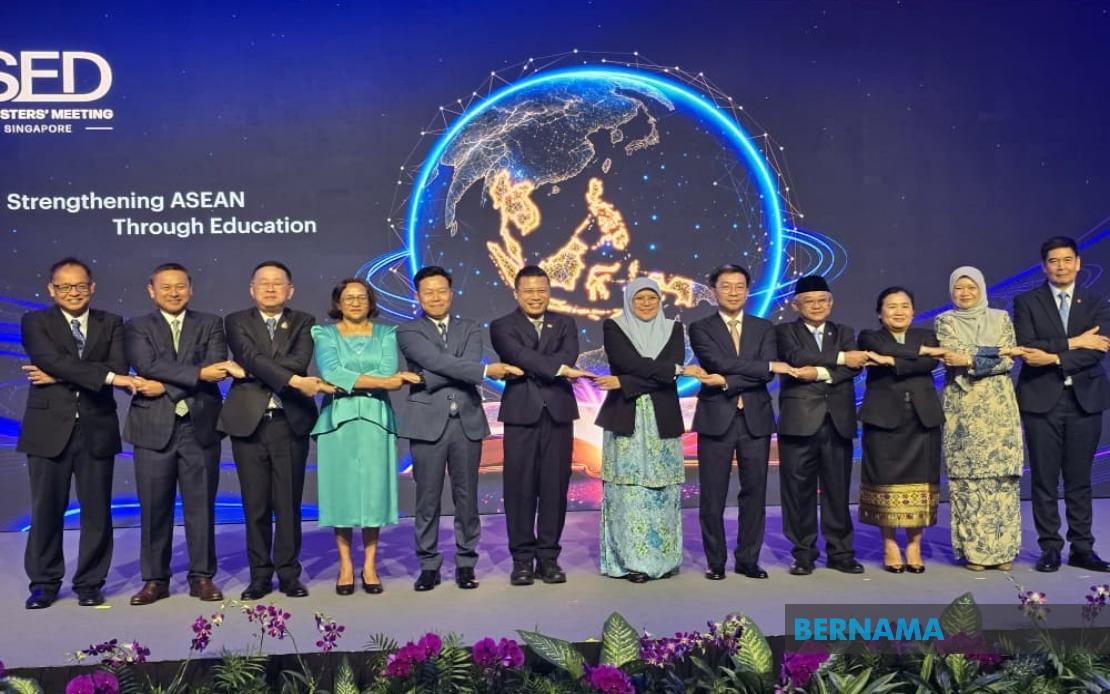
Southeast Asia's ten education ministers gathered in Singapore this week to formally adopt an ambitious five-year strategic framework designed to reshape how the region approaches learning and student development. The launch of the Five-Year Work Plan on Education 2026-2030 represents a coordinated effort among ASEAN member states to establish shared educational priorities that will guide classroom practices and policy decisions across the bloc. The initiative reflects growing recognition that education systems throughout the region must evolve together to address common challenges posed by globalisation, technological disruption, and shifting workforce demands that transcend national borders.
The overarching vision articulated by the participating ministers emphasises the need to cultivate individuals who possess not only technical competence but also the resilience and adaptability required in an increasingly complex world. Alongside this human development imperative, the plan seeks to strengthen regional identity by anchoring educational curricula in shared ASEAN values and principles. This dual approach attempts to balance the universal skill sets demanded by global markets with efforts to reinforce collective identity and cultural continuity across the ten-nation bloc. By framing education as a vehicle for both individual advancement and regional cohesion, the work plan positions learning as central to ASEAN's broader political and economic integration agenda.
Singapore's education minister, Desmond Lee, emphasised that member states recognise education systems must remain responsive to rapid changes in global economic structures and technological landscapes. He highlighted three foundational pillars that will anchor the regional education strategy moving forward. Artificial intelligence in education emerged as the first priority, reflecting widespread acknowledgment that AI tools are transforming pedagogical approaches and that educators across ASEAN must develop frameworks for responsible and effective technology integration. The second pillar focuses on strengthening Science, Technology, Engineering and Mathematics education—critical fields that consistently show shortages across regional labour markets and that underpin competitiveness in high-value industries.
The third strategic focus area, holistic development, signals a departure from purely academic or vocational measurement and instead encompasses student well-being, character formation, and the cultivation of soft skills such as collaboration and critical thinking. This comprehensive approach recognises that educational outcomes extend beyond standardised test scores and employability metrics. Lee articulated Singapore's commitment to building on foundations established by previous ASEAN chairs and to advancing the collective vision through concrete actions during Singapore's tenure as the bloc's education sector chair for 2026-2027.
Equitable access to quality learning remains a persistent challenge throughout Southeast Asia, where disparities in educational infrastructure, teacher quality, and resource availability often correlate with geographic location and socioeconomic status. The work plan explicitly targets this inequality, committing ASEAN member states to developing mechanisms that broaden opportunity and reduce educational gaps that constrain social mobility. This commitment carries particular relevance for Malaysia and other developing economies where rural-urban divides in educational provision remain substantial. By elevating equity to a central concern within the regional framework, ASEAN ministers acknowledge that sustainable development and regional stability depend partly on ensuring that quality education reaches beyond privileged urban populations.
The mechanics for implementing this ambitious agenda involve establishing institutional mechanisms for coordination and knowledge-sharing across member states. Singapore Centre for Character and Citizenship Education will spearhead a regional research network dedicated to advancing aligned approaches to values education. This initiative reflects recognition that while each nation maintains sovereign control over curriculum content and educational policy, opportunities exist to establish common understandings and best practices around core educational principles. The research network will function as a clearing house where ASEAN member states—including Malaysia—can examine how different national systems integrate values education into curricula and identify transferable lessons and models.
Values education represents an increasingly significant element of educational agendas across Southeast Asia, as policymakers grapple with concerns about social cohesion, ethical conduct in public and private sectors, and national identity formation in multicultural societies. The platform created by Singapore's initiative will enable Malaysian educators and administrators to understand how neighbouring countries approach similar challenges, potentially yielding insights applicable to Malaysia's own curriculum development efforts. This comparative approach moves beyond the traditional pattern of isolated national policy-making and instead cultivates regional learning communities among education professionals.
Malaysian Education Minister Fadhlina Sidek's presence at the ministerial meeting underscored Malaysia's commitment to the collaborative framework and signals that Malaysia will integrate the plan's priorities into domestic educational planning. The inclusion of San Lwin, ASEAN's Deputy Secretary-General for the Socio-Cultural Community, reflected the organisation's broader institutional commitment to positioning the five-year plan as a central element of ASEAN's development trajectory rather than a peripheral initiative confined to education specialists.
The timing of this launch during Singapore's assumption of educational sector leadership positions Singapore to shape implementation priorities and establish the tone for regional cooperation through 2027. Given Singapore's advanced educational infrastructure and its international reputation for innovation in schooling, this leadership role carries symbolic weight that may encourage member states to embrace the more ambitious elements of the plan. However, the success of the framework ultimately depends on whether individual ASEAN nations integrate its priorities into their respective national education systems and whether they commit resources necessary for meaningful implementation rather than treating it as a rhetorical commitment alone.
The five-year plan arrives at a critical juncture when technological change is accelerating faster than education systems can typically adapt. Integrating artificial intelligence into classrooms, upgrading STEM instruction, and implementing holistic development approaches simultaneously across a diverse region of countries at varying levels of economic development and educational system maturity presents profound implementation challenges. Questions remain about resource allocation, teacher training requirements, curriculum redesign timelines, and mechanisms for monitoring progress. Yet by establishing this shared framework, ASEAN has created a platform upon which member states can coordinate responses to common educational challenges rather than attempting to address them in isolation, potentially yielding efficiencies and learning benefits that individual national systems might not achieve alone.

