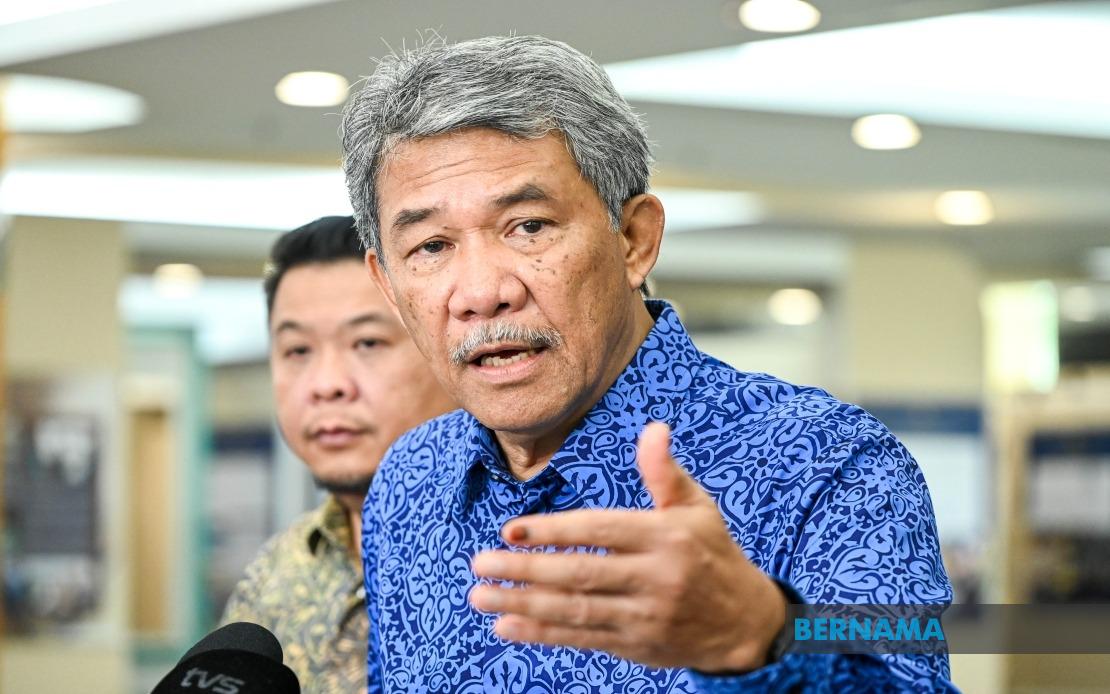
ASEAN remains far short of realizing its economic potential, with intra-regional commerce accounting for less than 25 per cent of total trade among member states, creating both a challenge and an opportunity for the bloc's ambitions to become the world's fourth-largest economy by 2030. Foreign Minister Datuk Seri Mohamad Hasan emphasized this gap while addressing the 59th ASEAN Day celebration in Putrajaya on Monday, signalling that closing the trade deficit between member nations is now central to the regional organization's strategic focus.
The shortfall underscores a fundamental structural weakness within ASEAN's integration efforts. While the bloc comprises over 650 million people and generates combined economic output exceeding USD 3 trillion, member states continue to rely heavily on external trading partners rather than deepening commerce with one another. This pattern reflects historical patterns of competition and complementarity among neighbours, as well as infrastructure and regulatory barriers that have persisted despite decades of regional cooperation frameworks.
Morehaps more significantly, Mohamad Hasan's remarks signal a pivotal shift in ASEAN's priorities away from purely political coordination toward pragmatic economic collaboration. The regional organization has long been critiqued for moving slowly on substantive economic integration while maintaining strong political consensus on non-interference. Today's messaging from Malaysia's Foreign Minister indicates that member nations increasingly recognize that sustained political stability and regional prosperity are inseparable from measurable economic gains.
The mechanisms already in place to facilitate trade growth demonstrate that ASEAN has not ignored the challenge. The framework for free movement of goods among member states represents a foundation upon which greater commerce can be built, yet the persistence of non-tariff barriers, varying regulatory standards, and logistical constraints has limited the real-world effectiveness of these arrangements. Rather than starting from scratch, the bloc must now focus on implementation and enforcement of existing agreements.
Malaysia's role as chair during the previous year proved instrumental in advancing this economic agenda. The administration successfully shepherded through the Kuala Lumpur Declaration and related resolutions that established a clearer roadmap for intra-regional collaboration. These initiatives, though sometimes appearing incremental in scope, represent genuine commitments from ten diverse nations with competing national interests, making their adoption itself a meaningful achievement.
The Philippines, assuming ASEAN's rotating chairmanship for the current year, has inherited both the momentum and the burden of these commitments. By advancing proposals and frameworks inherited from Malaysia's tenure, the Philippines demonstrates continuity in the bloc's economic strategy while building on established groundwork. This handoff reflects ASEAN's methodical approach to regional cooperation, where progress often depends on sustained effort across multiple leadership cycles.
Malaysia's newly designated position as the Permanent Shepherd or Permanent Auditor of the ASEAN Community 2045 vision carries particular significance for Malaysian interests and for the region's long-term trajectory. This role provides Kuala Lumpur with a degree of institutional leverage to ensure that intra-regional trade strengthening remains a priority even as attention and political capital shift between member states and competing initiatives. The designation suggests confidence among peers that Malaysia can credibly steward this agenda.
The 2030 target for becoming the world's fourth-largest economy represents an ambitious goal, yet one grounded in demographic and economic fundamentals. Achieving this status is entirely plausible if member nations can unlock greater integration. However, reaching it while maintaining internal trade below 25 per cent would require extraordinary growth driven almost entirely by exports to non-ASEAN markets—a scenario vulnerable to external shocks and global trade shifts beyond the region's control.
For Malaysia specifically, deeper intra-ASEAN trade offers tangible benefits. The country's manufacturing base could expand by securing more reliable regional supply chains and markets, while Malaysian services and financial expertise command respect throughout the bloc. A more tightly integrated ASEAN economy would favour Malaysia's position as a regional hub and transportation corridor.
The gap between current performance and stated ambitions reveals that ASEAN's integration, while genuine, remains incomplete. Border procedures, standards certification, and digital infrastructure across member nations continue to fragment the single market that on paper already exists. Closing this gap between formal agreements and practical implementation requires political will, investment, and possibly uncomfortable compromises on national sovereignty—precisely the issues that have constrained ASEAN's effectiveness historically.
Moving beyond 25 per cent intra-ASEAN trade share would fundamentally alter the bloc's relationship with the global economy. Rather than ten separate economies competing for external opportunities, a more integrated ASEAN would function increasingly as a consolidated actor in international commerce. This transformation could enhance negotiating power in global trade talks while insulating the region from individual nation's vulnerabilities.
The Foreign Minister's remarks should be read as both diagnosis and prescription. ASEAN has identified the challenge, positioned economic cooperation as central to its future relevance, and established institutional mechanisms to address the gap. What remains to be proven is whether member states will translate rhetorical commitment into sustained policy action across the difficult terrain of tariff reduction, regulatory harmonization, and infrastructure investment that actual integration demands.

