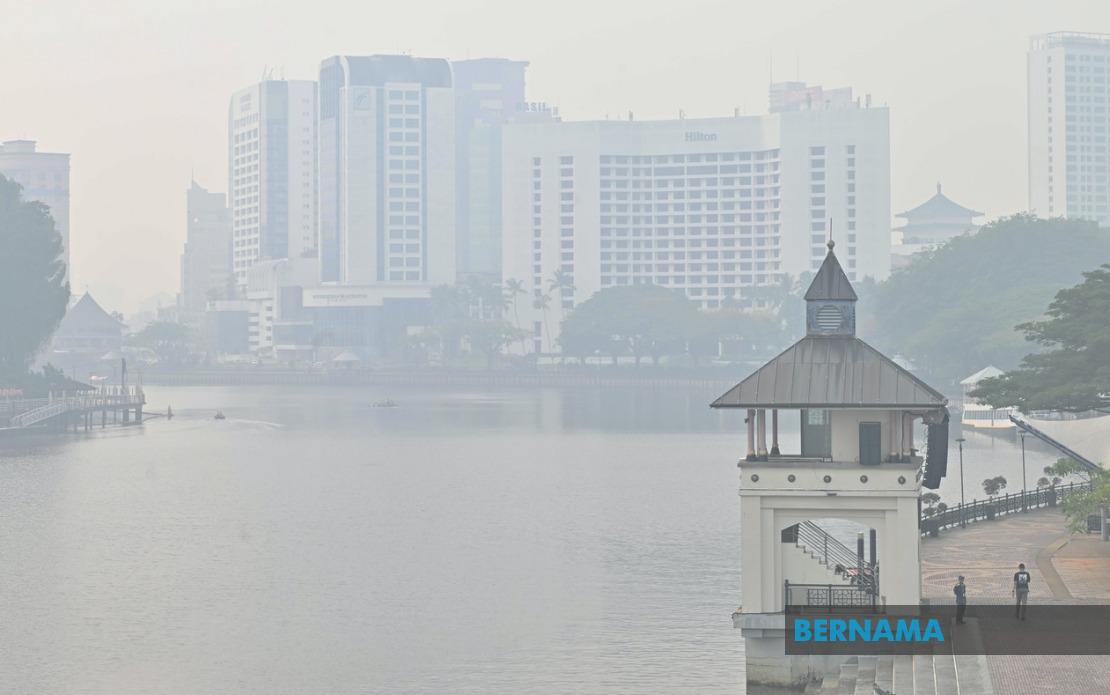
Transboundary haze has become so entrenched in Southeast Asian life that citizens increasingly accept it as inevitable—yet regional leaders continue to treat the crisis with the passivity of those managing a seasonal annoyance rather than a governance emergency. Social activist Tan Sri Lee Lam Thye is demanding nothing short of a comprehensive overhaul, calling on ASEAN member states to undertake an urgent high-level review of the ASEAN Agreement on Transboundary Haze Pollution and replace vague commitments with a rigorous, time-bound regional action plan backed by genuine enforcement powers.
The agreement in question has now operated for more than two decades since its signing in Kuala Lumpur on June 10, 2002, entering force the following year. Yet despite this extensive history of formal cooperation, Southeast Asia continues cycling through predictable episodes of choking haze, deteriorating air quality indexes that spike into hazardous levels, and the familiar spectacle of cross-border finger-pointing among nations. The persistence of this problem despite two decades of institutional frameworks suggests that the current approach has fundamentally failed to prevent recurring fires and smoke from blighting the region—a failure Lee argues demands a paradigm shift from reactive damage control to proactive prevention.
Lee's critique strikes at the heart of ASEAN's diplomatic culture: the preference for non-binding statements and face-saving compromise over muscular regional governance. He contends that haze cannot be reduced to a weather phenomenon or seasonal inconvenience but must be understood as a compound crisis spanning governance failures, environmental degradation, public health threats, and breached regional responsibilities. This reframing is crucial for Malaysian policymakers and citizens grappling with the economic costs of recurrent transboundary pollution—from healthcare burdens to productivity losses and tourism disruption. The stakes extend beyond comfort or convenience into fundamental questions of sovereignty, equity, and whether ASEAN can deliver tangible protections to its citizens or merely exchange symbolic pledges.
Weathering conditions present a complicating factor. The ASEAN Specialised Meteorological Centre has signalled that intensifying El Niño patterns combined with below-normal rainfall and prevailing wind currents are poised to elevate fire and haze risks across southern ASEAN territories. However, Lee correctly resists the temptation to attribute the crisis primarily to climatic forces beyond human control. While El Niño constitutes a natural climate phenomenon affecting regional moisture and atmospheric conditions, the translation of dry weather into transboundary pollution crises depends fundamentally on human decisions—particularly the deliberate use of open burning for land clearing and the inadequate regulatory oversight of forest management practices. Externalising blame to climate absolves policymakers and commercial actors of responsibility for choices they make in responding to environmental conditions.
The activist has advanced a substantive reform agenda addressing multiple dimensions of the problem. Strengthening the regional agreement requires establishing clear, quantifiable targets for fire prevention, hotspot reduction, and elimination of recurring pollution sources—moving beyond aspirational language toward measurable benchmarks against which ASEAN can be held accountable. Equally essential is robust accountability for corporations and individuals engaged in open burning or illegal land clearing, coupled with functional mechanisms for cross-border investigation, evidence-sharing, and enforcement when fires generate transnational harm. The current system lacks teeth; without consequences for those responsible for fires that pollute neighbouring airspace, the incentive structure remains skewed toward short-term economic gain over regional welfare.
Lee has also outlined an institutional architecture for preventing future crises through real-time coordination. A permanent regional haze response mechanism would integrate satellite monitoring with rapid information-sharing on hotspot locations, establishing joint firefighting capabilities and delineating clear responsibilities when serious episodes emerge. This represents a move toward the kind of integrated regional infrastructure that successful transboundary environmental governance requires—analogous to frameworks governing maritime safety or aviation standards. The proposal acknowledges that preventing haze demands not ad-hoc crisis management but standing institutional capacity primed for immediate deployment.
Advance preparation through joint prevention and early-warning systems timed to seasonal dry-season risks offers another preventive lever. Coupled with enhanced cooperation on peatland and forest management—sectors where land-use decisions directly determine fire vulnerability—this approach addresses vulnerabilities before they ignite into crises. Transparency in sharing hotspot information, disclosure of fire sources, and reporting enforcement actions would create mutual visibility into national implementation efforts, reducing the opacity that currently shields non-compliance. Malaysian officials and civil society groups have long complained about inadequate information flows regarding the origins and trajectory of transboundary smoke; structural improvement in data-sharing would strengthen informed pressure on laggard nations.
The diplomatic pathway forward, Lee suggests, requires Malaysia and other affected countries to champion these reforms at the highest ASEAN forums with sustained resolve. This positioning matters: framing haze action as humanitarian protection for Southeast Asian citizens—rather than accusatory finger-pointing at specific nations—creates political space for consensus-building. The principle is straightforward: transboundary pollution that damages health and welfare across borders constitutes a legitimate regional concern, not an intrusion into national sovereignty. When Indonesian or Bruneian fires create hazardous conditions in Malaysian cities, the affected population gains legitimate standing to demand regional action.
For Malaysia specifically, the stakes are acute. As one of ASEAN's most economically developed nations with substantial populations concentrated in urban areas vulnerable to haze episodes, Malaysia experiences compounded economic and public health impacts. The recurring cycle of school closures, air quality warnings, respiratory health emergencies, and outdoor activity restrictions imposes measurable social costs. More fundamentally, Malaysia's position in regional dialogues—its diplomatic influence and credibility as a development model—is undercut by apparent helplessness before a preventable transnational nuisance. Taking leadership on ASEAN haze reform would align national interest with regional responsibility, strengthening Malaysia's claim to constructive regional stewardship.
The broader question is whether ASEAN can evolve beyond its traditional consensus-based, sovereignty-protective diplomacy toward binding commitments backed by enforcement mechanisms. The transboundary haze challenge serves as a microcosm of this larger institutional challenge: air and water respect no borders, yet ASEAN's institutional culture privileges non-interference over collective action. Lee's proposal implicitly argues that on issues where individual national decisions generate region-wide harms, the traditional framework proves inadequate. Accepting accountability for cross-border pollution is not a surrender of sovereignty but a recognition that harming neighbours is inherently outside legitimate national discretion.
Implementing substantive reform will require political will that has thus far been lacking. Yet the cumulative toll of two decades of recurring crises—public health impacts, economic disruption, and regional tension—creates growing pressure for institutional change. If ASEAN cannot deliver on environmental governance when the harms are manifest and the solutions technically feasible, its claim to meaningful regional integration becomes hollow. The question facing ASEAN leaders is whether they will treat the upcoming dry season as another cycle of crisis management or as an inflection point toward genuinely binding, enforceable regional action.

