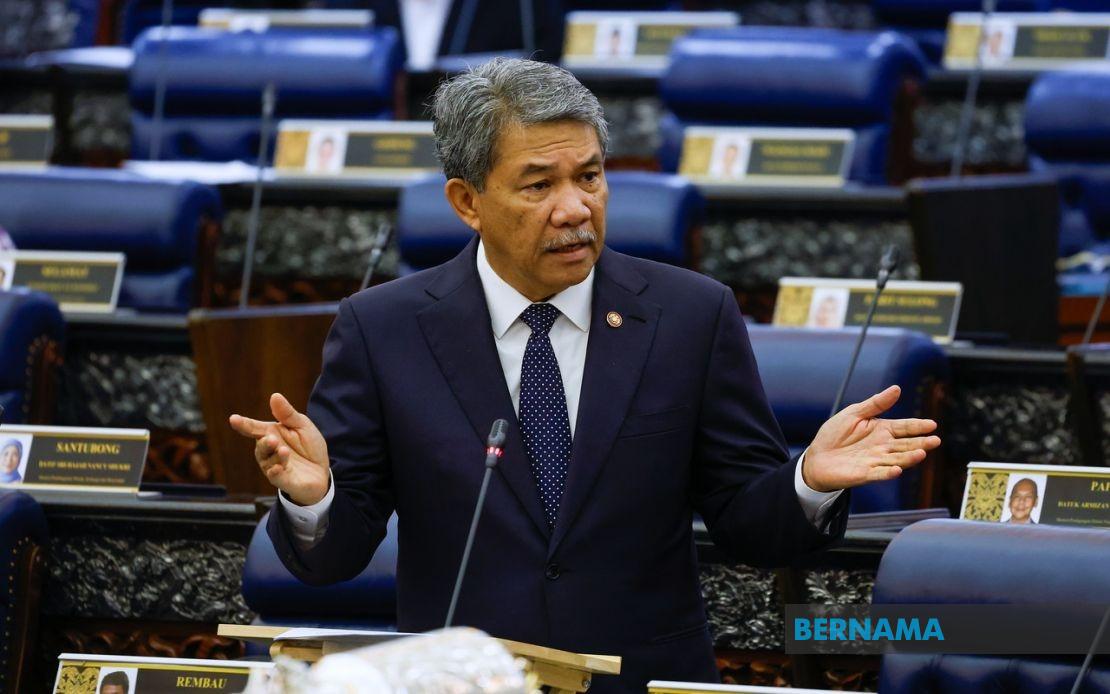
ASEAN is quietly reassessing its approach to Myanmar's intractable crisis, with Foreign Minister Datuk Seri Mohamad Hasan acknowledging that the region's flagship Five-Point Consensus has not delivered the progress hoped for when it was adopted. Speaking in Parliament on June 25, Mohamad revealed that regional leaders gathered at the 48th ASEAN Summit in Cebu last month have tasked foreign ministers with exploring alternative strategies while keeping the original framework nominally intact, signalling both continuity and frustration with the status quo.
The Five-Point Consensus, which has served as ASEAN's primary diplomatic tool for addressing Myanmar's deepening crisis since it was agreed in April 2021, calls for an immediate cessation of violence, dialogue between all parties, mediation by ASEAN, provision of humanitarian assistance, and visits by ASEAN envoys to Myanmar. Yet more than three years on, Myanmar has made limited meaningful progress against any of these benchmarks. The military junta continues to consolidate power, armed resistance movements have proliferated, and the humanitarian catastrophe has worsened dramatically. Mohamad's acknowledgement that the consensus has not achieved its intended aims represents a significant admission of the framework's limitations, even as ASEAN leaders insist they will not abandon it entirely.
The shift in emphasis toward informal ministerial engagements with Myanmar reflects a recognition within ASEAN that the multilateral summit approach has yielded diminishing returns. By focusing on bilateral and smaller-group discussions between foreign ministers and Myanmar officials, ASEAN hopes to create space for more candid conversations about what implementation might realistically look like. This tactical adjustment suggests that ASEAN is moving away from high-profile declarations toward quieter, more persistent diplomatic engagement—a pragmatic acceptance that grand gestures and headline-grabbing statements have not moved the needle significantly in Yangon.
Malaysia has emerged as one of the more active voices within ASEAN on Myanmar policy, proposing that the six-month ceasefire implemented by Myanmar's military and set to expire at the end of July be formally extended into a second phase. This proposal carries both symbolic and practical weight: it would signal to the junta that ASEAN remains engaged without endorsing its rule, while also providing a mechanism for sustained dialogue. The extension would need to be coupled with a clearer roadmap from Myanmar's government on how the broader peace process might unfold, including pathways toward inclusive dialogue with opposition groups, ethnic armed organisations, and civil society representatives who remain sidelined from formal negotiations.
The underlying anxiety driving ASEAN's policy recalibration is the fear of external powers exploiting Myanmar's instability for geopolitical advantage. Mohamad explicitly warned against allowing a vacuum to develop that might be filled by third parties with competing strategic interests, language clearly directed at concerns about Chinese and Indian involvement in Myanmar's affairs. Should ASEAN be perceived as having disengaged or failed definitively, regional powers and global rivals could move to fill the diplomatic void, potentially turning Myanmar into a contested proxy battleground that would destabilise the entire Southeast Asian region. This concern explains why ASEAN maintains formal engagement even as private frustration with Myanmar's trajectory mounts.
Malaysia's stated willingness to engage with multiple stakeholders—including the Myanmar government, the National Unity Government opposition coalition, the People's Defence Force armed resistance movement, and numerous ethnic armed organisations—reflects the complex realities on the ground. Myanmar's conflict has evolved into a multifaceted struggle involving competing visions of governance, ethnic autonomy claims, and economic interests that no single framework can easily accommodate. By maintaining channels to all major actors, Malaysia and ASEAN hope to position themselves as neutral brokers capable of facilitating conversations that might eventually create conditions for a negotiated settlement, however distant that prospect currently appears.
The parliamentary exchange that prompted Mohamad's remarks came from opposition MP William Leong Jee Keen, who specifically asked whether ASEAN had abandoned hopes that Myanmar would meaningfully comply with the Five-Point Consensus. Mohamad's response—that the framework remains in place but needs operational refinement—represents careful political calibration. ASEAN cannot be seen as abandoning Myanmar entirely, as doing so would risk the regional isolation that the bloc reflexively opposes through its cherished principle of non-interference. Yet neither can ASEAN pretend that the current approach is yielding satisfactory results. The foreign ministers' informal engagements represent an effort to split this diplomatic difference.
For Malaysia and other ASEAN members, the Myanmar crisis poses a genuine dilemma. The region's founding principle of non-interference in member states' internal affairs has collided with the unprecedented scale of Myanmar's instability, humanitarian suffering, and regional security implications. Previous ASEAN crises involved isolated states; Myanmar's chaos potentially affects border regions, refugee flows, drug trafficking, and the security architecture that underpins Southeast Asian stability. The attempt to develop new approaches while preserving the Five-Point Consensus reflects an effort to maintain ASEAN coherence while acknowledging that incremental adjustments to diplomatic rhetoric will not resolve Myanmar's fundamental political and military deadlock.
Looking forward, the success of ASEAN's revised approach depends heavily on whether the Myanmar junta perceives genuine value in continued engagement with the regional bloc, and whether opposition and resistance forces believe ASEAN can actually facilitate meaningful negotiations. Neither condition currently appears strongly satisfied. The military remains largely dismissive of international pressure, while armed resistance groups and the National Unity Government have grown increasingly skeptical that ASEAN diplomacy can constrain the junta or create space for genuine political transition. ASEAN's challenge is to find leverage points that could convince Myanmar's competing factions that negotiated compromise serves their interests better than indefinite conflict—a task that requires both diplomatic skill and realistic assessment of what regional pressure can actually achieve in the current environment.

