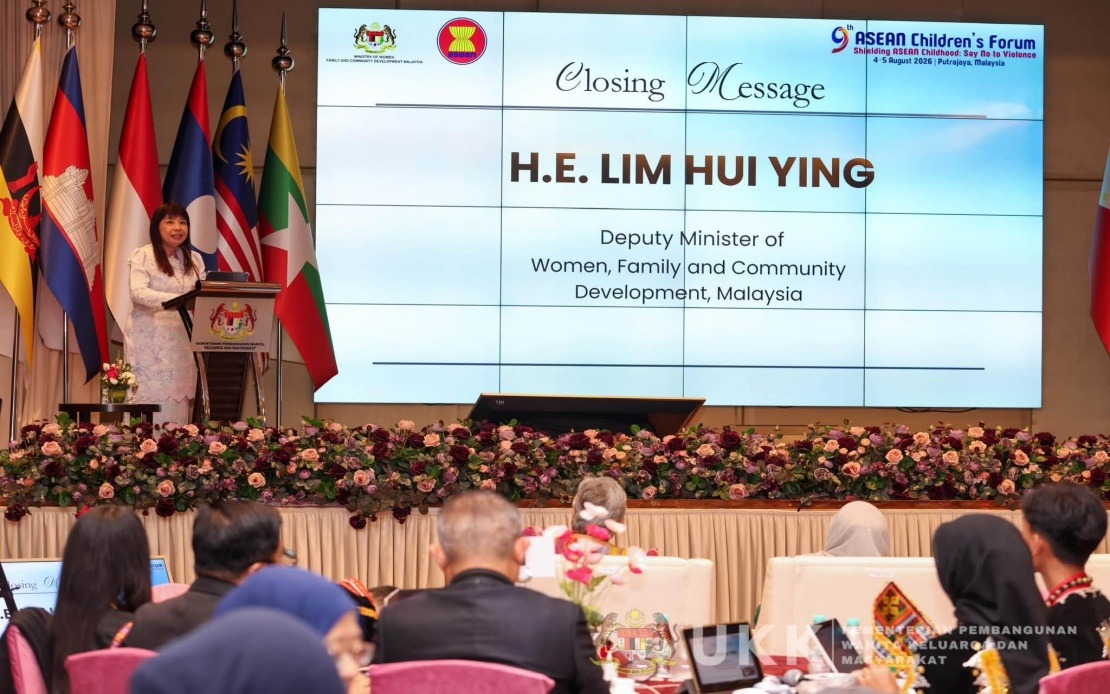
The 9th ASEAN Children's Forum concluded in Putrajaya with a comprehensive set of recommendations designed to reshape how the region safeguards its youngest citizens. Deputy Women, Family and Community Development Minister Lim Hui Ying underscored the significance of these proposals, emphasizing that they emerge directly from the lived experiences of children across the bloc and warrant serious consideration from policymakers at both national and regional levels.
The hybrid forum assembled young participants representing all ASEAN member states to examine the multifaceted problem of violence against children in its various manifestations—physical, emotional, psychological and sexual abuse. Rather than relying solely on expert testimony or government analysis, the forum positioned children themselves as central voices in identifying solutions, a recognition that their perspectives offer crucial insights that adults often overlook.
Participants developed targeted recommendations spanning four critical environments where children spend significant time: their homes, educational institutions, digital spaces and broader communities. This comprehensive geographic approach reflects an understanding that protection cannot be addressed through isolated interventions but requires coordinated action across all settings where children interact and develop.
Strengthening legislative frameworks emerged as a primary priority. Current child protection laws across ASEAN vary considerably in scope and enforcement capacity, leaving gaps that perpetrators can exploit. The forum's call for enhanced legislation suggests the need for regional harmonization of standards while respecting national contexts, potentially involving model laws that member states could adapt and enforce more rigorously.
Equally important is the emphasis on child-friendly reporting mechanisms. Many children face barriers reporting abuse due to fear, shame, distrust of authorities or simply not knowing where to turn. Creating accessible channels—whether through hotlines, digital platforms, school counselors or trusted community figures—reduces friction in reporting and ensures more incidents come to light. Such mechanisms must be culturally sensitive and genuinely responsive rather than bureaucratic obstacles disguised as solutions.
Anti-bullying policies received specific attention, reflecting growing recognition that peer violence constitutes a significant harm. Schools in particular must move beyond punishment-focused approaches toward preventive frameworks that build empathy, establish clear consequences, and provide support to both victims and perpetrators. Implementation challenges remain substantial, requiring teacher training, parental engagement and sustained commitment beyond initial policy announcement.
The forum's recognition of psychosocial support reflects modern understanding of trauma's lasting effects. Children who experience violence require not only physical safety but emotional healing and psychological rehabilitation. Expanding access to counseling, mental health services and trauma-informed care addresses the full spectrum of harm rather than treating incidents as discrete events to be forgotten.
Minister Lim emphasized that these recommendations should catalyze concrete governmental action rather than remain aspirational statements. She called on governments, ASEAN sectoral bodies and international partners to examine the proposals carefully and translate workable recommendations into binding policies and sustained programs. This framing places responsibility squarely on decision-makers rather than positioning children's voices as merely decorative contributions to policymaking.
The forum also highlighted the interconnected responsibilities of various social actors. Parents, teachers, business leaders, civil society organizations, journalists and peer networks all shape the environment in which children navigate safety and risk. No single institution bears sole responsibility; rather, effective child protection demands alignment across these constituencies toward shared protective goals. This ecosystem approach acknowledges that legal frameworks alone cannot succeed without supporting cultural change across families and communities.
Participants concluded by pledging mutual support and commitment to fostering care and respect, translating their forum experience into personal agency. This symbolic commitment matters beyond ceremonial value—it demonstrates that young people understand themselves as agents capable of contributing to solutions rather than passive recipients of adult-designed protection. For Southeast Asia, where youth population remains substantial, cultivating this sense of responsibility may generate positive behavioral shifts from within peer networks.
The regional implications extend beyond individual countries. ASEAN's commitment to community building and human development makes child protection a legitimate concern for ASEAN Secretariat bodies and collective action frameworks. Countries facing similar challenges can learn from peer experiences, while coordinated approaches to online safety and trafficking prevention require transnational cooperation that the bloc is uniquely positioned to facilitate.
For Malaysia specifically, these recommendations align with existing national commitments under the Convention on the Rights of the Child, yet implementation gaps persist. The forum provides fresh impetus for reviewing whether current laws adequately address emerging forms of violence, whether reporting mechanisms genuinely function for vulnerable children, and whether resources for psychosocial support match documented need. Bringing the voices of Malaysian child participants into domestic policy conversations could strengthen political will for meaningful reform rather than incremental adjustment of existing frameworks.

