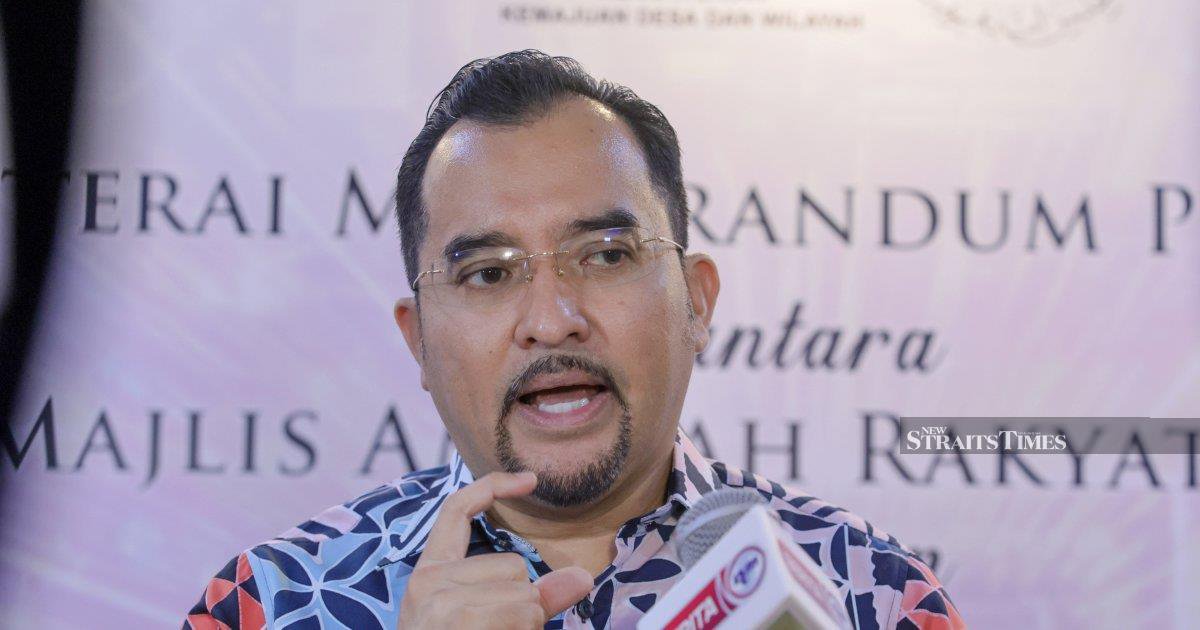
Umno secretary-general Datuk Dr Asyraf Wajdi Dusuki has firmly rejected suggestions that he wielded any influence or played a substantive role in Tabung Haji transactions while serving as deputy minister in the Prime Minister's Department. The senior party official's statement represents a strategic distancing from the embattled pilgrimage fund, which has faced mounting scrutiny over its financial management and controversial dealings.
Tabung Haji, the sovereign wealth fund that manages billions of ringgit in savings for Malaysian pilgrims, has emerged as a flashpoint in national governance debates. The fund's Al-Rawda transaction has attracted particular attention from lawmakers and the public, given the scale of the investment and questions about the decision-making processes that preceded it. As deputy minister overseeing the Prime Minister's Department, Asyraf's position held considerable symbolic weight in government circles, even if formal authority over fund operations may have rested elsewhere.
The timing of Asyraf's clarification underscores broader political sensitivities surrounding Tabung Haji's stewardship. The pilgrimage fund serves nearly two million registered members across Malaysia, making it a matter of genuine concern to ordinary Malaysians whose retirement and religious obligations depend on sound financial management. Any perception of political interference or improper influence over fund decisions resonates deeply with this constituency.
Ashyraf's tenure as deputy minister placed him within the administrative apparatus responsible for overseeing various government functions, yet the specific organisational chart separating departmental oversight from Tabung Haji's independent board structure remains crucial to understanding his actual sphere of influence. The fund operates under its own governance framework, with a board of directors tasked with fiduciary responsibilities. Clarifying the distinction between supervisory oversight and direct operational control has become essential for public confidence.
The Al-Rawda investment itself represents a substantial commitment of Tabung Haji resources, warranting transparent documentation of who authorised it and through what processes approval was obtained. Questions about this transaction have prompted wider examination of how the fund deploys its assets and whether adequate safeguards exist to protect member interests from decisions influenced by political considerations rather than prudent investment logic.
For the Umno politician, the disavowal serves multiple purposes within Malaysia's current political landscape. It shields him from potential liability should investigations into the transaction yield findings of misconduct or impropriety. Simultaneously, it positions him as someone willing to submit to institutional discipline and separation of powers, qualities increasingly valued as Malaysian institutions rebuild credibility after years of political turbulence.
The statement also reflects the delicate balance that political figures must maintain when confronted with scrutiny over past decisions. Asyraf's clarification neither attacks opponents who may have raised questions nor accepts blanket responsibility for the fund's entire operational record during his tenure. Instead, it establishes a narrower claim: that his role lacked the specific authority to shape Tabung Haji transactions directly.
Context matters considerably here. If Asyraf's ministerial brief encompassed only policy coordination or high-level oversight rather than day-to-day fund management, his denial gains credibility. Conversely, if his position granted him informal access to decision-makers or if contemporaneous correspondence shows his involvement in approving the Al-Rawda transaction, the disclaimer would carry less weight. The public record and any available documentation will ultimately determine the accuracy of his claim.
Tabung Haji itself faces urgent imperatives to restore institutional integrity. The fund has undertaked significant reform efforts in recent years, recognising that public trust directly correlates with member willingness to maintain deposits and contribute to savings schemes. Each controversy that surfaces tests the organisation's commitment to transparency and accountability. Independent audits and rigorous governance reviews become increasingly necessary to satisfy stakeholder concerns.
For Malaysian policymakers, the broader question extends beyond any single transaction. It concerns establishing and enforcing clear institutional boundaries that prevent political interference with fiduciary responsibilities. Countries with mature fund governance models typically insulate investment decisions from party political considerations through robust independent boards, professional management accountability, and transparent decision-making processes.
Ashyraf's position within Umno adds another dimension to the controversy. As party secretary-general, he represents the party establishment during a period when Umno navigates complex coalition politics and internal succession dynamics. Any perception of wrongdoing by senior figures potentially damages party credibility, particularly given recent political history where governance failures by prominent party members prompted public anger.
The denial itself contributes to an emerging narrative around ministerial responsibility and institutional boundaries in Malaysia. Whether Asyraf's specific claim survives scrutiny will depend on detailed documentary evidence and organisational records. Regardless, the underlying principle that political figures should not instrumentalise sovereign wealth funds for partisan advantage remains paramount for Malaysia's financial system and the millions of citizens depending on these institutions.

