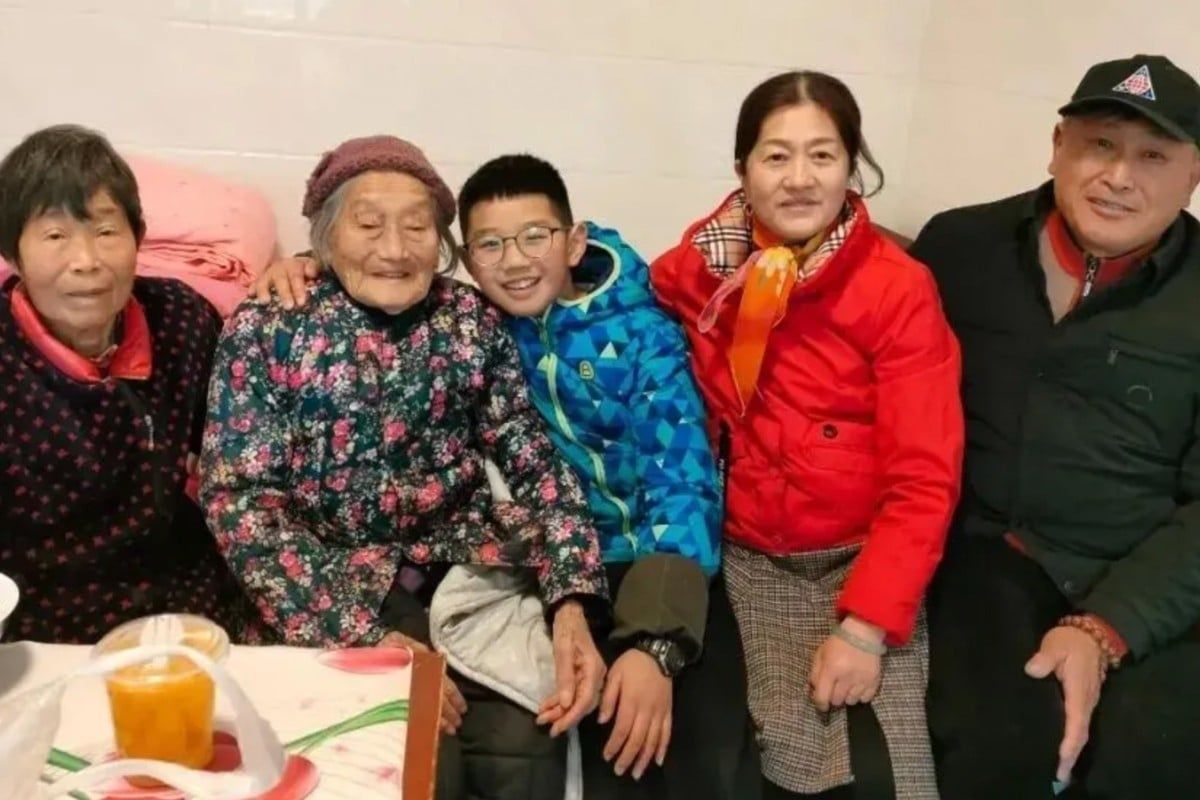
Wang Gaiying, a 111-year-old resident of Rugao in Jiangsu province, has emerged as an unlikely social media personality by offering insights into the formula behind her extended lifespan. Her story resonates particularly in the context of Southeast Asia, where ageing populations and interest in healthy longevity have become pressing social and health concerns. Wang's philosophy—grounded in accessible, everyday practices rather than expensive interventions or exotic remedies—offers a compelling counternarrative to the wellness industry's often-commercialised approach to ageing well.
Rugao has earned a reputation as one of China's premier longevity hubs, a distinction backed by demographic data. As of February this year, the municipality was home to 672 individuals aged 100 or older, a concentration that distinguishes it globally and has attracted considerable scientific scrutiny. This clustering of exceptional lifespans prompted researchers at the Chinese Academy of Sciences' Institute of Soil Science in Nanjing to investigate the environmental factors at play. Their findings pointed to a significant contributor: the region's geologically mineral-rich soil produces agricultural yields abundant in trace elements known to support human health. For Malaysian readers familiar with concerns about soil degradation and nutritional deficiencies in mass-produced foods, Rugao's experience suggests that regional terroir and agricultural practices merit closer examination as public health variables.
Wang's personal circumstances reinforce the demographic picture. She resides within a multi-generational household spanning five generations, an arrangement increasingly rare in urbanised East and Southeast Asia. Her grandson, now 60 years old, belongs to the third generation in her immediate household, reflecting family structures that facilitate elder care and intergenerational knowledge transfer. Yet despite her advanced age, Wang has resisted the passivity often associated with retirement and institutional care. Well into her 100s, she continued engaging in agricultural labour, harvesting peanuts and watermelons alongside family members, work that maintained her physical engagement with the world around her.
Central to Wang's philosophy is her reframing of domestic labour as a deliberate form of physical activity. Rather than viewing housework as an obligation to be minimised or delegated, she treats tasks such as wiping tables, folding clothes, and other light domestic chores as opportunities for maintaining muscular engagement and cardiovascular function. When family members suggest she should rest, Wang articulates a fitness principle that modern gerontology increasingly validates: that sustained movement maintains circulatory health and preserves musculoskeletal function. Her insistence that she remains young, justified by her continued mobility, reflects not mere denial but a psychological stance that resists the internalisation of age-based limitation.
Nutritional discipline forms another pillar of her longevity strategy. Wang maintains a deliberately balanced diet that her family rotates to ensure variety, alternating between dumplings, steamed buns, and other staple preparations. She has developed a particular fondness for fish, which she praises for its tender texture and digestive compatibility with an aging gastrointestinal system. More significant than any individual food choice is her broader dietary philosophy, which privileges variety and moderation over indulgence. She consciously resists overeating, a restraint that resonates with both traditional Chinese medicine principles and contemporary nutritional science emphasising caloric restriction as a potential longevity factor.
Wang's earlier consumption of rice soaked in baijiu, the traditional Chinese spirit, illustrates the negotiation between cultural practice and practical health management. Her family discontinued this custom approximately five years ago, recognising that alcohol consumption posed genuine risks—specifically, the elevated likelihood of falls and intoxication—that outweighed any perceived benefits. This decision reflects a pragmatic reassessment of risk at advanced age, where injuries and their cascading health consequences carry heightened stakes. For Southeast Asian families managing elder care, this recalibration suggests the importance of periodically reviewing long-standing practices through the lens of changing physiological vulnerability.
Beyond the physical dimension, Wang attributes her longevity to psychological and relational factors equally deserving of attention. She has cultivated a personal discipline of performing one small act of kindness daily, whether through complimenting a family member or sending a greeting to a longtime friend. This practice, while modest in appearance, addresses a dimension of human wellbeing that biomedical models often neglect: the psychological benefits of generosity, social connection, and purposefulness. Research in gerontology increasingly validates what Wang has intuited through lived experience—that social engagement and a sense of contribution correlate strongly with both longevity and quality of life in advanced age.
Equally revealing is Wang's approach to emotional regulation and sleep. She deliberately refuses to carry frustrations into sleep, employing rest itself as a tool for psychological resolution. By allowing overnight sleep to provide cognitive distance from daily irritations, she reduces the chronic stress load that accelerates biological ageing. Her disciplined sleep schedule—retiring at 7pm and rising at 7am, supplemented by one or two daytime naps—provides approximately ten hours of sleep nightly, well above the seven to eight hours typically recommended for younger adults. The additional sleep in advanced age may reflect both physiological changes and deliberate prioritisation of rest as a health intervention.
Wang's case has not escaped notice beyond her family circle. Social media influencer Yaoqing Ge documented her life last December, amplifying her story to millions online. The resulting commentary reflects divergent interpretations of her longevity: some observers attribute it primarily to genetic fortune, others to environmental advantage, and still others to the accumulation of wise choices across a century. The most sophisticated responses acknowledge that Wang's lifespan likely results from confluence of factors—genetic predisposition, the fortunate geography of Rugao's mineral-rich soils, family structure supporting elder care and integration, and a lifetime of deliberate practices around movement, nutrition, and emotional resilience. This multifactorial perspective mirrors contemporary gerontological understanding, which resists monocausal explanations in favour of systemic analysis.
For Malaysian and Southeast Asian readers, Wang's story carries particular resonance at a moment when the region confronts rapid population ageing. Unlike expensive medical interventions or pharmaceuticals, her prescription emphasises practices accessible across socioeconomic strata: purposeful domestic activity, dietary moderation and variety, emotional discipline, social engagement, and adequate sleep. These represent not exotic secrets but rather a systematic application of wellbeing principles grounded in ordinary life. As healthcare systems across the region strain under demographic pressure, the possibility that extended healthspan correlates as much with lifestyle architecture as with medical technology merits serious consideration. Wang Gaiying's century-plus existence, viewed not as individual miracle but as exemplar of deliberate practice, offers a template for thinking about ageing differently—not as inevitable decline but as a condition amenable to conscious cultivation.

