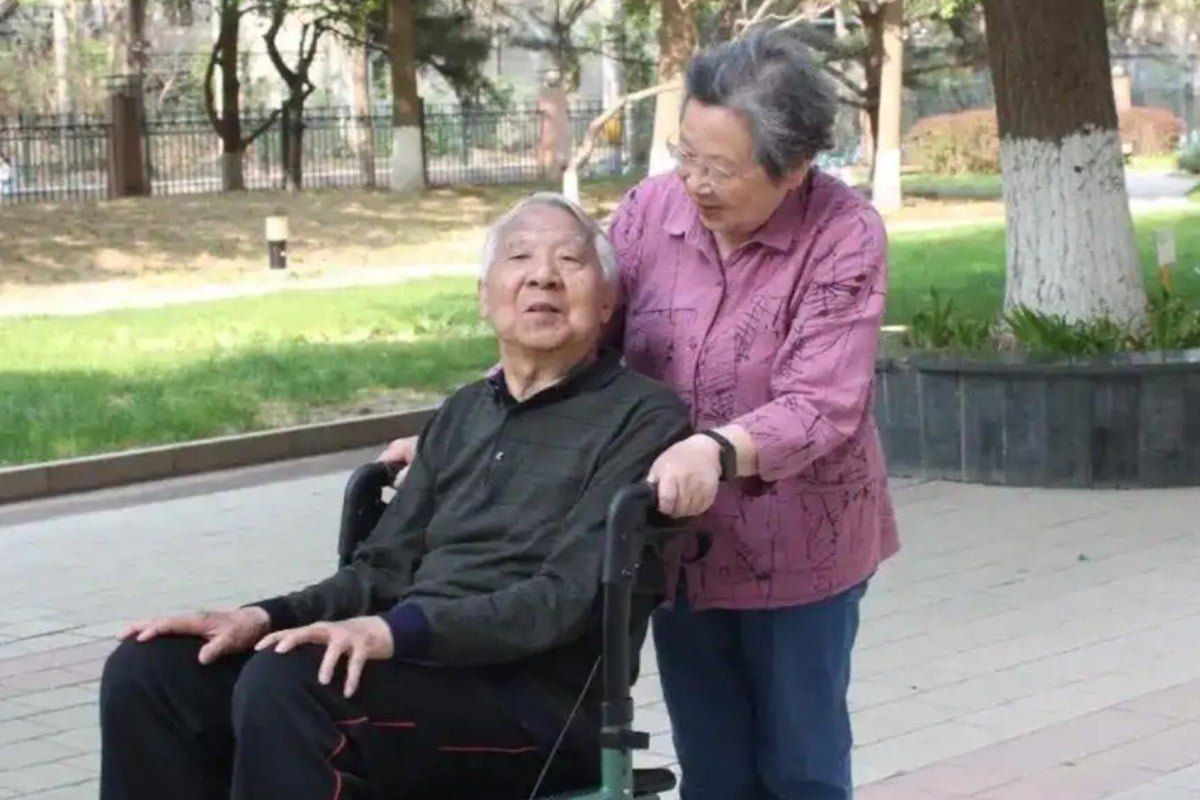
Wen Bo, a 90-year-old resident of Beijing, has captured the hearts of millions of Chinese internet users through her unwavering commitment to preserving her husband's sense of self as he navigates the progressive erosion of memory caused by Alzheimer's disease. Her story arrives at a pivotal moment in China's demographic landscape, where the nation grapples with an ageing population exceeding 320 million people aged 60 and above—more than one-fifth of the country's total population. What makes Wen's approach remarkable is not merely her devotion, but her philosophical conviction that individuals with neurodegenerative diseases deserve to maintain their autonomy, self-respect, and sense of purpose rather than being defined solely by their condition.
Wen and her husband share a romantic history spanning more than six decades. They first encountered each other as secondary school classmates before embarking on a lengthy long-distance courtship. Their commitment culminated in marriage in 1960, beginning a partnership that produced two sons and included decades of vigorous living—swimming, walking, and frequent travel throughout China and beyond. This foundation of shared experience and deep partnership would prove essential when their lives shifted dramatically in 2023, the year her husband received his Alzheimer's diagnosis following the onset of memory loss and incontinence. Rather than allow her adult sons, preoccupied with their own careers and family obligations, to shoulder the caregiving burden, Wen made the deliberate choice to become her husband's full-time carer, supported primarily by a hired domestic helper who manages cooking and household maintenance.
The disease's progression has been relentless. Her husband's ability to recall his medication has deteriorated, his physical mobility has declined, and his engagement with family members—particularly his grandchildren—has diminished significantly. Yet rather than resign herself to accepting the trajectory of his decline, Wen embarked on an intensive self-education initiative, consulting medical literature and online resources to understand Alzheimer's mechanisms and evidence-based interventions. Each day she engages him in structured cognitive exercises: mathematical problems, puzzles, and painting sessions interspersed with physical training. The results of her methodical approach have been measurable—her husband's cognitive deterioration has proceeded at a notably slower pace than typical disease progression, and he has retained sufficient motor control to independently operate his electric wheelchair during outings, occasionally even reminding his wife to rest.
Wen's determination to maintain her husband's dignity extends beyond medical interventions into the symbolic and relational realm. She has instituted a nightly ritual wherein she reminds him of her name before sleep, articulating a profound conviction about the hierarchy of memory: "He has to remember my name. I am his wife. I should be the last person he forgets." This statement reflects a deeper understanding that memory loss in Alzheimer's patients is not merely a cognitive phenomenon but a threat to the emotional bonds that constitute identity and meaning. She encourages her husband to participate in simple household tasks, patiently allowing him to work at his own pace despite the inefficiency such an approach may entail. In doing so, she creates opportunities for him to feel needed and to maintain a sense of agency within the domestic sphere.
Wen's caregiving philosophy rests on a conviction that extends beyond medical practice into humanistic territory: individuals with Alzheimer's disease should not be reduced to their diagnosis. "Self-respect, a sense of existence, and the feeling of being needed are essential for individuals with Alzheimer's disease," she articulated in interviews, capturing a perspective that challenges medicalized models of dementia care that often prioritize clinical efficiency over psychological wellbeing. This philosophical stance has resonated profoundly with Chinese society, particularly among younger generations encountering the prospect of caring for ageing parents while navigating careers and family responsibilities of their own.
Wen's influence operates primarily through RedNote, a Chinese social media platform where she has documented her caregiving journey through diary entries. One recent post described her husband completing an arithmetic test—he required slightly more time than usual and made only a single error, a modest achievement that Wen celebrated as evidence of preserved cognitive capacity. These small victories, recorded and shared publicly, have garnered support and engagement from millions of online followers who perceive in her narrative an alternative model for ageing in contemporary China. The response from younger users reveals the profound anxiety surrounding elder care in a rapidly modernizing society. One observer wrote: "Grandma Wen's posts always bring me comfort. She shows me what an ideal later life could look like: being with the person you love while living independently." Another commenter noted: "I used to fear not knowing how to care for my ageing parents, but her experiences have provided me with valuable guidance and increased confidence for the future."
Wen has been transparent about the limitations of her approach and her own contingency planning. She has indicated that should her husband's condition deteriorate to a degree requiring specialized medical intervention beyond her capacity to provide, she would consider transitioning to hospice care. This honesty—acknowledging both her commitment and her realistic assessment of her own limitations—has enhanced rather than diminished her credibility with followers. She presents caregiving not as an idealized romantic sacrifice but as a practical, evolving endeavour requiring adaptability and self-awareness.
The broader significance of Wen's story extends beyond her individual circumstances to encompass China's structural challenges in elder care. As the population ages at an unprecedented rate, the nation faces growing shortages of professional caregivers, increasing costs associated with institutional care, and cultural tensions between traditional expectations that adult children will care for parents and contemporary economic realities that often make such arrangements impossible. Wen's model—combining professional domestic support with intensive family caregiving, structured cognitive and physical interventions, and a philosophical commitment to preserving the personhood of the individual with dementia—offers a template that is simultaneously labour-intensive and emotionally sustainable.
For Malaysian and Southeast Asian audiences, Wen's experience carries particular resonance given demographic and cultural parallels. The region is simultaneously ageing and modernizing, with growing numbers of adult children working in different cities or countries from their elderly parents. Similar tensions between filial obligations and economic necessity characterize family structures across Southeast Asia. The practical strategies Wen employs—self-directed education about disease management, adaptive household modifications, cognitive stimulation protocols—are accessible to families with moderate means across the region. Her philosophical framework—that maintaining dignity and autonomy constitutes a valid health outcome alongside slowing cognitive decline—challenges prevailing medical paradigms that often emphasize pure disease management over quality of life considerations.

