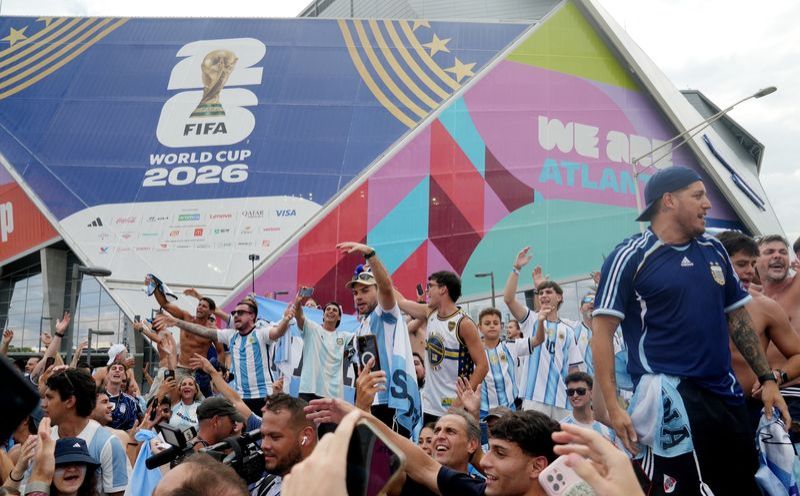
Atlanta's role as host city for the 2024 Women's World Cup has fundamentally reshaped how the traditionally hip-hop-centric metropolis presents itself to the global stage. Over the past month, the streets and stadiums of Georgia's capital have reverberated not to the usual beat of rap and R&B, but to the passionate chants and songs of football supporters from every corner of the world. From Cape Verde's tournament debut to Argentina's spectacular comeback victories en route to the final, Atlanta has served as the backdrop for some of the competition's most defining moments, creating memories that will linger long after the final whistle.
The city's transformation into a World Cup venue represents a remarkable culmination of strategic planning that began in earnest during the summer of 2017. Dan Corso, president of the Atlanta host committee, recalls receiving an initial inquiry about the city's interest in bidding for hosting rights. The response was swift and decisive. Within weeks of that preliminary email, local leadership had convened multiple meetings and committed to pursuing the opportunity with full institutional backing. This decisive action would prove pivotal in securing FIFA's approval for Atlanta as a match venue.
Atlanta's growing credentials as a soccer destination provided crucial leverage in the bidding process. The establishment of Major League Soccer franchise Atlanta United in 2017 coincided with the city's World Cup bid, creating a powerful narrative of expansion and investment. The club's immediate success—including capturing the MLS Cup just a year after inception—demonstrated genuine grassroots interest in the sport beyond traditional American football and basketball. Arthur Blank, the billionaire owner of both Atlanta United and the NFL's Falcons, further elevated the region's soccer infrastructure by donating fifty million dollars toward the U.S. Soccer National Training Center located just outside the city limits. This convergence of professional sport, institutional support, and capital investment made Atlanta an obvious choice for FIFA's selection committee.
Atlanta United's sustained dominance in MLS attendance figures year after year provided additional proof of concept. The club's consistent ability to draw crowds to their home stadium demonstrated that the region possessed not merely casual interest in soccer, but a substantial and engaged fan base willing to invest time and money in the sport. Combined with U.S. Soccer's headquarters establishing itself in Atlanta, the city had effectively positioned itself as the unofficial capital of American soccer development. These factors, according to Corso, directly influenced FIFA's decision-making process during the formal selection phase.
The city's experience hosting major international sporting events also bolstered its candidacy. Atlanta last hosted the Olympic Games in 1996 and has become the venue for the Super Bowl multiple times, with another installment scheduled for 2028. This proven track record in managing logistics, security, and fan experience for events attracting global audiences provided reassurance to FIFA that Atlanta possessed the necessary infrastructure and expertise. Nevertheless, the World Cup represented the first opportunity for the city to showcase itself as a football destination on the international stage in three decades.
The tournament's impact on Atlanta proved immediate and substantial. More than half a million people attended the Fan Fest events spread across nineteen days, representing a remarkable engagement from both locals and visitors. Grassroots enthusiasm translated into volunteerism, with over two thousand Atlantans and Georgians enlisting as volunteers to support match operations and fan services. This civilian participation underscored that the World Cup had captured not just institutional interest but authentic community enthusiasm.
Across eight matches held at the Atlanta stadium, the tournament attracted 544,516 spectators, including three knockout-stage contests that delivered intense competition and memorable narratives. The semi-final featuring Argentina's dramatic comeback against England particularly captured the imagination of fans and media alike, exemplifying the kind of high-stakes drama that the World Cup specializes in delivering. These matches provided global audiences with a compelling introduction to Atlanta as a serious soccer metropolis.
Beyond the immediate sporting spectacle, the World Cup has catalysed longer-term community development. The host committee collaborated with local transit authority MARTA and the Soccer in the Streets programme to construct a new mini-pitch accessible to the public. This facility ensures that children throughout Atlanta gain free access to the sport regardless of economic background, embedding soccer infrastructure into the city's neighbourhoods and schools. Such grassroots initiatives represent the tournament's most enduring legacy, creating pathways for youth development that extend far beyond the World Cup's four-week duration.
Atlanta's ambitions for soccer development extend well into the coming decade. The city will welcome a new women's professional soccer franchise launching in 2028, the same year the Super Bowl returns to the stadium. More significantly, Atlanta is actively bidding to host matches during the 2031 Women's World Cup, seeking to consolidate its status as a premier venue for the sport. These initiatives suggest that the 2024 tournament represents not a singular event but rather a pivotal moment in the city's long-term investment in soccer infrastructure and culture.
Corsó expressed genuine optimism that international visitors discovered in Atlanta something beyond its athletic facilities. He suggested that the World Cup provided a window into the city's remarkable diversity and regional character, exposing global audiences to a cosmopolitan American metropolis that extends far beyond hip-hop and entertainment stereotypes. For returning visitors and locals alike, the month of football festivities created lasting memories and potentially deeper appreciation for the city's multifaceted identity and growing prominence as a soccer destination.

