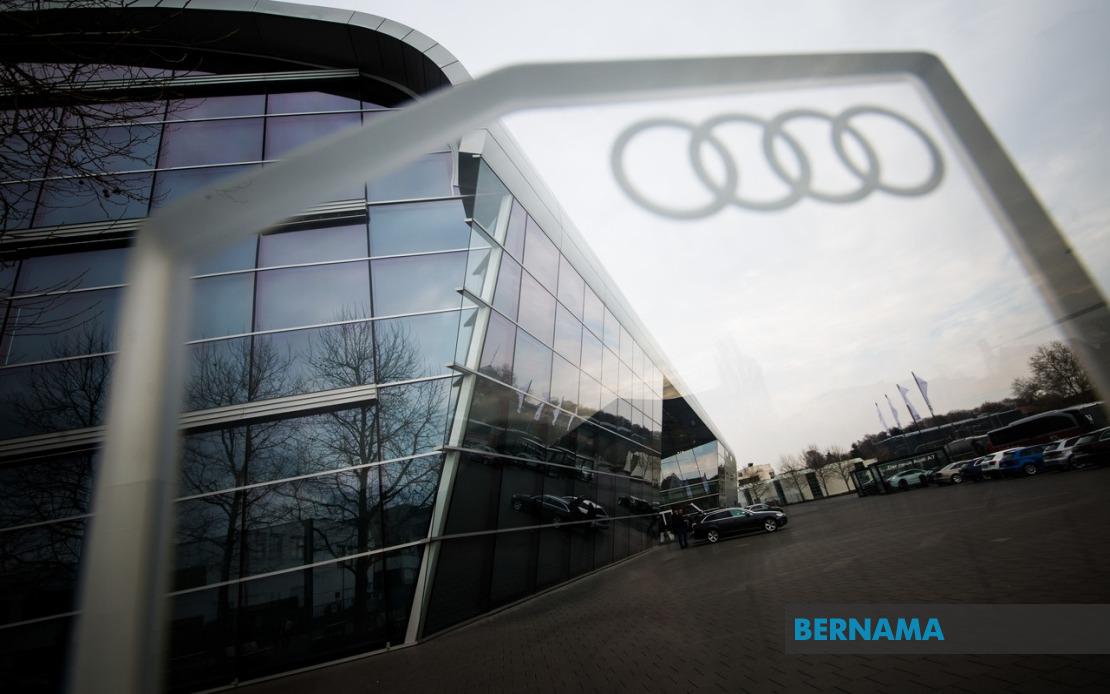
Audi has significantly trimmed its annual financial expectations, warning of lower revenues and diminished returns as it grapples with a contracting Chinese market and heightened geopolitical instability across West Asia. The Volkswagen Group subsidiary reported that after-tax profit in the second quarter declined by approximately 21 per cent to €563 million, a sharp fall that underscores deepening challenges facing Europe's automotive sector amid broader economic headwinds.
The Ingolstadt-based manufacturer has reset its full-year revenue projection to between €58 billion and €63 billion, down materially from the previously guided range of €63 billion to €68 billion. The company has also pared back its profitability expectations, a move that carries implications for shareholder returns across the luxury marque portfolio. The revised figures encompass Audi's portfolio of high-end brands, including Lamborghini, Bentley, and the motorcycle manufacturer Ducati, all of which are experiencing softer demand.
While Audi's earnings contraction is concerning, the performance remains less severe than that of parent company Volkswagen, which endured a near 33 per cent collapse in second-quarter profits. This comparative resilience offers limited solace, however, given that the broader group is now reportedly evaluating substantial workforce reductions across multiple territories. Among the facilities facing potential job cuts are Audi's manufacturing operations in Neckarsulm, Germany, a facility that has long anchored the company's production footprint in Europe.
China represents the gravest challenge confronting Audi's turnaround prospects. The world's largest automotive market, historically a significant profit engine for German luxury brands, has deteriorated markedly. Audi has surrendered considerable market position to both international and domestic Chinese competitors in recent quarters. The company's financial contribution from its Chinese joint venture operations—which are recorded within financial income rather than operating revenue—plummeted to just €73 million during the first half of 2024, roughly one quarter of the corresponding figure from the prior year. This dramatic erosion illustrates the intensity of competitive and demand pressures weighing on foreign manufacturers in the region.
Cutthroat pricing dynamics have compounded Audi's difficulties. Chinese automakers, particularly emerging electric vehicle producers, have aggressively undercut established European brands, forcing established players to either cede market share or accept margin compression. Audi, positioned as a premium offering rather than a mass-market competitor, faces an acute dilemma in a market where price sensitivity has sharpened considerably. The carmaker's inability to maintain pricing power signals that even luxury segments are proving susceptible to intensifying competition and flagging consumer confidence.
Beyond China, the company has also surrendered ground in the United States, another critical revenue territory. The combination of lost sales in these two major markets—representing nearly half of global automotive demand—creates a precarious situation for a manufacturer dependent on volume and pricing stability. For Southeast Asian markets, where Audi maintains a growing but still minority presence, these difficulties may translate into delayed product launches, reduced promotional activity, and potential inventory pressures that could reshape local dealership economics.
Geopolitical tensions across West Asia represent an additional headwind that management flagged as a drag on outlook. While the direct exposure of German automakers to the Middle East, relative to manufacturers with larger operations in the region, is limited, supply chain vulnerabilities and broader macroeconomic uncertainty stemming from regional instability present tangible risks. Potential disruptions to shipping routes, energy price volatility, and reduced consumer spending in affected territories could ripple through global automotive networks.
Chief Financial Officer Jürgen Rittersberger attempted to strike a cautiously optimistic tone, suggesting that the second half of the year may bring relief through new model introductions and cost-reduction initiatives. Historically, the latter six months of the calendar year perform more robustly for automakers as consumers rush to register new-year model vehicles. However, such seasonal strength assumes stable demand conditions and functioning supply chains—assumptions that appear increasingly fragile given current macroeconomic and geopolitical realities.
For Malaysian automotive stakeholders, Audi's predicament carries instructive lessons. The contraction underscores how rapidly market positions can shift in the face of technological disruption, competitive intensity, and external shocks. Local distributors and dealership networks dependent on imported German luxury vehicles face potential tightening of allocations and margin pressures as manufacturers prioritise higher-volume markets. Additionally, Audi's difficulties in China may accelerate the company's pivot toward electric vehicles and emerging technologies, which could reshape product availability and pricing strategies across regional markets.
The carmaker's downgrade also signals broader fragility within the Western automotive establishment. Legacy European manufacturers, despite their engineering heritage and brand prestige, are struggling to adapt to a market environment dominated by price competition, electrification requirements, and shifting consumer preferences. As Audi reduces guidance and contemplates significant job cuts, the industry faces a potential wave of consolidation and restructuring that will reshape competitive dynamics globally.
Looking ahead, Audi's path to stabilisation depends substantially on factors beyond management control—particularly whether Chinese demand stabilises and whether geopolitical tensions ease. The company's internal initiatives around cost management and product innovation, while necessary, appear insufficient to offset the magnitude of headwinds. For investors, regional partners, and employees across Audi's global operations, the coming months will prove critical in determining whether current difficulties represent a cyclical adjustment or a more fundamental erosion of competitive position within an industry experiencing unprecedented transformation.

