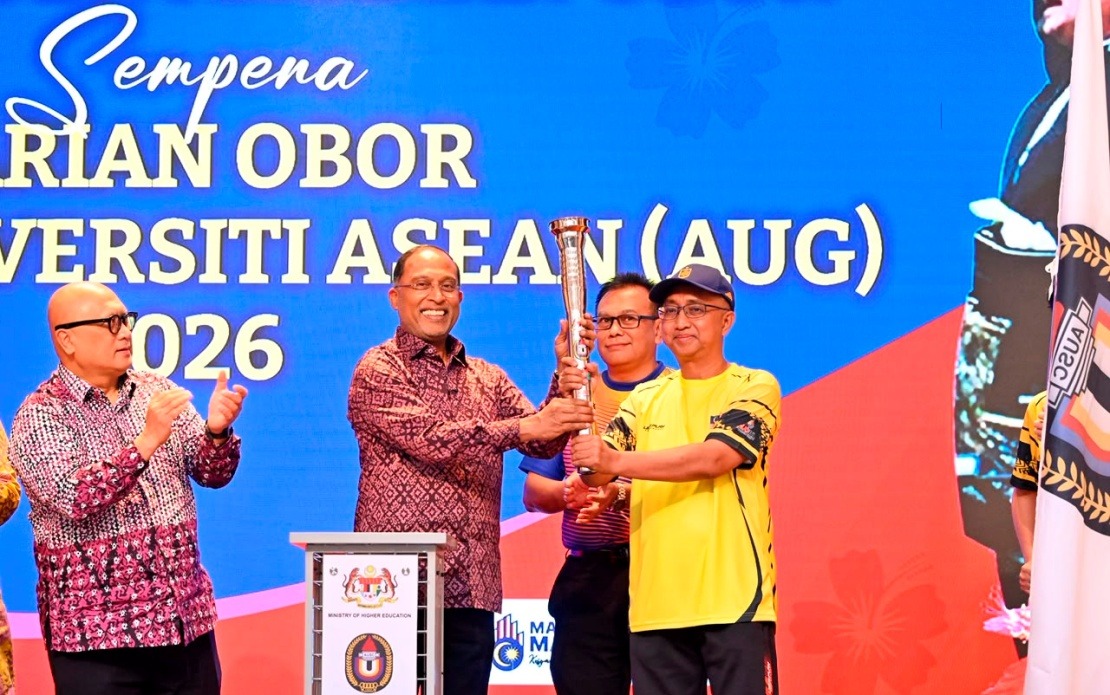
The torch for the 2026 ASEAN University Games ignited at Malaysia's Ministry of Higher Education headquarters in Putrajaya on Wednesday, marking the symbolic beginning of the nation's preparation for one of Southeast Asia's most significant sporting competitions. Higher Education Minister Datuk Seri Dr Zambry Abd Kadir formally handed over the flame to Prof Dr Mohammad Ismail, the chief representative of the Malaysian contingent and Deputy Vice-Chancellor for Student and Alumni Affairs at Universiti Malaysia Kelantan, during a ceremony held as part of the ministry's monthly assembly. The occasion underscored the government's endorsement of the Games and positioned university athletes as ambassadors for Malaysian excellence on a regional platform.
The ceremonial relay drew four accomplished national athletes whose presence highlighted the calibre of competition Malaysia expects to field. Long jumper Andre Anura Anuar and shot putter Nani Sahirah Maryata, both competing for Universiti Putra Malaysia, were joined by karate fighter Thevendran Kaliana Sundram from Universiti Pertahanan Nasional Malaysia and taekwondo competitor Lee Hui Yee, representing Sultan Salahuddin Abdul Aziz Shah Polytechnic. These individuals embody the dual mission of university sports in Malaysia—fostering both athletic excellence and institutional pride across the country's higher education landscape.
Dr Zambry's remarks to the athletes carried a message resonating beyond mere sporting competition. He urged the Malaysian contingent to carry forward the nation's aspirations alongside their pursuit of victory, framing athletic achievement as an extension of national service. His call to "carry the Malaysian torch and the torch of victory" reflected the cultural significance placed on international sports representation, particularly within the ASEAN region where sporting prowess contributes to regional standing and soft power. For Malaysian athletes, this perspective transforms individual medals and team standings into matters of national prestige.
The torch's journey itself was choreographed as a symbolic tour of the nation's institutional landscape. Beginning at the Ministry of Higher Education grounds, the flame proceeded to the Ministry of Tourism, Arts and Culture before returning to complete the initial leg. However, the relay's planned route extends far beyond this ceremonial beginning, encompassing major research and teaching institutions including Universiti Kebangsaan Malaysia, Universiti Putra Malaysia, Universiti Pertahanan Nasional Malaysia, Universiti Malaya, and Universiti Teknologi MARA. This geographical and institutional spread ensures that the Games command attention and pride across Malaysia's diverse university sector, building grassroots enthusiasm ahead of December's competition.
The AUG 2026, scheduled for December 10 to 19, represents an enormous logistical and sporting undertaking for Malaysia. The Games will attract approximately 4,669 participants, encompassing 2,849 athletes and officials drawn from all eleven ASEAN member states. Supporting this athlete contingent will be 700 referees and competition officials alongside 920 volunteers, creating a substantial temporary workforce dedicated to delivering world-class competition standards. The scale of participation reflects ASEAN's commitment to university sports as a mechanism for building regional connections and fostering goodwill among younger generations across Southeast Asia.
Nineteen sports will be contested across four major venues spanning the Klang Valley and surrounding areas—Shah Alam, Kuala Lumpur, Serdang, and Bangi. This dispersal of competition sites ensures efficient use of existing sporting infrastructure while distributing the Games' economic and social impact across multiple municipalities. The choice of venues also reflects Malaysia's substantial investment in sports facilities over recent decades, positioning the country as a capable host for major regional events. Each venue will become a temporary centre of sporting excellence and nationalist fervour as delegations from across the region converge.
The Games' official theme, "HOLISTIC.EXCELLENCE," encapsulates a philosophy extending beyond winning medals. It signals Malaysia's understanding that university sports serve multiple purposes: developing athletic talent, building character through competition, fostering international friendships, and contributing to national development goals. This broader interpretation of sporting success aligns with ASEAN's emphasis on regional community-building and people-to-people connectivity. Malaysian organisers are positioning AUG 2026 not merely as a competition but as a vehicle for deepening understanding among Southeast Asia's future leaders and professionals.
For Malaysia specifically, hosting and performing well in AUG 2026 carries strategic implications. The Games provide a testing ground for emerging athletic talent and coaching systems, while international competition offers valuable experience for athletes targeting Olympic qualification or world championships. University sports also serve as a talent identification mechanism, allowing national sporting bodies to scout promising performers from across the tertiary education sector. Success at AUG 2026 could establish reputations that launch athletes into professional careers or coaching roles, multiplying the Games' long-term impact on Malaysian sport.
The torch relay's symbolism also carries domestic significance. By involving the Ministry of Tourism, Arts and Culture alongside the Higher Education Ministry, the government signals that university sports are not peripheral academic activities but central to Malaysia's cultural identity and international image. The Games will generate media coverage across ASEAN, providing Malaysia with opportunities to showcase its organisational capabilities, hospitality, and sporting passion to regional audiences. This visibility contributes to nation-branding efforts and demonstrates Malaysia's confidence in its ability to manage complex international events successfully.
As the torch begins its journey through Malaysian universities, it carries expectations for athletic achievement and competitive success. However, it equally represents a moment for reflection on university sports' broader role in developing well-rounded graduates and fostering regional understanding. The Games' December timing, occurring before year-end examinations conclude at many institutions, required careful coordination between academic calendars and sporting schedules, demonstrating the complexity of integrating major international events into university life. This coordination effort itself reflects Malaysia's institutional maturity and sporting commitment.
The launch of the AUG 2026 torch relay marks the beginning of a countdown to what promises to be a defining moment for Malaysian university sports. As the flame passes through the country's major educational institutions, it will inspire athletes, students, and university leaders to invest in preparation and excellence. The Games represent both a celebration of existing talent and an investment in future sporting potential, embodying Malaysia's determination to lead ASEAN in university sports excellence while building lasting connections across the region.

