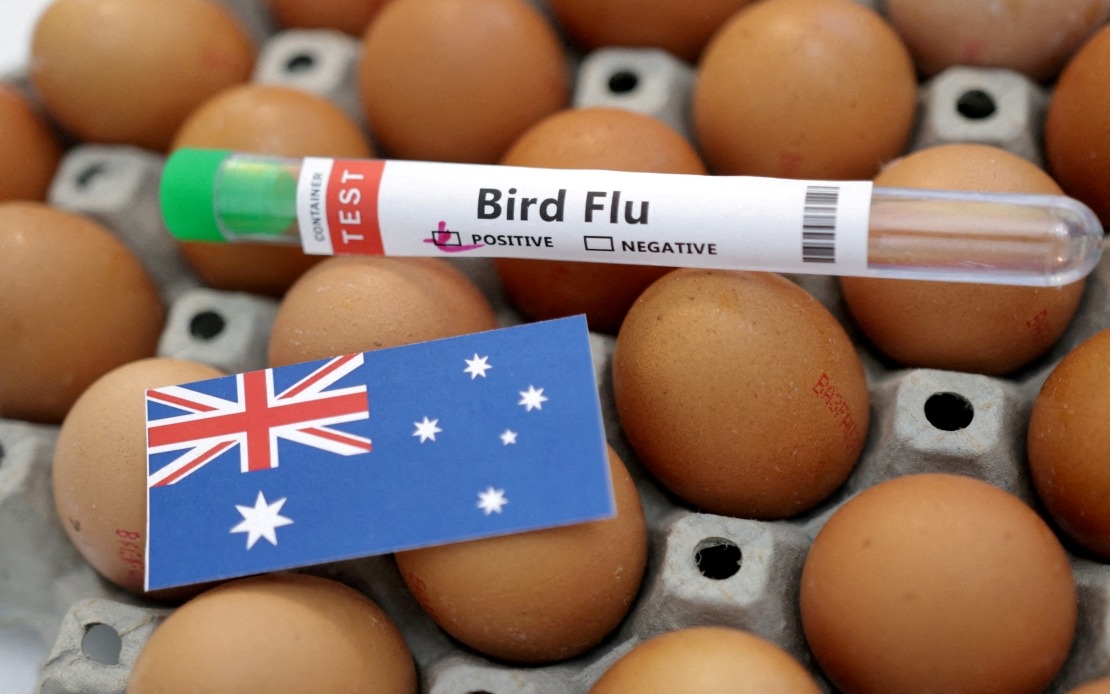
Australia has joined other continents in detecting H5N1 avian influenza circulating within its own wildlife population, ending its status as the sole continent without confirmed local transmission of the deadly strain. The milestone was reached when authorities identified the virus in a greater crested tern, a non-migratory seabird that washed ashore near Robe in South Australia on July 10. This development represents a critical shift in Australia's biosecurity landscape, as all previous detections on the mainland had involved migratory birds originating from sub-Antarctic regions.
Agriculture Minister Julie Collins announced the discovery to reporters, describing the finding as concerning yet unsurprising. The greater crested tern's positive test result for the highly pathogenic H5N1 strain signals that the virus has established a foothold beyond the isolated populations previously tracked in migratory species. The identification occurred months after Western Australia first detected H5N1 in June, when the continent's initial mainland case emerged. Since that watershed moment, authorities have identified a total of twelve confirmed cases across the Australian mainland, fundamentally altering the country's approach to avian influenza management.
The South Australian discovery triggered immediate action from regional health authorities, who deployed enhanced surveillance protocols across the coastal area surrounding Robe. Scientists have launched investigations to trace the infection pathway that led to the seabird's exposure to the virus. Collins acknowledged that while the situation demands serious attention, Australia's robust biosecurity framework has proven effective in detecting the threat early, before wider dissemination could occur. The rapid identification underscores the value of sustained monitoring and swift laboratory confirmation procedures that have become routine practice across Australian wildlife management agencies.
For Southeast Asian nations including Malaysia, Australia's detection of locally circulating H5N1 carries significant implications. The region sits downstream of many migratory bird routes that connect to Australian territories, meaning surveillance systems across ASEAN must remain vigilant for similar developments. While Australia's isolated geography provides some protective advantage, the infection of non-migratory species suggests that local transmission chains can develop wherever bird populations congregate, whether in temperate coastal zones or tropical lowlands. This reality demands that regional veterinary authorities strengthen laboratory capacity and cross-border information sharing protocols.
The progression from migratory to resident bird populations represents an epidemiological concern that extends well beyond Australia's shores. When a pathogenic strain like H5N1 establishes itself in sedentary species, it gains the potential to persist indefinitely within specific geographic areas, transforming from a seasonal threat into a persistent challenge. Greater crested terns inhabit coastal regions and breeding colonies, meaning sustained transmission could affect entire ecosystem networks and human communities that depend on marine resources. The investigation into how this particular bird contracted the virus may reveal whether direct contact with infected migratory species occurred or whether environmental transmission through contaminated food or water sources played a role.
Australia's previous status as H5N1-free on its mainland had created a comparatively secure position in global disease monitoring. The detection of twelve mainland cases within several months, however, suggests either increased circulation globally or improved detection capacity within Australia. The concentration of confirmed cases across South Australia and Western Australia indicates that coastal regions with significant seabird populations face the greatest immediate risk. This geographic clustering may reflect actual disease distribution or enhanced surveillance in these areas following the initial June detection.
Southeast Asian countries should interpret Australia's experience as a cautionary indicator of what proactive surveillance can reveal. Malaysia's own monitoring of avian influenza, conducted through veterinary services and supported by regional coordination mechanisms, must remain comprehensive and adequately resourced. The transition from detecting imported cases to identifying local transmission chains represents a threshold that no country wishes to cross, yet Australia's experience demonstrates that crossing it remains possible regardless of geographical isolation or previous success in containment.
The global H5N1 situation has evolved dramatically over recent years, with the strain now endemic across multiple continents and affecting diverse bird species beyond its traditional hosts. Poultry operations, wild bird populations, and increasingly mammalian species have all experienced outbreaks, indicating growing adaptive capacity within the virus. Australia's detection of locally transmitted cases means the country must now manage the virus as an established environmental pathogen rather than treating each case as an imported anomaly requiring containment. This shift necessitates updated protocols for poultry farming, wildlife rescue operations, and biosecurity measures at ports and airports.
Minister Collins's statement that the discovery represents evidence of a strong biosecurity system at work reflects an important framing, yet also acknowledges Australia's acceptance of the new epidemiological reality. Rather than viewing the detection as a failure, authorities present it as vindication of surveillance infrastructure designed precisely to identify such threats. For Malaysian policymakers and health authorities, this perspective offers guidance: investments in detection and monitoring, while they inevitably reveal problems, serve the critical function of preventing larger outbreaks before they metastasize into uncontrollable situations.
The investigations underway in South Australia to establish the transmission pathway will yield valuable data for regional experts. Whether the greater crested tern contracted H5N1 through direct contact with migratory birds, shared food sources, or environmental contamination will inform risk assessments across the Asia-Pacific region. Malaysia's position along major migratory routes, combined with its tropical environment and diverse avian populations, requires sustained attention to these developments. Coordination with Australian authorities, participation in regional surveillance networks, and maintenance of diagnostic laboratory capacity represent essential components of preparedness.
Looking forward, Australia faces the prospect of managing H5N1 as an endemic threat requiring long-term surveillance, periodic culling operations, and public communication strategies to balance pandemic preparedness with economic and social concerns. The twelve confirmed mainland cases represent only the beginning of what could become sustained monitoring of an established pathogen. For Southeast Asia, Australia's experience validates the importance of early detection systems, cross-border disease intelligence sharing, and maintaining the capacity to respond rapidly when suspected cases emerge. The region's vulnerability to avian influenza stems not from geographic proximity alone but from interconnected ecosystems and trade patterns that facilitate pathogen movement across national boundaries.

