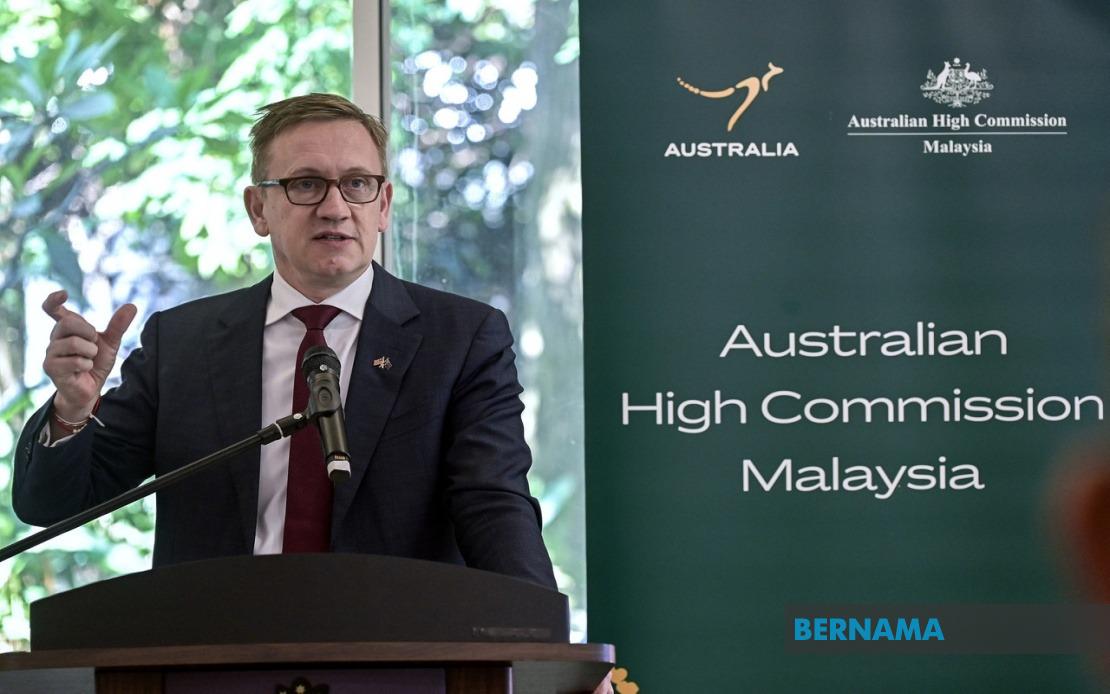
The Australian High Commission in Malaysia has unveiled a fresh scholarship initiative designed to expand opportunities for Malaysian students seeking international education pathways. The Australia Awards–Malaysia Semester Programme, officially launched this month, permits enrolled undergraduates and postgraduates at Malaysian branch campuses of Australian universities to complete up to two consecutive semesters of their studies in Australia, with comprehensive financial backing covering travel, housing, meals, visa processing, and insurance expenses.
Australia's Assistant Minister for International Education Julian Hill, who presided over the launch ceremony, positioned the scheme as a demonstration of Canberra's sustained commitment to nurturing deep interpersonal bonds between the two nations. The initiative reflects a strategic recognition that educational exchange strengthens not merely academic institutions but entire bilateral relationships spanning generations. By facilitating meaningful study experiences abroad, the programme aims to transform Malaysian graduates into cultural ambassadors who maintain lasting connections with Australia throughout their careers.
The backdrop to this initiative is substantial. Malaysia represents one of Australia's largest sources of international students, with more than half a million Malaysians having studied there historically. Most complete their qualifications and return home, yet many carry formative experiences that shape professional networks and personal allegiances to Australian institutions. Hill noted that these individual connections accumulate into broader economic and political dividends, underpinning trade partnerships and diplomatic cooperation that benefit both economies.
Crucially, Hill emphasised that strengthening education ties must operate bidirectionally. While Australia actively recruits Malaysian talent, the government simultaneously encourages Australian students to pursue studies at Australian university branch campuses operating in Malaysia through complementary programmes including the New Colombo Plan and reciprocal semester exchanges. This reciprocal framework prevents the relationship from becoming extractive, instead fostering genuine intellectual and cultural circulation between nations.
The participating institutions in the pilot phase currently encompass Curtin University Malaysia, Monash University Malaysia, and the University of Wollongong Malaysia. Invitations have extended to all four Australian university branch campuses in Malaysia, including Swinburne University of Technology Sarawak Campus, creating pathways for broader student participation as the programme matures. This geographic and institutional diversity ensures that Malaysian students from different regions and academic disciplines can access international mobility opportunities.
From a Southeast Asian perspective, this scholarship initiative carries particular significance. As the region becomes increasingly competitive in attracting and retaining talent, educational mobility programmes serve as tools for regional influence and soft power. Australia's investment in Malaysian human capital development demonstrates confidence in the region's potential and a desire to deepen integration across academic and professional spheres that will shape Southeast Asia's future leadership.
The inaugural cohort comprises 16 Malaysian students who departed for Australia in preparation for the July intake, representing the pilot programme's commencement. This modest opening cohort provides an experimental phase through which the scheme's operational frameworks, student support mechanisms, and outcomes can be assessed before potential scaling. The relatively small numbers also suggest that Australian policymakers are proceeding deliberately rather than rushing implementation, prioritising quality integration and learner support over rapid expansion.
Hill articulated a vision of Australian university branch campuses in Malaysia as more than teaching delivery points. Rather, these institutions function as research engines capable of generating original knowledge and addressing transnational challenges confronting both countries. Medical science, renewable energy, mining innovation, and agricultural advancement represent domains where Australian and Malaysian expertise can productively combine. The scholarship programme thus facilitates not merely student mobility but the circulation of ideas and collaborative problem-solving approaches essential for addressing shared regional concerns.
Government commitment to the programme extends across an initial four-year funding cycle, aligned with standard budget planning horizons. However, Hill expressed hope that successful pilot outcomes would justify elevation to permanent status within Australia's international education strategy. This conditional commitment reflects realistic fiscal planning whilst signalling genuine confidence in the initiative's potential to deliver measurable benefits in bilateral relations. For Malaysian students and universities, the four-year guarantee provides adequate certainty for curriculum planning and student recruitment efforts.
The scheme addresses a persistent barrier to international education: financial constraint. Many academically talented Malaysian students lack resources enabling overseas study experiences, yet possess genuine potential to benefit from and contribute to international learning environments. By covering comprehensive costs including often-prohibitive international airfares, accommodation, and living expenses, the scholarship removes a significant participation obstacle. This democratising dimension ensures that talent rather than parental wealth determines access to transformative educational experiences.
Within Malaysia's higher education landscape, the programme creates meaningful alternatives to conventional full-degree overseas study. Students can maintain connections with their home institution and peer networks whilst experiencing Australian university culture, teaching methodologies, and research facilities directly. This hybrid pathway particularly appeals to mature students with family or employment obligations, those from middle-income backgrounds seeking international exposure without complete relocation, and students pursuing specialised fields unavailable through local campuses.
The initiative also reflects shifting patterns in international student mobility post-pandemic. Rather than assuming all international education requires physical relocation for entire degree programmes, contemporary scholarship designs increasingly emphasise semester exchanges and partial mobility arrangements. These flexible models accommodate diverse student circumstances, reduce costs relative to full-degree study abroad, and maintain institutional diversity within individual academic trajectories. Australia's adoption of this approach signals responsiveness to evolving student preferences and budgetary realities in both developed and developing economies.
Looking forward, the programme's success will depend on rigorous monitoring of participant experiences, post-programme outcomes tracking, and mechanisms through which Malaysian alumni engage with Australian institutions and communities. The most significant achievements will likely materialise not during the study period itself but across subsequent decades as graduates build careers where their bilateral educational experiences inform professional decisions, institutional partnerships, and personal connections that collectively constitute the enduring infrastructure of Australia-Malaysia relations.

