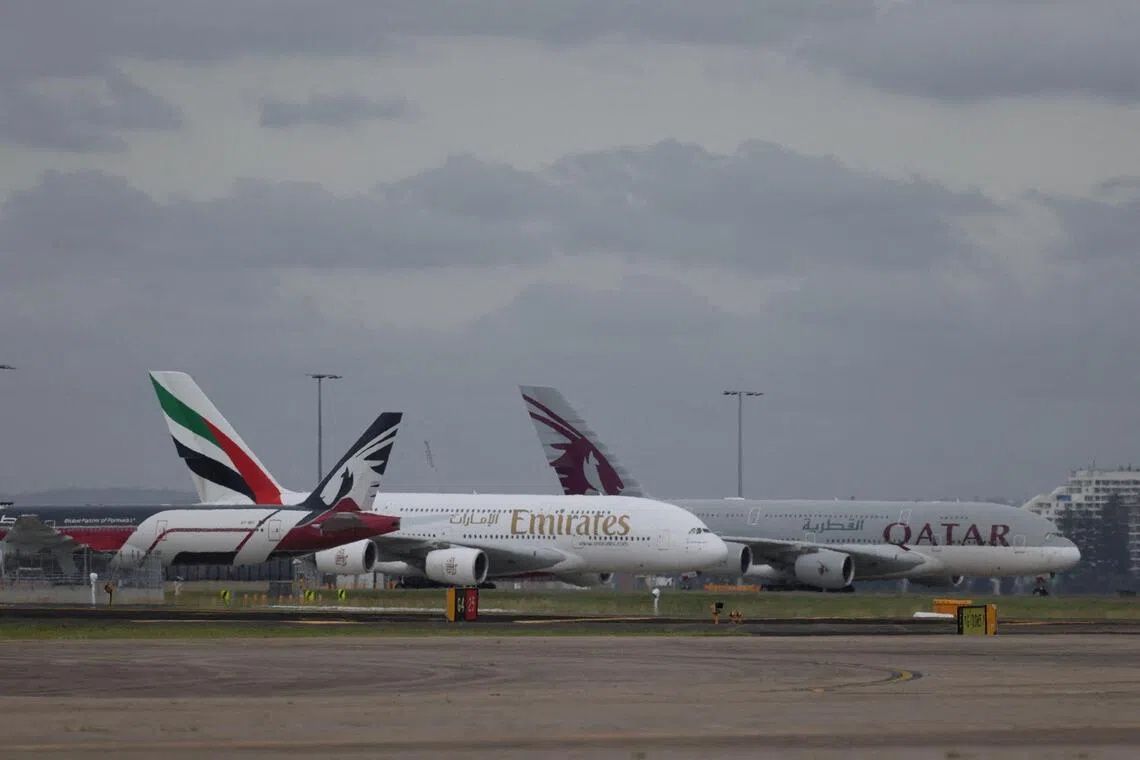
Australia's transport safety regulator has launched a formal investigation into three potentially catastrophic near-misses that occurred at Sydney Airport over a two-week period in late July and early August, marking an unusual cluster of incidents that has prompted scrutiny of airfield operations and staffing at one of the Asia-Pacific region's busiest aviation hubs. The incidents, occurring between July 27 and August 9, have alarmed aviation authorities and raised concerns about whether procedural safeguards designed to prevent collisions on runways are functioning adequately during peak operational periods.
The first recorded incident took place on July 27 when two Qantas aircraft, both having received explicit clearance for take-off, came dangerously close to colliding. Just over a week later, the situation deteriorated sharply when Sydney Airport experienced two separate near-accidents within hours of each other on August 9 alone. In the morning incident, a Virgin Australia Boeing 737 was authorised to begin its take-off roll when the flight crew spotted a Qantas aircraft crossing the runway directly in their flight path. The Virgin Australia pilots executed an emergency stop, bringing their aircraft to a halt approximately one kilometre short of the Qantas plane, which had simultaneously been cleared to taxi across the active runway—a fundamental breach of standard separation protocols. Earlier that same morning, a Jetstar pilot performed an emergency braking manoeuvre to avoid colliding with a Qatar Airways aircraft, demonstrating the severity and frequency of the procedural breakdowns occurring that day.
Angus Mitchell, Chief Commissioner of Australia's Transport Safety Bureau, acknowledged the gravity of the situation while attempting to reassure the travelling public about aviation safety standards. He indicated that the investigation would examine not only the immediate circumstances of each incident but also any underlying organisational or systemic factors that may have created conditions enabling such occurrences. Mitchell emphasised that the bureau would evaluate multiple operational variables, including traffic volume during the incidents, staffing levels in the control tower, and adherence to established protocols. His statement implicitly suggested that resource constraints or staffing gaps may have contributed to the breakdown in standard operating procedures.
One aspect that has drawn particular attention is the delayed reporting of these incidents to higher authorities and the public. Initial questions emerged about why more time elapsed before the incidents were formally disclosed and subjected to regulatory scrutiny, raising concerns about transparency and the mechanisms designed to rapidly escalate safety issues through the aviation system. This reporting delay itself has become part of the investigation's scope, as authorities seek to understand whether communication protocols are adequate during high-stress operational periods.
Mitchell revealed that on August 9, a training or supervisory situation was occurring within the control tower at the time of the incidents, potentially indicating that an instructor or training controller was involved in the operations that led to the near-misses. This disclosure suggests that controller error, whether by trainee or supervising staff, may have been a contributing factor. However, Mitchell was careful not to assign blame prematurely, instead framing the incidents as symptoms of broader challenges facing the airport's operational framework.
The transport authority chief also contextualised the incidents within Australia's aviation sector expansion, noting that the nation is currently in a significant growth phase for air services that requires substantial recruitment and training of new air traffic controllers. This expansion-related strain on the system represents a critical vulnerability, as newly qualified controllers integrate into operations while senior staff shoulder additional training responsibilities. The pressure to rapidly expand the controller workforce while maintaining the rigorous safety standards demanded by international aviation authorities creates inherent tension—a dynamic familiar to Southeast Asian airports experiencing similar explosive growth in passenger and cargo volumes.
Prime Minister Anthony Albanese added his voice to demands for thorough investigation, signalling political engagement with what could have constituted a major aviation disaster. The involvement of the nation's political leadership underscores the seriousness with which these incidents are being treated and the potential for public loss of confidence in aviation safety if not addressed decisively. For Malaysian and other Southeast Asian readers, this situation resonates with concerns about maintaining safety standards amid rapid regional aviation growth, particularly as budget carriers and international services expand across the region.
The incidents expose a critical tension in modern aviation: the simultaneous imperatives to accommodate surging passenger demand while upholding the exacting safety protocols that have made commercial aviation statistically safer than ground transport. Sydney Airport, handling over 40 million passengers annually and serving as Australia's primary international gateway, operates under intense pressure to maximise runway utilisation while maintaining zero-tolerance margins for error. The investigation will likely examine whether current staffing levels and training protocols adequately support the volume of daily operations, or whether the airport has reached saturation points where fatigue and workload become safety hazards.
For aviation professionals and safety-conscious travellers throughout Southeast Asia, this investigation carries implications beyond Australian borders. As regional airports and carriers experience similar growth trajectories, the findings emerging from Sydney's probe could inform safety protocols and staffing models across the region. The incident sequence suggests that procedural compliance becomes increasingly challenging during expansion phases, necessitating robust checking systems and adequate staffing redundancies to prevent human error from cascading into catastrophe. The resolution of this investigation may provide valuable lessons for aviation authorities region-wide grappling with balancing operational efficiency against safety imperatives.

