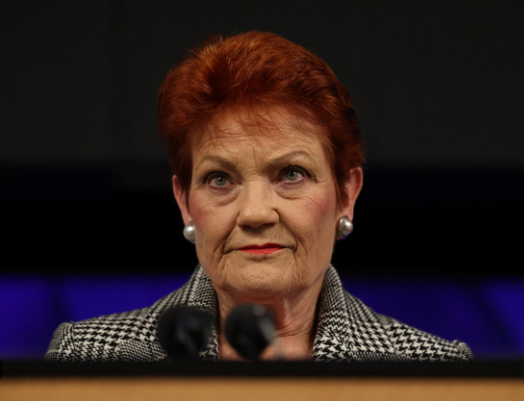
An Australian federal court has rejected Pauline Hanson's attempt to overturn a racial vilification ruling stemming from her 2022 social media attack on Mehreen Faruqi, a senator and fellow parliamentarian. The decision, handed down on Monday, represents a significant legal setback for one of Australia's most polarising political figures and raises fresh questions about the boundaries of acceptable political speech in an era of heated social media discourse.
Hanson, who leads the One Nation party, has positioned herself at the forefront of Australia's anti-immigration movement and emerged as a potent political force with considerable popular support. Her party has leveraged growing voter concerns about immigration, government spending, and Australia's international commitments to build substantial polling numbers. The party's rise reflects broader patterns of populist movements gaining traction across developed democracies, capturing disaffected voters through hardline stances on borders, fiscal restraint, and national sovereignty.
The controversy originated in September 2022 when Faruqi, a left-leaning Greens senator born in Pakistan, posted comments criticising the British monarchy in the immediate aftermath of Queen Elizabeth II's death. Faruqi characterised the late Queen as the "leader of a racist empire built on stolen lives, land and wealth of colonised people," a statement that invoked postcolonial critiques of the British Empire and its historical legacy. Her remarks reflected broader discussions within progressive circles about how to reckon with monarchical institutions and imperial histories.
Hanson's response on social media escalated the dispute considerably. She accused Faruqi of ingratitude toward Australia, pointing to Faruqi's acquisition of citizenship, property ownership, and parliamentary employment as evidence of her having benefited from Australian society. Hanson then told Faruqi to "pack your bags and piss off back to Pakistan," a statement that implicitly suggested Faruqi's immigrant status disqualified her from legitimate political participation or criticism within Australia. The retort employed a rhetorical strategy common in debates about immigration and national belonging—invoking an immigrant's foreign origin as grounds for exclusion or dismissal.
When Faruqi lodged a complaint under Australia's racial discrimination laws, the Federal Court examined whether Hanson's comments constituted racial vilification. In 2024, the court determined that the remarks amounted to "a strong form of racism," finding that they violated provisions protecting individuals from racial abuse. The judgment suggested that while Hanson had legitimate grounds to contest Faruqi's statements about the monarchy, her response crossed a legal and ethical line by weaponising Faruqi's ethnic and national origin.
Hanson mounted an appeal challenging the finding on free speech grounds, arguing that her comments were protected political expression and criticism rather than unlawful vilification. This defence reflected a broader libertarian argument that robust debate, even when harsh or offensive, should enjoy legal protection in democratic societies. The appeal court, however, rejected her position, upholding the original decision and effectively endorsing the view that free speech protections have limits when speech targets individuals based on race or national origin.
Following the court's dismissal of her appeal, Hanson defended her conduct by emphasising her objection to Faruqi's remarks about the monarchy. She characterised her response as a straightforward expression of patriotic sentiment rather than an attack on Faruqi's ethnicity, framing her comments as "calling out" perceived disrespect to the late Queen. This interpretation sidesteps the court's analysis of how her language functioned—specifically, how the invocation of Faruqi's Pakistani background operated as a mechanism of exclusion and delegitimisation rather than mere political disagreement.
The legal outcome reflects evolving international standards on hate speech and racial discrimination. Many Western democracies, including Australia, have moved toward treating certain categories of discriminatory speech as exceeding the boundaries of protected expression. This approach differs markedly from some other Anglo-American jurisdictions, such as the United States, where First Amendment protections extend more broadly to offensive or hateful speech. Australia's framework attempts to balance free expression against protection from racial vilification—a calibration that remains contentious among legal scholars and political figures.
Hanson's One Nation party has nevertheless continued its political ascent, capitalising on voter sentiment around immigration, government efficiency, and scepticism of international institutions. The party has drawn comparisons to populist movements globally, particularly its emphasis on fiscal retrenchment comparable to Elon Musk's "DOGE" proposal in the United States context. One Nation's platform combines economic nationalism with stringent immigration restriction, appealing to voters who feel economically marginalised or culturally threatened by rapid demographic change.
For Malaysian observers, the case illuminates ongoing debates about political speech, immigration, and national identity in diverse democracies. Australia's experience demonstrates how immigration-focused populism can drive electoral success while simultaneously generating legal and social friction, particularly when directed at visible minorities or immigrant-origin citizens. The intersection of free speech doctrine and anti-discrimination law remains unresolved across many jurisdictions, with different democracies striking different balances based on their constitutional traditions and historical experiences.
The Hanson case also underscores how social media has transformed political discourse, enabling politicians to communicate directly with voters while simultaneously creating permanent digital records subject to legal scrutiny. What might have been a passing comment in a parliamentary debate now constitutes documented evidence available for litigation and public judgment. This shift has raised the stakes for politicians' public utterances and forced courts to grapple with new questions about how traditional legal frameworks apply to digital communication.
Looking ahead, Hanson's loss may not significantly constrain her political trajectory given One Nation's continued popularity. The legal setback may instead solidify her position with supporters who view the court decision as emblematic of cultural and institutional forces opposing their preferred political direction. For Faruqi and other parliamentarians from immigrant backgrounds, the decision provides some legal protection against discriminatory attacks, though enforcement mechanisms remain limited and reputational damage persists regardless of judicial outcomes.

