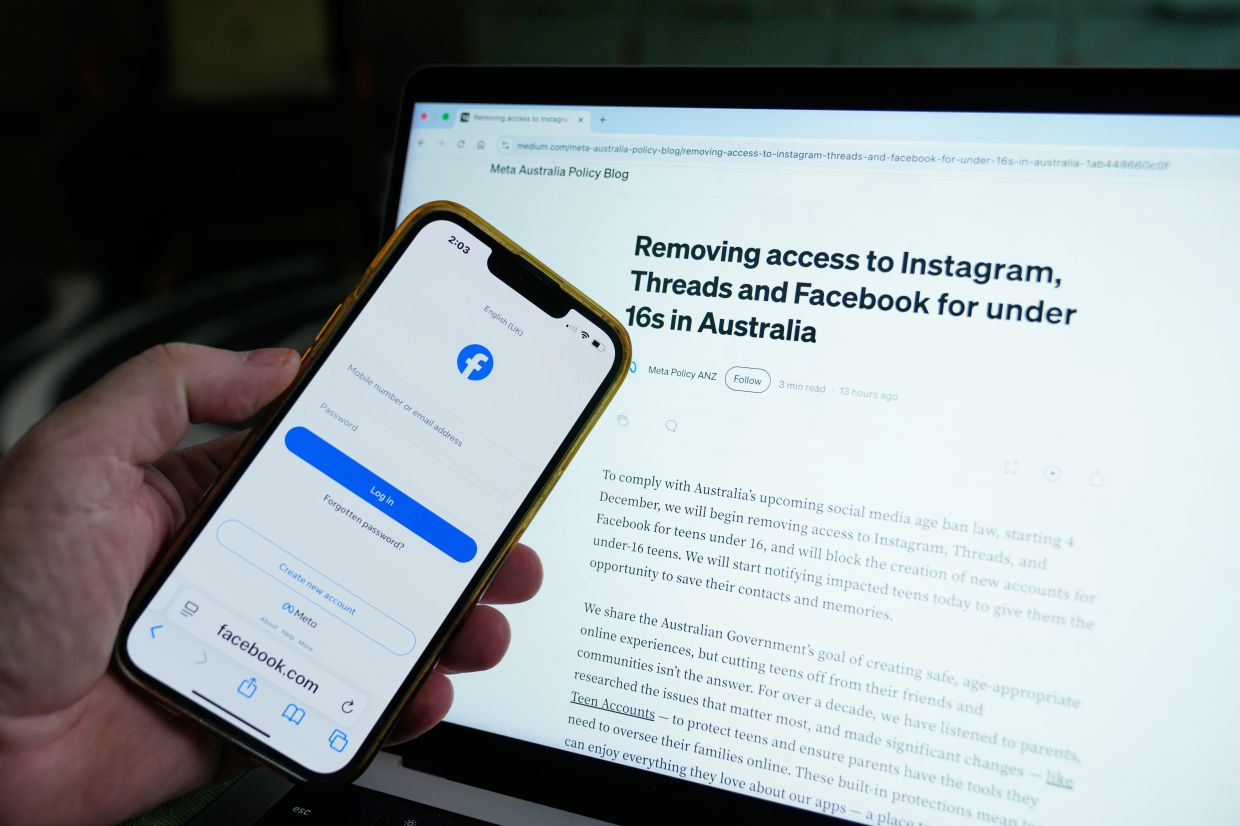
Australia's government faces a legislative setback in its effort to fortify enforcement of the child social media ban introduced in December, with the conservative opposition and Greens party pushing amendments to a Senate inquiry rather than allowing swift passage. Prime Minister Anthony Albanese has publicly castigated the eight-week delay, arguing that postponement will undermine the regulatory authority attempting to police the controversial restrictions on users under 16.
The contentious amendments, tabled in Parliament, would expand the already significant powers wielded by eSafety Commissioner Julie Inman Grant, the nation's online safety regulator responsible for administering the ban affecting Facebook, Instagram, YouTube and seven other major platforms. Under current law, Inman Grant can only request information from these services; the proposed changes would permit her to demand both documents and detailed data about each platform's efforts to prevent young users from accessing accounts. This distinction matters considerably—a demand carries legal force, whereas a request can be easily declined or ignored.
Albanese's frustration stems from a straightforward calculation: every week the Senate delays represents an opportunity for major social media firms to purge records of non-compliance. He told the Australian Broadcasting Corporation that once the amendments become law, the eSafety Commissioner could immediately issue enforcement demands backed by the threat of substantial fines, creating a clear timeline for platforms to demonstrate compliance efforts or face penalties. The delay, Albanese contends, essentially grants these corporations a window to eliminate evidence of their failure to adequately exclude minors from their services—a concern that strikes at the heart of regulatory effectiveness in the digital age.
The amendment package also contains provisions extending Inman Grant's investigative reach beyond the platforms themselves. She would gain authority to demand information from third-party technology providers, particularly those offering age-assurance solutions, allowing independent verification of platforms' claims about how young users circumvent the ban. This represents a crucial enforcement tool, as platforms have repeatedly blamed sophisticated users for bypassing protections while claiming they implement reasonable safeguards. The amendments would double the maximum financial penalty to A$99 million for companies failing to take adequate steps excluding children, a significant escalation designed to create genuine incentive for compliance.
However, the legislative coalition opposing swift passage raises substantive questions about the ban's actual effectiveness. Opposition communications spokesperson Senator Sarah Henderson argues the amendments remain insufficiently stringent, characterising the original legislation as a rushed, poorly designed measure that has demonstrably failed to achieve its stated objectives. This criticism carries weight given recent data about the ban's actual impact: while the government initially reported that over 5 million child accounts were removed, deactivated, or restricted following the December implementation, subsequent investigations by eSafety revealed a far grimmer reality.
According to eSafety's March assessment, approximately 70 percent of children who held accounts on restricted platforms when the ban took effect remain active on Facebook, Instagram, Snapchat, and TikTok. This striking statistic—suggesting that roughly seven in ten young users have either evaded the restrictions or that platforms have largely failed to enforce them—has prompted Inman Grant to consider legal action against non-compliant services. The persistent circumvention indicates that age verification mechanisms are inadequate, that enforcement by platforms is inconsistent, or that young users are sufficiently technologically sophisticated to bypass restrictions designed to protect them.
Greens Senator David Shoebridge, whose party has consistently opposed the ban since its inception, challenges the logic of increasing penalties for violations that have never been financially sanctioned. He questions whether doubling a fine that has never been deployed represents genuine policy improvement or merely symbolic posturing by a government under public pressure to demonstrate action. This critique, while politically motivated, highlights a fundamental gap between regulatory authority and regulatory teeth: without demonstrated willingness to impose maximum penalties, threats of enforcement carry limited deterrent weight in corporate risk calculations.
The international dimensions of Australia's regulatory experiment cannot be overlooked. Multiple countries monitoring Australia's implementation—including developing nations in Southeast Asia and established democracies across Europe—are evaluating whether restrictive approaches to child social media access represent viable policy models. The ban's struggling implementation sends a cautionary signal about the practical challenges of enforcing age restrictions in a digital environment where verification is technically difficult and platforms possess powerful economic incentives to maximise user numbers rather than strictly police demographics.
Communications Minister Anika Wells has confirmed that monthly updates from eSafety since March show no meaningful improvement in platform compliance, reinforcing the sense that existing tools are insufficient. The amendment debate therefore centres on whether expanded investigative powers and enhanced penalties represent the necessary escalation, or whether Australia's ban fundamentally misconceives the problem it attempts to solve. The Senate inquiry, while enabling thorough examination of these questions, simultaneously provides platforms the temporal space to adjust their compliance strategies—or, as Albanese fears, to eliminate records of previous non-compliance.
The legislative standoff reflects deeper tensions within Australian politics regarding technology regulation and the appropriate balance between protecting children and respecting platform business models. The Labour government's determination to strengthen enforcement, the opposition's call for more aggressive measures, and the Greens' philosophical opposition to the ban itself represent genuinely competing visions about digital governance. Yet all three positions acknowledge a common reality: the current mechanisms are insufficient, and young Australians continue accessing platforms nominally prohibited to them, raising fundamental questions about whether legislative prohibitions can effectively function in the borderless digital realm.

