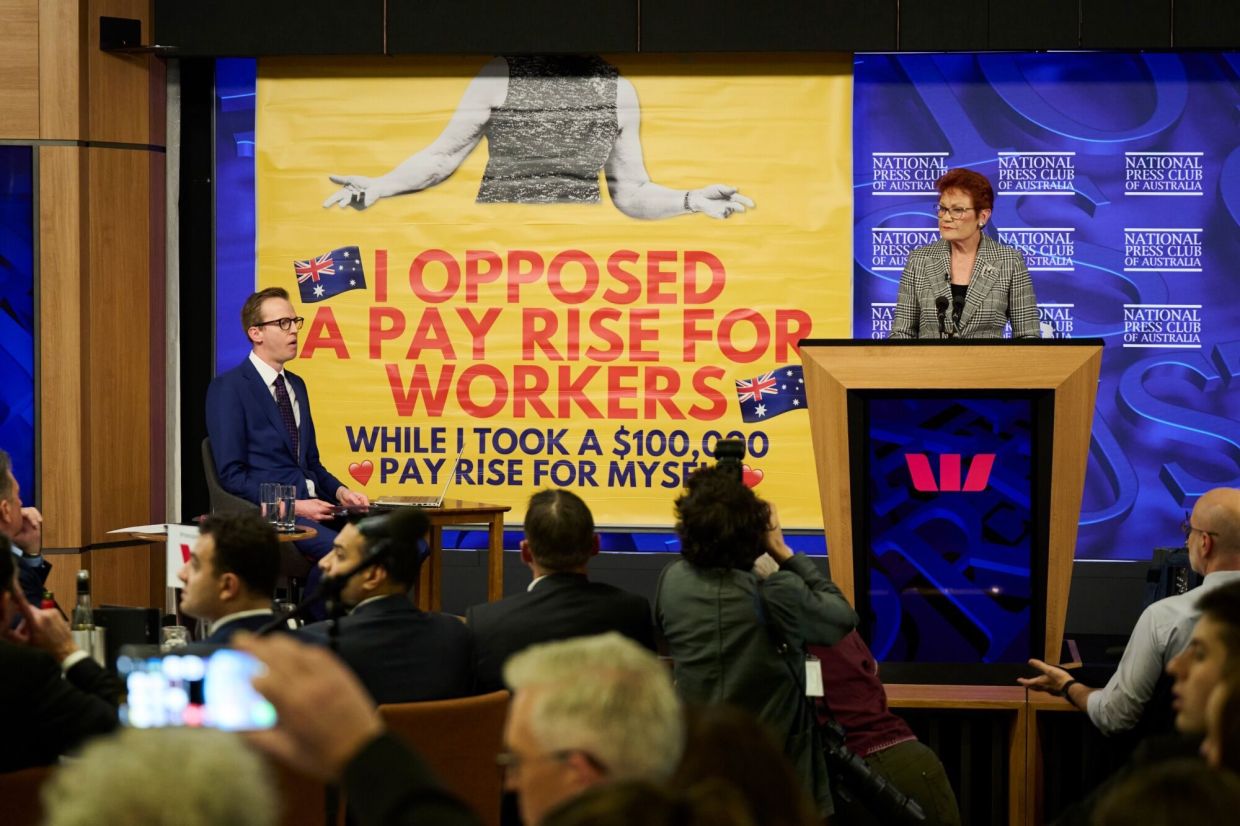
Pauline Hanson, the hard-right populist leading Australia's One Nation party, has mounted a frontal assault on the nation's foundational multicultural policy, declaring that Australia must become a monocultural society despite its multiracial composition. Speaking at the National Press Club in Canberra on Wednesday, a symbolic moment marking her first appearance at the prestigious venue in a 30-year political career, Hanson argued that the housing affordability crisis gripping the nation stems directly from immigration levels she characterises as "extremely high." Her intervention reflects growing electoral momentum for One Nation, which has climbed significantly in opinion polling over the past year, particularly since the collapse of the centre-right coalition government's electoral prospects in May.
Hanson's framing of Australia's identity challenges reveals a fundamental tension at the heart of her political argument. She distinguished between Australia being a "multiracial society"—a demographic reality impossible to deny—and what she insists must be a "monocultural" nation, where all inhabitants "live under the one cultural umbrella." This distinction attempts to reconcile observable diversity with a demand for cultural uniformity, proposing that racial and ethnic diversity can coexist with enforced cultural conformity. In her National Press Club address, she pledged to "slash" migration substantially and to restrict entry for people "from places immersed in extremism like radical Islam," conflating immigration policy with security concerns in ways that blur distinctions between legitimate border management and broader identity politics.
The timing of Hanson's intervention is significant for understanding contemporary Australian politics and its potential resonance across the region. One Nation's polling surge has accelerated precisely as Australians grapple with a constellation of economic pressures that feel increasingly unmanageable for middle and working-class households. Resurgent inflation, climbing interest rates that have pushed mortgage repayments to record levels, and elevated fuel costs—exacerbated by geopolitical tensions including the Iran conflict—have created fertile ground for populist messaging that offers simple explanations for complex problems. Hanson has seized this moment to argue that immigration, which she characterises as a policy choice rather than an inevitable structural feature of modern economies, bears responsibility for housing unaffordability and broader cost-of-living pressures.
Australia's housing crisis presents a genuine policy challenge that extends far beyond immigration, though One Nation's political strategy has successfully linked the two in public discourse. The nation's residential property market has experienced sustained price inflation, driven by factors including restrictive planning regulations, undersupply of dwelling stock, record-low interest rates that inflated demand, and sustained migration that has added to housing demand. However, attributing the entire affordability crisis to immigration obscures the role of inadequate housing construction, investment property speculation, and structural economic factors. The Prime Minister Anthony Albanese's Labor government has attempted to address these pressures through targeted interventions including temporary reductions to fuel excise and tax reform proposals aimed at easing housing costs, recognising that bread-and-butter economic concerns directly shape electoral outcomes.
Albanese has characterised the rise of One Nation and similar populist movements as symptomatic of deeper economic malaise affecting ordinary Australians. His framing identifies "simplistic grievance-based politics" as a reactive phenomenon emerging from an economy that has ceased functioning equitably for significant portions of the population. This analysis suggests that One Nation's electoral gains reflect not primarily ideological conversion but rather genuine material distress among voters seeking explanations and solutions. The political challenge facing Labor involves either delivering visible improvements in living standards or effectively reframing the causes and solutions to economic problems in ways that compete with One Nation's straightforward—if analytically reductive—explanations.
For Southeast Asian observers, including Malaysians navigating their own multicultural societies, Hanson's intervention offers instructive lessons about the relationship between economic stress and identity politics. Malaysia's own complicated history with multiculturalism, constitutional recognition of Bumiputera status, and periodic tensions around cultural integration demonstrate that multicultural societies can experience significant political contestation around identity questions. However, Australia's particular circumstances—as a wealthy developed economy with a history of deliberately managed migration policy—differ substantially from Southeast Asian contexts. The challenge facing Australian policymakers mirrors dilemmas confronting governments across the developed world: how to acknowledge legitimate community concerns about rapid demographic change and economic insecurity without surrendering to reductive narratives that scapegoat vulnerable groups or abandon commitment to inclusive democratic societies.
One Nation's electoral resurgence also reflects shifts in Australia's political geography and coalition-building. The party has consolidated support among regional and working-class voters who feel abandoned by traditional party structures and overlooked in prosperity narratives centred on urban knowledge economies and professional classes. This constituency has experienced genuine disruption from deindustrialisation, agricultural pressures, and wage stagnation, making them receptive to explanations that attribute their circumstances to immigration and cultural change rather than to structural economic transformation. Hanson has effectively mobilised this sentiment, positioning One Nation as the authentic voice of neglected Australians while major parties are portrayed as captured by multicultural orthodoxy divorced from community concerns.
The policy substance underlying Hanson's monoculturalism proposal deserves scrutiny given its vagueness and potential contradictions. Implementing a genuinely monocultural society in a nation that is already substantially diverse would require either the departure of millions of Australians with distinct cultural identities or comprehensive state intervention in cultural affairs—both politically implausible and democratically problematic. More realistically, Hanson's proposal functions as political rhetoric signalling resistance to demographic change and cultural pluralism rather than as a coherent policy blueprint. This gap between rhetorical appeal and practical feasibility characterises much contemporary populist politics globally, where emotional resonance matters more electorally than logical coherence or implementability.
The intersection of housing affordability, immigration policy, and identity politics will likely define Australian electoral competition over coming years. Labor's task involves demonstrating that progressive multicultural commitments can coexist with effective policy addressing cost-of-living pressures and housing shortages. This requires moving beyond defensive postures around multiculturalism toward affirmative cases for immigration based on economic necessity, demographic realities, and cultural enrichment. Simultaneously, the government must deliver material improvements in housing affordability and general living standards, reducing the appeal of scapegoating narratives. One Nation's continued polling strength suggests that this political battle remains unresolved, with significant implications not only for Australia's domestic politics but for regional attitudes toward immigration and multiculturalism across the Indo-Pacific.