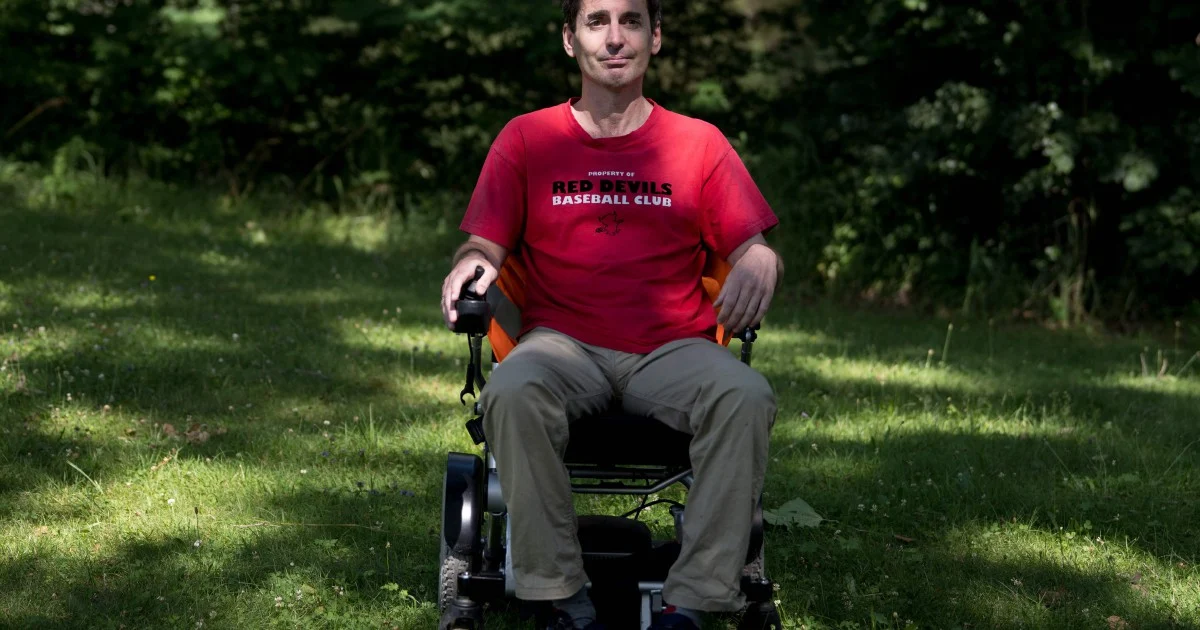
Mex Muellner, an Austrian wheelchair user, has taken his government to court over what he argues is inadequate action on climate change, in a case that illustrates how extreme heat poses particular dangers to people with disabilities. Sweating through successive heatwaves from his wheelchair, Muellner became convinced that legal action was the only pathway to forcing meaningful change from Austria's policymakers on one of the most pressing environmental challenges of our time.
The case represents a growing trend across Europe and beyond, where citizens and advocacy groups are resorting to litigation when they believe governments have failed their constitutional and human rights obligations on climate. Such lawsuits have proven increasingly effective at compelling state action, particularly when framed around fundamental rights to life, health, and dignity. For Muellner and others in similar circumstances, the connection between climate inaction and immediate physical harm is not abstract or theoretical—it is viscerally real.
People with disabilities face disproportionate risks during extreme weather events, a reality that receives insufficient policy attention in most countries. Those with mobility restrictions like Muellner cannot easily relocate to cooler spaces, rely on functioning infrastructure that may fail under climate stress, and often depend on caregivers or public services that become overwhelmed. In much of Europe, including Austria, air-conditioning remains less prevalent than in North America, making heat events particularly dangerous in homes and public spaces. For wheelchair users, the problem intensifies because many cooling centres and emergency services remain inaccessible or poorly designed for people with disabilities.
Austria, despite its reputation as an environmentally conscious nation, has faced persistent criticism from climate advocates and international bodies for falling short of its own targets and European Union commitments. The country's emissions reductions have lagged behind neighbours, and Alpine regions—which Austria depends on for tourism, water resources, and ecological stability—face accelerating glacier melt and ecological disruption. Muellner's decision to pursue his case through courts rather than purely through political channels reflects frustration with the pace of legislative change and the perception that traditional democratic processes have been insufficient.
The legal strategy of framing climate action as a human rights issue has gained traction globally. Courts in Germany, France, and other nations have recognized that governments have obligations to protect citizens from the tangible harms of climate change, not merely to acknowledge the problem rhetorically. By pursuing a human rights angle rather than purely environmental grounds, Muellner's case strengthens the argument that climate action is not a matter of preference or economic convenience, but a fundamental obligation to protect vulnerable populations.
For Southeast Asian readers, this Austrian case carries particular relevance. The region faces even more acute climate pressures than Central Europe, with rising sea levels threatening low-lying nations, intensifying monsoons, and temperature increases that already exceed global averages. Malaysia, Thailand, Indonesia, and the Philippines are home to millions of people with disabilities whose vulnerability to climate impacts remains largely unaddressed in national climate plans. Few countries in the region have systematically evaluated how their disabled populations will cope with the combination of extreme heat, flooding, and infrastructure collapse that climate change threatens.
Muellner's case also highlights an uncomfortable reality: that wealthy nations with greater adaptive capacity and resources are only now being forced by courts to take climate seriously, while poorer countries bearing the heaviest burdens face far fewer legal remedies. This asymmetry raises questions about international climate justice and whether wealthy nations will ultimately fulfill promises made under the Paris Agreement and other frameworks. For developing countries in Southeast Asia bearing disproportionate climate impacts while contributing minimally to historical emissions, Muellner's Austrian lawsuit paradoxically underscores both the effectiveness of legal action and its limitation as a tool available primarily to citizens of rights-respecting democracies.
The specific mechanics of extreme heat represent a relatively invisible threat compared to floods or typhoons, yet they prove deadly. Across Europe, heatwaves kill thousands annually, often among the elderly, the very young, and people with chronic illnesses or disabilities. Austria experienced record temperatures in recent years, with urban areas particularly affected as concrete and asphalt absorb and retain heat. Muellner's experience—being essentially immobilized by heat while trapped in a wheelchair—exemplifies how climate impacts are mediated through existing inequalities and vulnerabilities.
Should Muellner succeed at Europe's human rights court, the implications could extend far beyond Austria. A ruling that inadequate climate policy violates human rights could establish precedent compelling other European governments to accelerate their transition efforts, justify more stringent regulations on emissions-intensive industries, and strengthen the hand of climate advocates across the continent. It might also influence how courts in other regions approach similar cases, potentially emboldening climate justice litigation in Asia and beyond.
What remains unclear is whether national governments and the international community will move quickly enough to prevent the worst outcomes for vulnerable populations, whether disabled or not. Muellner's legal battle is ultimately a proxy for a larger question: whether democracies can respond to existential threats with sufficient urgency, or whether judicial intervention becomes necessary precisely because political systems have proven inadequate to the scale and speed of action required. For Austria and far beyond, the answer will define whether vulnerable citizens receive protection or become casualties of policy inertia.

