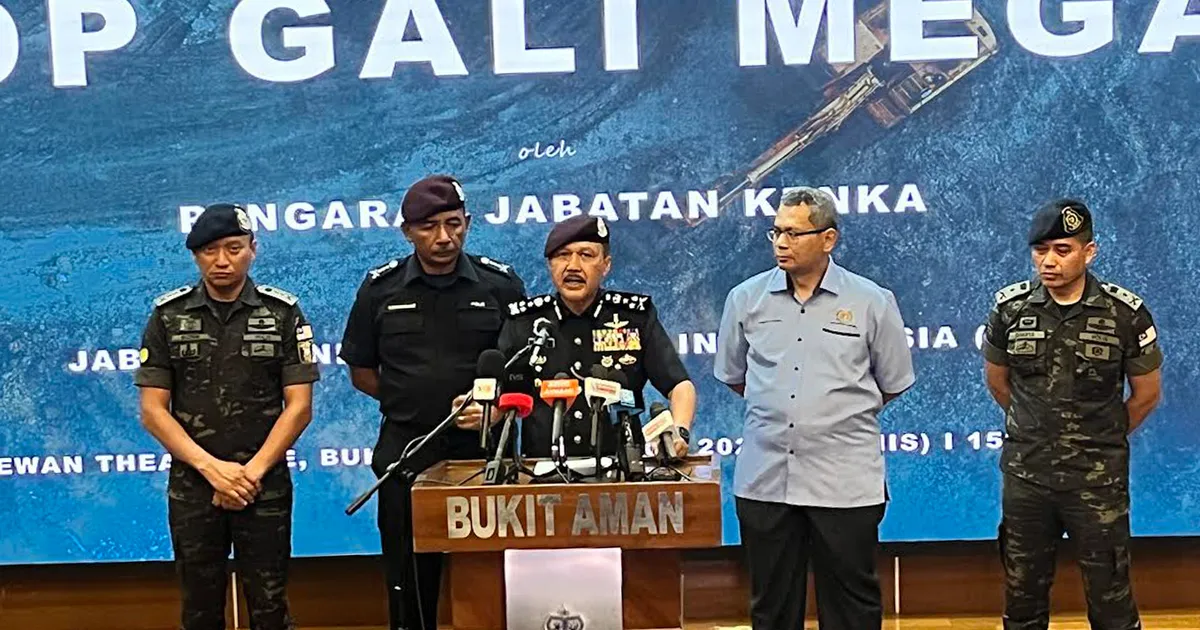
Authorities have dealt a substantial blow to Malaysia's illegal mining sector with a high-impact crackdown that netted 99 suspects and seized assets valued at RM119 million, signalling intensified efforts to curb unauthorised extraction of natural resources across the country. The operation, which ran from August 19 to 23, demonstrates law enforcement's commitment to addressing a persistent problem that threatens environmental integrity and undermines legitimate mining operations regulated under proper frameworks.
During the five-day enforcement sweep, enforcement teams recovered more than 33,000 tonnes of illicitly extracted natural resources spanning coal, quarry stone, earth and sand, with the raw materials alone valued at RM21 million. This substantial volume of confiscated materials reflects the scale at which these underground operations have been functioning, often in remote areas where monitoring proves challenging and oversight remains sparse. The diversity of materials seized indicates these networks operate across multiple commodity types, suggesting organised networks rather than isolated incidents of unauthorised extraction.
The broader asset seizure of RM119 million encompasses not merely the raw materials themselves but also the infrastructure, equipment and vehicles associated with the illegal operations. Heavy machinery used in excavation, transportation vehicles, processing equipment and ancillary materials made up the bulk of this figure, revealing the capital-intensive nature of these enterprises. Such significant asset bases indicate that illegal mining operations often function as sophisticated businesses with substantial financial backing, contradicting the notion that these are small-scale informal activities.
For Malaysia, this operation carries particular significance given the country's natural resource wealth and the persistent challenges authorities face in managing extraction across diverse terrain. The enforcement action underscores growing recognition among regulators that illegal mining generates cascading negative externalities beyond simple resource theft. Environmental degradation, water contamination, land subsidence and ecosystem damage represent serious costs to communities living near mining sites, often those least equipped to bear such burdens.
The arrested individuals face scrutiny that may reveal the ownership structures and financial networks underpinning these operations. Understanding whether single operators controlled these enterprises or whether multiple syndicates collaborated will inform future intelligence gathering and prevention strategies. International criminal networks have previously exploited Malaysia's geography and regulatory gaps to extract resources illicitly, with proceeds often laundered across borders through complex schemes.
From a regulatory perspective, the operation highlights ongoing vulnerability despite existing licensing and oversight mechanisms under the jurisdiction of various state governments and federal authorities. Illegal mining typically flourishes in jurisdictions where enforcement capacity lags behind the rate of illicit activity, where corruption compromises oversight, or where remote geography impedes regular patrols. Addressing these structural vulnerabilities requires sustained investment in surveillance technology, personnel training and inter-agency coordination across state boundaries.
For Southeast Asia more broadly, Malaysian enforcement actions against illegal mining contribute to regional efforts addressing transnational resource trafficking. Neighbouring countries confronting similar challenges often coordinate intelligence sharing and pursue parallel operations. The RM119 million asset seizure sends a clear economic signal that participation in illegal mining carries substantial financial risk, potentially deterring involvement by marginal operators while confronting larger networks with serious operational losses.
The timing of this operation suggests sustained pressure on illegal mining activity rather than sporadic enforcement. Consecutive multi-day operations targeting this sector indicate whether authorities have shifted from reactive to proactive postures, something that would require investment in intelligence gathering and predictive enforcement planning. Establishing whether this August operation represents an escalation in activity levels or merely standard enforcement practice will help clarify the resource commitment Malaysia dedicates to combating illicit extraction.
The case intersects with Malaysia's environmental commitments under international agreements and domestic climate pledges. Unregulated mining operations bypass environmental impact assessments, operate without restoration bonds and leave degraded landscapes requiring expensive remediation. These external costs effectively subsidise illegal operators while imposing burdens on state governments tasked with land rehabilitation. Quantifying these environmental costs alongside the seized asset values would illustrate the true economic case for robust enforcement.
Moving forward, enforcement agencies face the challenge of converting operational success into sustained deterrence. Mass arrests require functional judicial systems capable of processing cases efficiently while gathering evidence sufficient for convictions. Asset forfeiture procedures must operate smoothly to prevent seized materials from returning to illegal markets through legal loopholes or corruption. The 99 individuals in custody represent both a success metric and a test of institutional capacity to maintain momentum.
Stakeholders including state governments, mining regulators, environmental agencies and border authorities must leverage this operation's intelligence to identify and dismantle supporting networks—suppliers of equipment, purchasers of illicit materials, transportation facilitators and money launderers. The true impact of enforcement emerges not from single operations but from systematic disruption of the entire value chain connecting extraction to market sale.
Public communication regarding this operation carries importance for both deterrence and legitimacy. Transparent reporting of enforcement actions, arrest procedures and asset outcomes builds public confidence in regulatory institutions. For communities living near mining areas, visibility of enforcement demonstrates state capacity and commitment to protecting environmental and property rights, which may reduce social acceptance of illegal mining operations that promise employment and infrastructure benefits.

