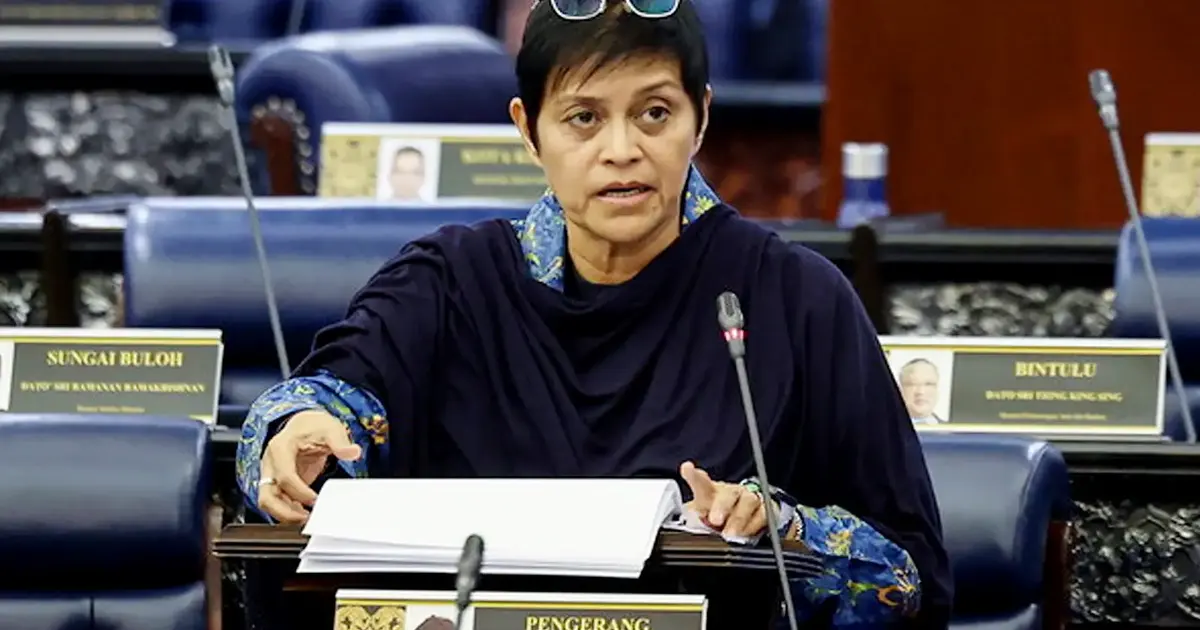
The documents detailing Azam Baki's shareholding portfolio will not enter the public domain, according to Law and Institutional Reform Minister Azalina Saadun, effectively closing off one avenue for public scrutiny into the matter that has drawn intense political attention across Malaysia.
The minister's statement represents a significant decision on information governance regarding the probe into the Malaysian Anti-Corruption Commission chief's financial interests. By restricting access to shareholding records, the government has opted for a closed-door approach rather than the transparency that some observers and opposition figures had anticipated. This move reflects broader questions about how accountability investigations into high-ranking officials are managed within Malaysia's institutional framework.
Azalina indicated that rather than releasing shareholding data directly to the media or civil society, all substantive developments concerning the investigation would be channelled through the office of the chief secretary to the government. This centralised communication strategy means that citizens seeking information about the probe's progress will depend entirely on official government statements rather than being able to examine primary documents themselves. The arrangement consolidates information control at the highest administrative level.
The confidentiality determination carries implications for Malaysia's evolving standards on official transparency. Over recent years, civil society groups and media organisations have progressively advocated for greater disclosure of information affecting public officials, particularly when conflicts of interest or financial irregularities are involved. The decision to withhold Azam Baki's shareholding records runs counter to these calls and may be perceived by transparency advocates as reluctance to subject senior establishment figures to the same level of public examination expected of lower-ranking officials.
For observers following the investigation, the reliance on periodic announcements from the chief secretary's office means the narrative will be shaped entirely by government communications rather than derived from independent analysis of underlying evidence. This distinction matters significantly, as official statements can emphasise particular aspects while downplaying others, creating an inherently filtered version of events that reaches the public.
The minister's position also underscores the distinction between formal accountability mechanisms and public disclosure. Malaysia maintains various investigative bodies and oversight systems designed to scrutinise official conduct, yet these frequently operate without generating the detailed public documentation that has become standard in some comparable democracies. Azalina's statement confirms that the Azam Baki matter will follow this more restricted disclosure model.
Within Southeast Asia, Malaysia's approach contrasts with some regional neighbours where shareholding and asset declarations by senior officials face greater pressure for public disclosure, though practices across the region remain inconsistent. Several countries have moved toward mandatory public asset registries for high-ranking government figures, reflecting growing international norms around transparency in governance. Malaysia's decision here suggests reluctance to adopt such expansive disclosure requirements.
The investigation itself remains significant given Azam Baki's prominent position overseeing Malaysia's anti-corruption enforcement. Any questions about his financial conduct directly touch on public confidence in the institution responsible for investigating corruption among other officials. The manner in which such investigations are handled therefore carries weight beyond the individual circumstances, affecting perceptions of how Malaysia's accountability institutions function.
Since the matter entered public discourse, political responses have divided along expected lines, with government-aligned figures emphasizing due process and institutional procedures while opposition voices have demanded fuller transparency. Azalina's announcement effectively validates the institutional approach, suggesting that the government sees no benefit in opening shareholding records for broader public examination. This reflects confidence in the chief secretary's office as the appropriate custodian of investigative updates.
The statement leaves open the possibility that summary information might eventually be released through official channels, but the confidentiality of underlying records appears settled. This means that even if the investigation concludes, the specific shareholding details that prompted scrutiny may never become public knowledge. Citizens seeking to form independent judgments about the substance of the matter will face information constraints.
Looking forward, the decision may influence how future probes into senior officials are managed, potentially establishing precedent that shareholding investigations can proceed with confidential records. This could have broader implications for other high-ranking figures whose financial portfolios come under examination. The choice to restrict Azam Baki's shareholding data therefore extends beyond the immediate situation to shape institutional practices more broadly.
For Malaysian civil society and media organisations tracking government transparency, this development registers as a test case for what information the state considers releasable regarding senior officials. The outcome suggests boundaries around disclosure remain tightly drawn, even when investigating potential conflicts of interest at the highest administrative levels. The chief secretary's office will now serve as the sole authorised source for information about the probe's progress.

