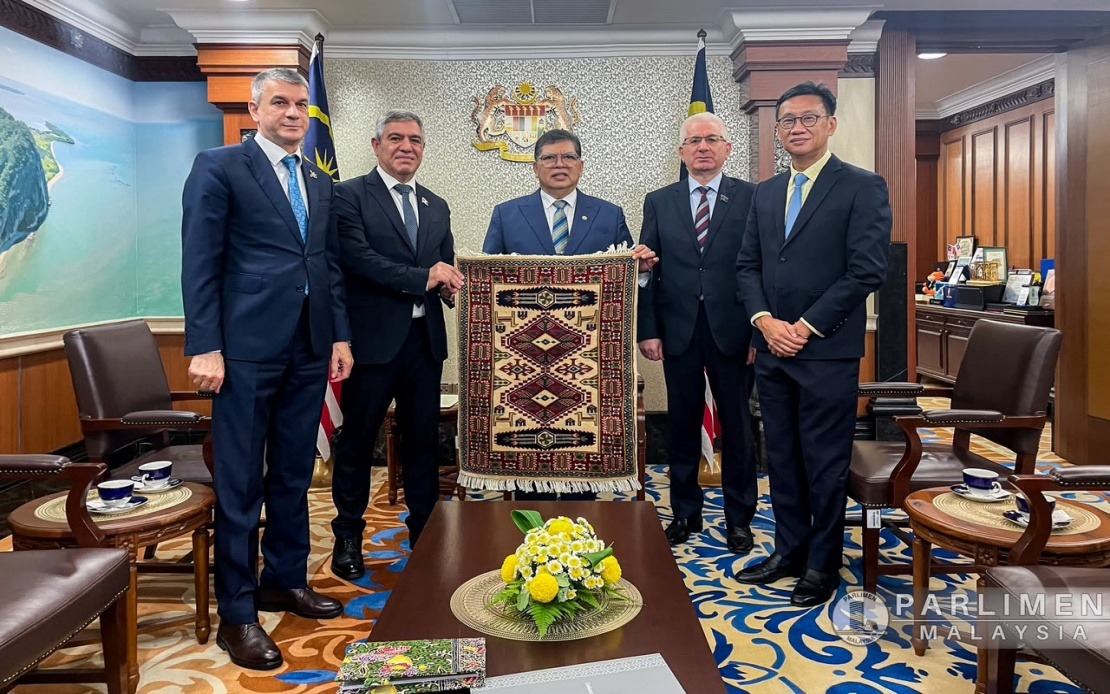
A high-level delegation from Azerbaijan's parliament arrived in Malaysia to advance political and commercial partnerships between the two nations. Led by Vugar Bayramov, head of the Working Group for Azerbaijani-Malaysian Interparliamentary Relations in the Azerbaijani Parliament, the visit underscored both countries' commitment to deepening engagement across multiple sectors. Accompanying Bayramov was fellow parliamentarian Bakhtiyar Aliyev, signalling the significance Baku places on this diplomatic initiative.
During their stay in Kuala Lumpur, the Azerbaijani lawmakers conducted a series of strategic meetings with Malaysia's senior legislative figures. They paid a courtesy call on Tan Sri Johari Abdul, Speaker of the Dewan Rakyat, setting the tone for high-level dialogue. This engagement demonstrated the formal nature of the visit and the respect accorded to the bilateral relationship by both parliamentary chambers. The delegation's interactions with Malaysian Parliament's leadership reflected the importance placed on sustaining institutional connections between the legislatures of the two countries.
The visiting parliamentarians also met with Wong Chen, chairman of the Malaysian Parliament's Special Select Committee on International Relations and International Trade, a forum particularly relevant given the emphasis on expanding commerce. Additionally, they engaged with Zahir Hassan, chairman of the West Asia Friendship Group, highlighting Azerbaijan's strategic positioning within regional diplomacy and Malaysia's institutional mechanisms for fostering ties with countries across Western Asia. These conversations provided platforms for discussing not merely ceremonial matters but substantive opportunities for cooperation.
Meaningwhile, the delegation held separate discussions with Datuk Awang Bemee Awang Ali Basah, President of the Dewan Negara, Malaysia's upper chamber. Both sides used this occasion to exchange perspectives on the future trajectory of their parliamentary relationship. Such interactions between upper and lower house leaders of both nations suggest a comprehensive approach to strengthening institutional bonds, ensuring that cooperation extends across multiple levels of the legislative branch rather than concentrating solely on one chamber.
Beyond the parliamentary sphere, the Azerbaijani delegation recognised that advancing bilateral relations required sustained engagement with the private sector. To this end, the delegation convened with representatives from more than twenty Malaysian business entities, alongside S. Gnanasambanthan, secretary-general of the Malaysian National Chamber of Commerce and Industry. This breadth of participation from the Malaysian business community demonstrates the receptivity of local enterprises to exploring partnerships with Azerbaijani firms and the potential demand for commercial collaboration.
The business-focused discussions centred on concrete avenues for expanding trade and investment linkages. Participants explored mechanisms for strengthening bilateral economic cooperation, fostering direct business-to-business relationships, and identifying emerging sectors where Malaysian and Azerbaijani companies might collaborate. The emphasis on promoting cooperation between both countries' business communities reflected recognition that durable diplomatic relationships are increasingly grounded in shared economic interests and mutual commercial benefit. For Malaysian enterprises, particularly in energy, agriculture, and manufacturing, Azerbaijan presents both market opportunities and potential sources of investment.
Tan Sri Johari's subsequent public reflection on the delegation's visit articulated a broader philosophical perspective on contemporary diplomacy. He emphasised that beyond formal parliamentary protocols, meaningful international relations depend fundamentally on building human connections that transcend political boundaries and ideological differences. In an era marked by geopolitical tensions and fragmented global order, his remarks suggested that the visit embodied a people-centred approach to diplomacy that prioritises mutual understanding and direct human engagement over transactional state interactions.
The timing of this visit carries particular significance for Malaysia's foreign policy positioning. As a Southeast Asian nation with longstanding ties across the Muslim-majority world, Malaysia has sought to maintain balanced relationships across various regions. Azerbaijan, positioned at the crossroads of Europe, Asia, and the Middle East, offers Malaysia strategic access to Caucasian and Central Asian markets while strengthening Malaysia's diplomatic footprint in a geopolitically significant region. The parliamentary delegation's visit reinforces Malaysia's commitment to deepening ties with countries beyond its immediate geographic sphere.
For Azerbaijan, the engagement with Malaysian parliamentarians and business leaders reflects its broader strategy of diversifying partnerships and strengthening economic relationships beyond traditional energy-sector connections. Malaysia's sophisticated financial infrastructure, established networks across Southeast Asia, and experience in facilitating South-South cooperation make it an attractive partner for Azerbaijani interests seeking expansion in the region. The focus on business-to-business engagement suggests both nations recognise that sustainable relationships require foundations beyond governmental agreements.
Moving forward, the outcomes of this visit may catalyse more frequent parliamentary exchanges, delegation visits, and working group meetings between the two legislatures. The establishment of concrete mechanisms for dialogue between sectoral committees and working groups could facilitate more targeted collaboration on issues of mutual interest, from trade facilitation to technological cooperation. Additionally, business forums emerging from these initial contacts may eventually translate into tangible joint ventures and commercial agreements that deepen economic interdependence.
The visit also reflects broader trends in Malaysian foreign policy, where parliament increasingly assumes prominent roles in public diplomacy and economic statecraft. By hosting international delegations and facilitating business networking opportunities, Malaysia's parliamentary institutions demonstrate their relevance not merely as legislative bodies but as platforms for advancing national interests across multiple domains. This evolution enhances the capacity of both countries to build multifaceted relationships that span political, commercial, and cultural dimensions, ensuring that cooperation proves resilient to shifts in any single sector.

