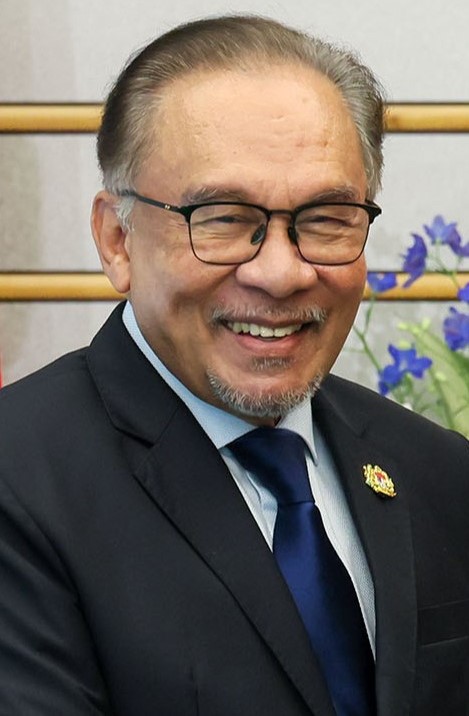
Azmin Ali's elevated profile within Bersatu has prompted analysts to view the party's secretary-general as a plausible intermediary capable of bridging the ideological and political divide between the Mahathir-founded party and the broader Pakatan Harapan coalition, particularly if current leadership transitions occur. The assessment underscores how Azmin's formative decade navigating PKR's internal politics has positioned him with institutional knowledge and personal relationships that could prove invaluable in rebuilding fractured connections between Bersatu and its former coalition partners.
Azmin's trajectory within PKR spanned a period of considerable political turbulence and factional realignment within Malaysia's largest opposition party. His tenure as deputy president exposed him to the complex dynamics of managing competing interests, building consensus across ideologically diverse factions, and maintaining relationships with both sitting and former leadership. During this decade-long engagement with PKR's machinery, he developed networks that extended beyond party structures into broader opposition circles, including individuals now holding influential positions within Pakatan Harapan's constituent parties.
The political fragmentation that has characterised Malaysian coalition politics over recent years has created structural incentives for figures capable of transcending party boundaries and historical grievances. Azmin's movement from PKR to Bersatu placed him in a unique position where he maintains credibility within his original party while simultaneously being embedded in the current Bersatu leadership apparatus. This dual standing, while sometimes generating criticism regarding divided loyalties, paradoxically renders him potentially useful as a reconciliatory figure if broader political realignments become necessary.
Bersatu's relationship with Pakatan Harapan has been marked by periods of cooperation and mutual suspicion since the coalition's formation prior to the 2018 general election. The party's subsequent departure and realignment with other political forces during the Sheraton Move episode crystallised resentments within Pakatan ranks. Yet the volatile nature of Malaysian coalition politics suggests that strategic interests might eventually necessitate recalibration of these relationships, particularly if electoral calculations change or factional pressures within larger parties intensify.
Analysts emphasise that Azmin's capacity to serve as a bridge would depend heavily on his maintaining moderate positioning on contentious issues that have previously divided coalition partners. His public statements and policy preferences would need to demonstrate compatibility with Pakatan's broader reform agenda while simultaneously reflecting pragmatic understanding of Bersatu's interests and constraints. This balancing act, while delicate, remains within the bounds of possibility for an experienced political operator.
The institutional memory Azmin retains from his PKR years extends beyond personal relationships to encompass substantive knowledge of the coalition's policy architecture, decision-making processes, and internal mechanisms for conflict resolution. Such technical familiarity can be instrumental when reopening dialogue between estranged political entities, as it allows mediators to propose workable solutions rooted in established precedent rather than purely speculative frameworks. His understanding of how Pakatan navigated complex negotiations during its previous iterations could inform current approaches to rebuilding trust.
Within Bersatu's current structural context, Azmin's position as secretary-general grants him administrative control over party machinery and communication channels, resources that would enhance any bridging role. The secretary-general portfolio traditionally encompasses responsibility for organisational coordination, information management, and implementation of party directives, positioning the incumbent with levers capable of influencing party direction. Combined with his personal stature within Bersatu's leadership collective, this institutional authority would strengthen his ability to articulate positions that accommodate multiple stakeholder interests.
The hypothetical scenarios analysts discuss typically presume some form of leadership transition within Bersatu, whether through voluntary succession planning or pressure from internal factions. Such transitions frequently create space for repositioning and recalibration of external relationships, as newly ascendant leadership seeks to establish distinct policy platforms and coalition strategies. Azmin's profile as someone capable of delivering credible messaging to both Bersatu's base and Pakatan constituencies would become particularly valuable during such moments of organisational flux.
For Malaysian observers following coalition politics, the Azmin analysis reflects broader patterns whereby parties retain internal figures capable of moderating external relationships and exploring negotiation possibilities without committing current leadership to specific outcomes. Such individuals serve as conduits for back-channel communication, testing ground for potential agreements, and sources of reassurance to partner organisations that serious consideration of alignment remains possible despite current estrangement. Azmin's specific historical positioning within PKR structures provides concrete foundation for such a role.
The practical implications for regional politics extend beyond immediate Malaysian considerations, as Bersatu's alignment decisions influence broader Southeast Asian political dynamics and Malaysia's international positioning. Coalition stability in the region's largest democracy carries implications for regional security arrangements, economic coordination mechanisms, and broader geopolitical alignments. Credible figures capable of managing reconciliation between fragmented political blocs therefore hold significance beyond purely domestic constituencies.
Looking forward, whether Azmin actually transitions into such a bridging role depends on multiple contingencies, including shifts in electoral arithmetic, evolution of public opinion regarding coalition viability, and internal dynamics within both Bersatu and Pakatan parties. Yet analysts note that maintaining someone with his specific combination of institutional credentials and relationship networks positions Bersatu with optionality regarding future coalition configurations. In Malaysian politics, where flexibility and repositioning frequently determine outcomes, such optionality constitutes genuine strategic advantage.