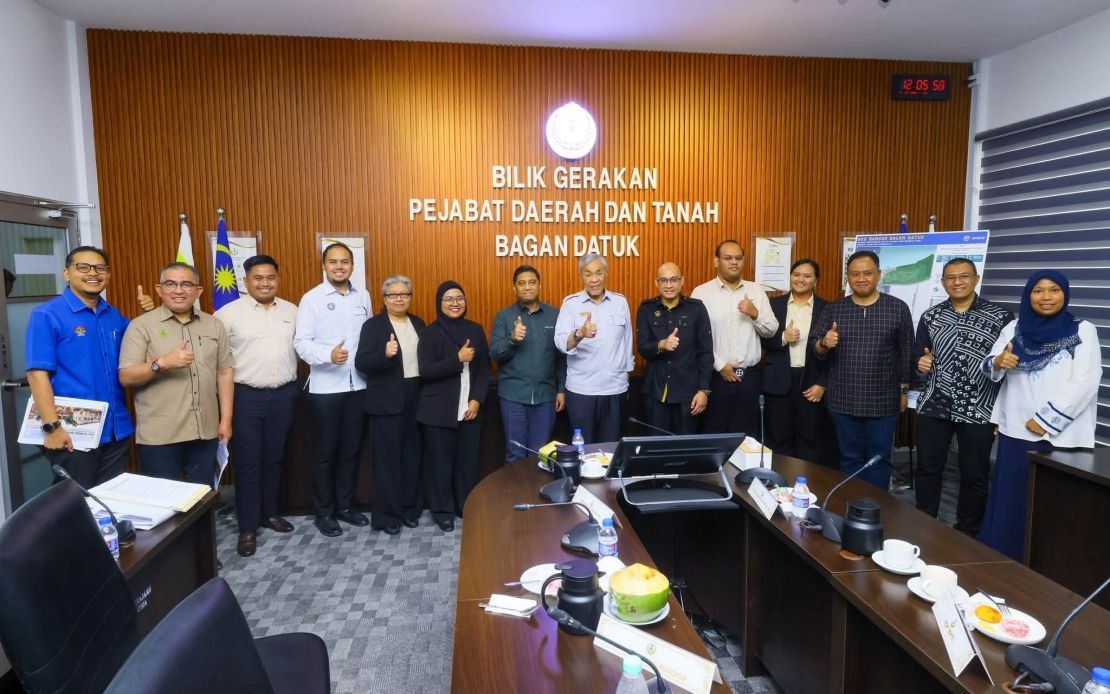
Deputy Prime Minister Datuk Seri Dr Ahmad Zahid Hamidi has articulated a comprehensive vision for transforming Bagan Datuk into a modern, livable administrative town that combines purposeful urban planning with environmental consciousness. Speaking from Ipoh on Wednesday, Zahid emphasised that the parliamentary constituency possesses significant untapped potential that, if properly harnessed, could reshape the district's economic and social landscape while delivering tangible benefits to residents.
The transformation framework rests on establishing Bagan Datuk as an administrative centre embedded within a park setting—a concept that seeks to balance urban development with green spaces. Zahid stressed the importance of integrating quality infrastructure, expanded economic opportunities, and improved living conditions as core pillars of this development trajectory. The approach reflects contemporary urban planning principles increasingly adopted across Southeast Asia, where officials attempt to reconcile growth with livability and environmental stewardship.
Zahid's commitment to the initiative was underscored by his personal participation in reviewing the special area plan (RKK) for Bagan Datuk, a process undertaken jointly with the Teluk Intan Municipal Council, the Bagan Datuk District Office, and engaged consultants. This collaborative approach signals recognition that successful regional transformation requires coordination across multiple administrative and technical entities. The special area plan functions as a strategic blueprint guiding land use, infrastructure deployment, and economic development over a specified timeframe.
As both Member of Parliament for Bagan Datuk and Deputy Prime Minister, Zahid carries dual responsibility for advocating the constituency's interests at federal level whilst maintaining grassroots engagement with local concerns. This positioning enables him to potentially channel resources and policy support toward implementing the development vision. His constituency status provides direct accountability to constituents, creating incentive alignment between political objectives and community welfare.
Zahid's emphasis on indigenous connection—identifying himself as a native of Bagan Datuk—serves to authenticate his commitment to the district's future. He framed the development agenda not as externally imposed change but as fulfilment of local aspirations grounded in understanding community needs. This rhetorical positioning attempts to generate legitimacy and public buy-in for planning decisions that may involve significant land use modifications and infrastructure investments.
The special area plan process represents the foundational phase of materialising developmental ambitions. Such studies typically analyse existing conditions, project demographic and economic trends, identify infrastructure gaps, and recommend strategic interventions. For Bagan Datuk, this planning framework will likely address connectivity, commercial hub development, residential expansion, and service provision across health, education, and governance sectors. The consultation process with municipal and district authorities ensures alignment with existing governance structures and regulatory frameworks.
From a regional perspective, Bagan Datuk's proposed transformation reflects broader Malaysian efforts to decentralise economic activity and development beyond primary metropolitan centres. Creating competitive secondary administrative towns can distribute population pressures, reduce infrastructure strain on major cities, and stimulate economic activity in peripheral regions. For Perak state specifically, enhancing Bagan Datuk's competitiveness diversifies the provincial economy beyond traditional sectors.
The timeframe for implementation remains unspecified, though Zahid's phrase "will continue to strive" suggests a long-term commitment spanning multiple electoral cycles. Translating special area plans into physical reality typically requires sustained investment, regulatory consistency, and coordination across budget cycles. Sustained political attention, particularly from senior federal figures like Zahid, can facilitate resource allocation and policy prioritisation necessary for plan implementation.
Economic diversification emerges as critical to Bagan Datuk's development narrative. Expanding economic opportunities beyond existing activity bases creates employment, attracts talent retention, and generates tax revenue for local administration. Strategic positioning as an administrative centre, potentially with government office relocation or expansion, could anchor employment growth whilst establishing the town as a regional service hub.
Infrastructure enhancement—encompassing transportation networks, utilities, digital connectivity, and municipal facilities—constitutes the material foundation enabling livability aspirations. Improved road networks enhance connectivity to surrounding centres and markets. Modern utilities and services attract investment and residents. Quality public amenities from parks to cultural facilities contribute to community satisfaction and quality of life perception, influencing talent attraction and retention.
The emphasis on distinctive character within a park setting differentiates the development vision from conventional urban expansion. This approach acknowledges growing preference among Malaysian professionals and families for environments balancing urban convenience with environmental quality and recreational space. Such positioning could attract higher-income residents and knowledge-intensive enterprises seeking alternatives to congested metropolitan areas.
Zahid's framing of development stakeholder responsibility highlights recognition that government action alone cannot realise ambitious development visions. Private investment, community participation, and civil society engagement remain essential. This multi-stakeholder perspective, if operationalised effectively, could foster collaborative approaches combining public sector planning and resources with private sector efficiency and innovation.
Ultimately, Bagan Datuk's transformation from secondary town to competitive administrative centre depends on translating strategic vision into sequenced investments, regulatory clarity, and sustained execution. The special area plan provides the analytical foundation; political commitment from Zahid and other leaders provides momentum. Success will hinge on resourcefulness in implementation, adaptability to emerging conditions, and genuine integration of community aspirations throughout the development process.

