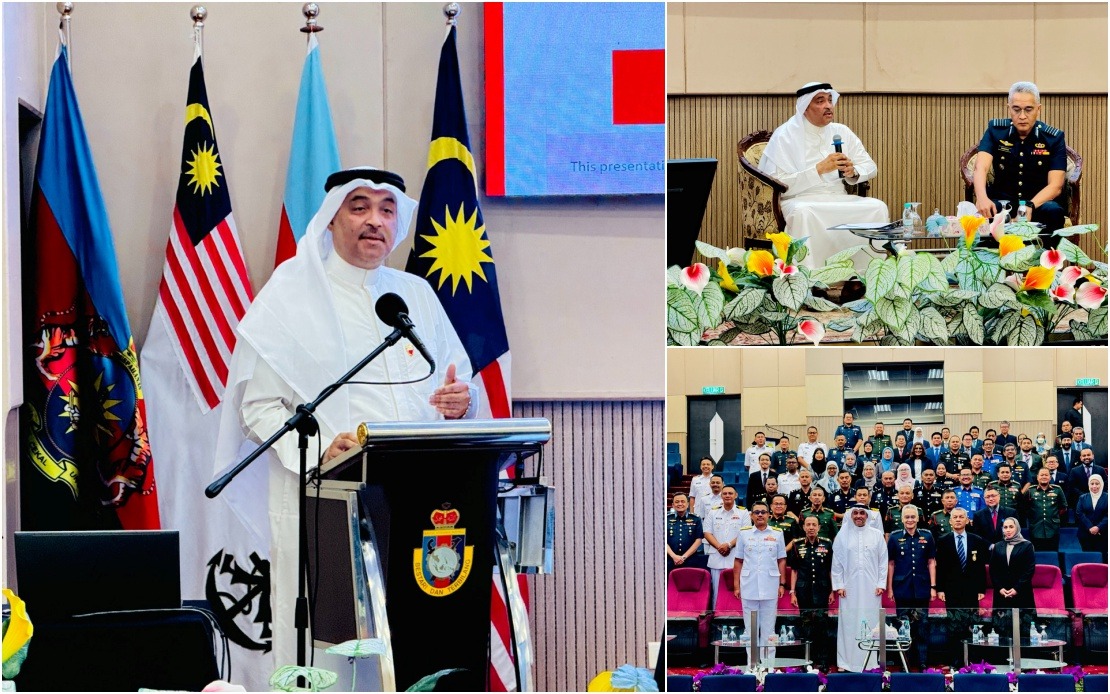
Bahrain and Malaysia are consolidating their bilateral relationship through expanded cooperation spanning multiple sectors, according to remarks made by Bahrain's Ambassador to Malaysia Dr Waleed Khalifa Al Manea during a high-level defence and security forum in Putrajaya. The ambassador indicated that the growing alliance reflects not only the personal rapport between the two monarchs—His Majesty King Hamad bin Isa Al Khalifa of Bahrain and His Majesty Sultan Ibrahim of Malaysia—but also the deliberate policy alignment pursued by their respective prime ministers, His Royal Highness Prince Salman bin Hamad Al Khalifa and Datuk Seri Anwar Ibrahim, to strengthen institutional ties across government and civil society.
The deepening engagement represents a significant shift in how Malaysia positions itself within broader geopolitical currents affecting the wider Asian region. Historically, Southeast Asian nations have maintained carefully calibrated relationships with Gulf powers, balancing commercial interests with a preference for non-alignment in Middle Eastern disputes. Bahrain's elevation of its partnership with Malaysia signals that the island kingdom views Southeast Asia not merely as a distant market but as an active stakeholder in regional stability conversations that increasingly interconnect Persian Gulf security with Asian maritime commerce and strategic interests.
Dr Al Manea delivered his remarks during a lecture at the National Resilience College, a component of the Malaysian National Defence Studies Centre, addressing a distinguished audience that included senior military officers, police leadership, maritime officials, parliamentarians, and defence scholars. His presentation, titled "The Evolving Security Landscape in the Middle East: Bahrain's Vision for Regional Stability, Diplomacy and Collective Security," outlined how Bahrain conceptualizes its role as a stabilizing force within the Gulf Cooperation Council framework while managing threats to critical infrastructure and civilian populations.
The ambassador articulated Bahrain's multifaceted security doctrine, which integrates sovereign defence capabilities with civilian protection mechanisms, factual documentation of security incidents, and diplomatic engagement aimed at fostering regional coordination. This comprehensive approach reflects Bahrain's experience navigating a complex environment where traditional state-to-state security concerns intersect with transnational maritime challenges, cyber threats, and the protection of vital commercial corridors upon which regional and global economies depend.
A central concern animating the bilateral dialogue involves Iranian military activities targeting Gulf Cooperation Council members. Dr Al Manea detailed how attacks originating from Iran have threatened civilian populations, struck at essential infrastructure installations, and disrupted maritime navigation routes critical to global trade. These incidents carry particular resonance for Malaysia and the broader Association of Southeast Asian Nations, as disruptions to regional shipping lanes and threats to commercial vessels directly affect ASEAN economies' ability to conduct international commerce and maintain energy security.
The strategic importance of this security dialogue cannot be overstated for Malaysian policymakers. Approximately 40 per cent of global maritime trade transits through Southeast Asian waters, and any destabilization of shipping corridors extending into the Persian Gulf creates cascading economic consequences for the region's manufacturing and export-dependent economies. Malaysia's position as both a major shipping hub and a significant energy importer makes it inherently vulnerable to Middle Eastern security deterioration, necessitating closer coordination with Gulf powers on maritime safety, freedom of navigation, and the protection of critical infrastructure.
During Bahrain's April presidency of the United Nations Security Council, the kingdom prioritized international efforts to safeguard maritime routes and protect critical infrastructure from attack. This initiative culminated in United Nations Security Council Resolution 2817, which Malaysia co-sponsored, reaffirming the sovereignty rights of affected states and emphasizing the imperative to protect civilian populations while calling for an end to hostilities. Malaysia's co-sponsorship represented a notable commitment to multilateral responses addressing Middle Eastern security challenges, reflecting a willingness to align with Gulf partners on international platforms despite traditional ASEAN preferences for measured engagement in external regional disputes.
The expanding partnership also carries commercial and sporting dimensions that reinforce diplomatic bonds. Bahrain's selection to co-host the 2026 Formula 1 Gulf Air Bahrain Grand Prix with Malaysia represents more than a ceremonial gesture. Such major international events strengthen people-to-people connections, demonstrate technological and organizational capacity, and create regular opportunities for high-level diplomatic engagement. The motorsport sponsorship and hosting arrangement signal mutual confidence in the partnership's durability and shared vision for positioning their nations as modern, globally engaged economies.
For Malaysia, the deepening relationship with Bahrain and, by extension, Gulf Cooperation Council members offers tangible benefits across multiple domains. Enhanced security cooperation enables intelligence sharing regarding maritime threats, terrorism financing, and transnational criminal networks that affect both regions. Diplomatic alignment on international platforms amplifies Malaysia's voice in global governance discussions, particularly regarding maritime law, freedom of navigation, and the responsibility of states to prevent attacks on civilian infrastructure. The partnership also opens opportunities for Malaysian companies to participate in Gulf infrastructure projects, defence procurement initiatives, and technology transfer arrangements that support economic diversification away from traditional palm oil and semiconductor exports.
The lecture's venue and audience composition underscore the institutional depth now characterizing Malaysia-Bahrain relations. The National Resilience College occupies a pivotal position in Malaysian strategic thinking, training senior military and civilian officials responsible for long-term defence planning and security policy formulation. By addressing this audience, Dr Al Manea ensured that Bahrain's security perspectives would influence not merely diplomatic circles but the military-strategic establishment responsible for force development, doctrine evolution, and operational planning across Malaysian defence institutions.
The security landscape Dr Al Manea described—characterized by asymmetric threats, maritime vulnerabilities, and the necessity for multinational coordination—reflects contemporary realities that transcend traditional geographic boundaries. Malaysian defence planners increasingly recognize that threats originating in the Middle East can swiftly affect Southeast Asia through maritime channels, supply chain disruptions, and radicalization pathways. Closer institutional ties with Bahrain and other Gulf powers provide Malaysian security establishments with forward visibility into emerging regional threats and opportunities to shape international responses before crises escalate into direct threats to ASEAN members' interests.
Looking forward, the Bahrain-Malaysia partnership appears positioned for continued evolution across security, economic, and cultural dimensions. Both nations face interconnected challenges regarding maritime security, critical infrastructure protection, and the maintenance of rules-based international order amid great power competition. The bilateral relationship, reinforced through high-level political commitment and institutional engagement, positions both countries to navigate these challenges more effectively while contributing to broader regional stability in an era of escalating geopolitical complexity.

