Bahrain has resisted tapping a $5.3 billion currency swap agreement with the United Arab Emirates despite significant economic headwinds, according to Minister of Sustainable Development Noor bint Ali Alkhulaif. The decision to leave the facility untouched, even as foreign exchange reserves have dwindled to roughly $3 billion—their lowest point since the COVID-19 pandemic—signals official confidence that the kingdom can weather its current fiscal challenges without emergency liquidity assistance. Alkhulaif, who also sits on Bahrain's central bank board, confirmed on Thursday that the swap, arranged in April, remained unexercised.
The geopolitical situation threatening Bahrain's economic stability has intensified dramatically. The kingdom occupies an exposed position in the Gulf, caught between broader tensions that have destabilized shipping lanes and deterred foreign investment. Credit rating analysts at S&P Global project the regional conflict will trigger a three percent economic contraction this year, compounded by a fiscal deficit approaching 8.5 percent of GDP—metrics that would ordinarily trigger urgent deployment of emergency funding mechanisms. Fresh Iranian strikes on the kingdom over consecutive days underscore how fragile the security environment remains and how quickly circumstances could force policymakers to reconsider their liquidity stance.
Yet Alkhulaif's public messaging emphasizes resilience rather than vulnerability. She characterized the current moment as a deviation from planned development trajectories, telling Reuters in a Tuesday interview that "what has happened is unfortunate, not what we planned for" and that this year was intended as "a year of building the new Bahrain." This rhetorical positioning matters for both international confidence and domestic morale. Despite the challenging headlines, she argued recovery mechanisms are already operational across critical economic sectors.
Manufacturing and logistics enterprises have begun redirecting supply chains away from the traditional Strait of Hormuz route, a significant adjustment that reduces immediate vulnerability to further shipping disruptions. Tourism data provides a more encouraging backdrop—inbound visitors from neighbouring Gulf states, which comprise approximately 90 percent of the roughly 15 million tourists who visited last year, have rebounded to pre-conflict levels. This regional travel resilience suggests that while international tourism may remain suppressed, the wealthy Gulf tourism market that typically generates highest per-visitor revenues has largely normalized.
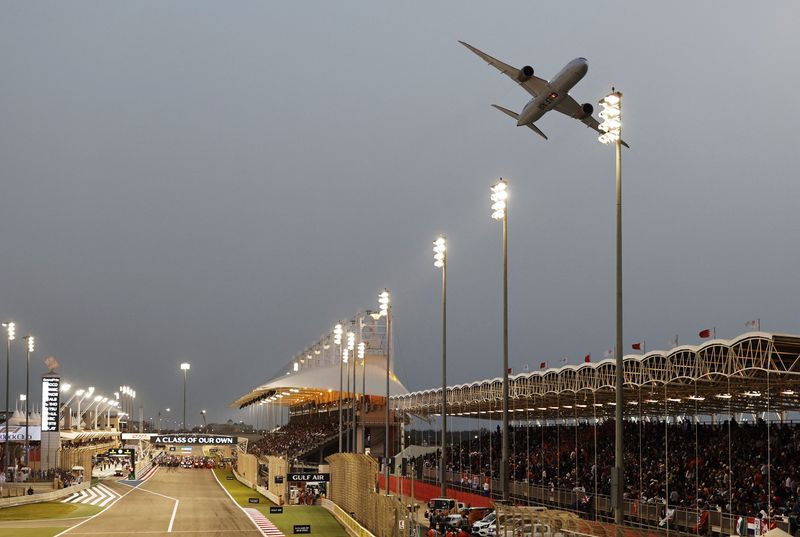
Parallel to economic stabilization efforts, Bahrain is pursuing the reinstatement of its Formula One Grand Prix, cancelled last March alongside Saudi Arabia's race after the conflict erupted. The event represents far more than mere sporting spectacle for the small island nation—it functions as a significant economic driver and international prestige platform. The race weekend typically draws approximately 105,000 spectators, with international visitors accounting for 10 to 15 percent of that audience but contributing disproportionately to hospitality and luxury spending.
Formula One sources indicate the most probable slot for Bahrain's return would be the October 3-4 weekend, positioned between the Azerbaijan Grand Prix in Baku and Singapore's race on October 11. This timing would require coordinated adjustment of the international racing calendar, a logistically complex undertaking that affects team preparation schedules, venue engineering, and broadcast arrangements across multiple time zones. Alkhulaif confirmed that discussions are underway regarding possible reinstatement of cancelled races, though she emphasized that no firm confirmation has yet materialized. The provisional language—"potentially"—reflects the genuine uncertainty still surrounding both the security situation and Formula One's willingness to commit resources to the restart.
Sporting authorities recognize that the window for calendar decisions is closing rapidly. Teams and race organizers require adequate preparation time to execute successfully, meaning postponement of scheduling determinations would effectively foreclose October possibilities. The pressure to decide imminently creates a peculiar dynamic where Bahrain must project sufficient confidence in stability to justify the motorsport investment, while acknowledging that geopolitical conditions remain volatile and potentially subject to sudden deterioration.
Bahrain's longer-term motorsport prospects appear considerably brighter. The timing of Ramadan in 2026 will shift earlier in the calendar year, positioning Bahrain to reclaim the prestigious opening race of the 2025-26 season—a scheduling advantage the kingdom has previously enjoyed. Associated pre-season testing programs would similarly revert to Bahrain, consolidating the nation's status as the region's motorsport hub and extending the economic activity window surrounding the marquee event. However, this medium-term optimism necessarily remains contingent on demonstrable stabilization of the security situation and sustained de-escalation of the underlying regional tensions.
The broader significance of Bahrain's cautious approach to both its currency swap and F1 negotiations lies in the signal it transmits about confidence levels among Gulf policymakers. By preserving the UAE swap for potential future deployment while actively marketing its sporting credentials internationally, Bahrain is attempting to maintain credibility on both fronts—demonstrating fiscal prudence to global creditors while signaling that normal business operations are resuming for international investors and sporting bodies. Whether this carefully calibrated messaging can be sustained depends ultimately on whether the regional security environment stabilizes or deteriorates further in coming weeks.

