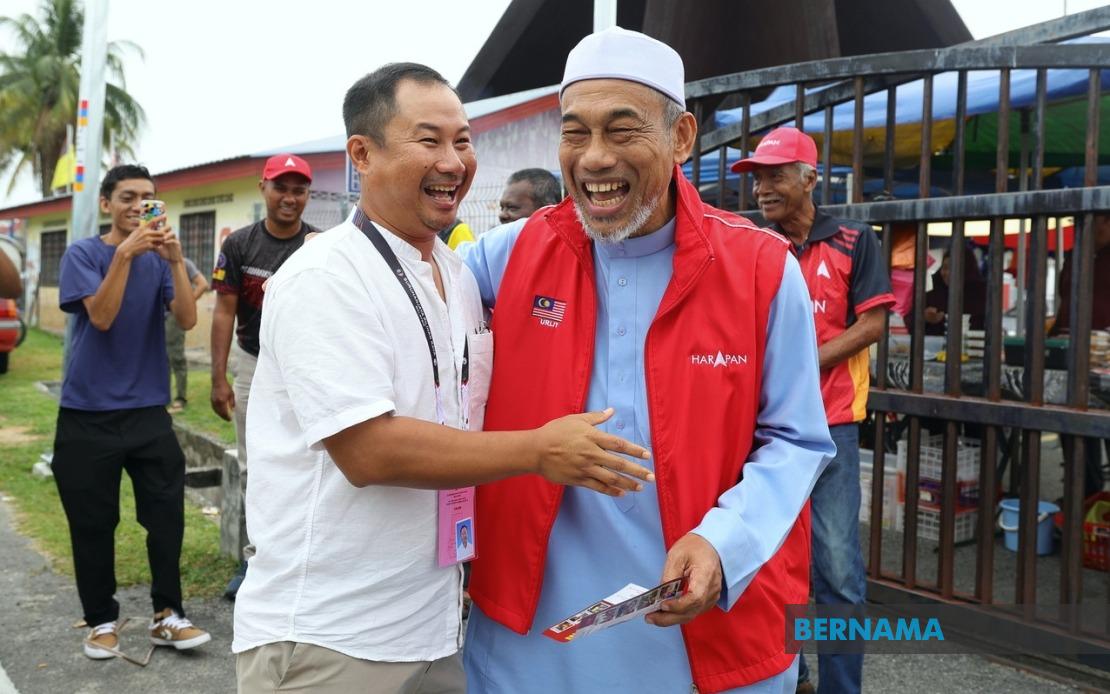
Datuk Bakri Sawir, the Pakatan Harapan candidate for Klawang in the 16th Negeri Sembilan State Election, is mounting his bid for a third consecutive term by emphasising the service initiatives and personal accessibility that have defined his tenure as an incumbent assemblyman since 2018. The 67-year-old politician frames his re-election campaign around a fundamental conviction that elected representatives must embed themselves within their constituencies, maintaining constant availability rather than retreating to distant service centres between electoral cycles.
Bakri's strategic appeal rests on demonstrating tangible commitment through sustained community engagement. The Klawang constituency, with its modest electorate of fewer than 14,000 voters, has enabled the incumbent to cultivate what he describes as genuine relationships with residents through consistent personal interaction. His campaign narrative positions this intimacy of contact as a distinguishing advantage against opponents who, he suggests, maintain only fleeting contact with constituents during election campaigns. This localist approach resonates particularly in Malaysian state elections, where personality and perceived accessibility often determine voter loyalty as decisively as party affiliation.
The assemblyman's philosophy explicitly reframes political service as a spiritual and moral undertaking. In campaigning at Pekan Kuala Klawang's weekly market, Bakri articulated a view of politics as worship and a pathway to spiritual merit—a framing that appeals to conservative voters concerned about ethical governance. His stated willingness to accept voter rejection without rancour demonstrates an attempt to transcend the adversarial tone characterising Malaysian electoral contests. This approach, rooted in acceptance of diverse political preferences, positions him as a consensual figure rather than a divisive partisan.
At the operational level, Bakri maintains permanent residence within Klawang, a commitment he credits with enabling spontaneous constituent contact outside formal service hours. This residential commitment contrasts markedly with the practice among some elected representatives who maintain only nominal constituency presence. For voters assessing competing claims to dedication, such tangible sacrifice—remaining domiciled in a rural constituency rather than commuting from urban centres—functions as credible evidence of genuine commitment. The constituency's limited size means that Bakri's presence or absence would be immediately observable to residents, creating accountability through unavoidable visibility.
Infrastructure development constitutes the second pillar of Bakri's platform. He advocates for establishing a higher education institution in Jelebu district, framing this as essential for developing human capital and retaining educated youth within the region. The proposal for Universiti Malaysia Negeri Sembilan, shelved due to current fiscal constraints, represents an aspirational long-term vision that differentiates his agenda from competitors focused on incremental improvements. Such proposals appeal to families invested in their children's educational trajectories and regional economic development advocates who perceive brain drain as a critical challenge.
More immediately actionable are Bakri's plans for a Rest and Recreation facility in Tembun, Hulu Klawang, and recreational development at Bukit Tajali. These projects target both quality-of-life improvements for residents and economic stimulus through enhanced tourism infrastructure. For a rural constituency competing for state-level investment allocation, having an incumbent directly engaged in securing and implementing such facilities provides a material advantage. The proposed R&R facility particularly addresses a practical deficit in a region bisected by major travel routes, offering immediate economic benefits through employment and commercial activity.
Agrotourism development, leveraging Jelebu's historical British Memorial Stone, represents an attempt to monetise cultural and natural assets. This strategy acknowledges the reality that rural constituencies must generate internal economic opportunities rather than relying on external patronage. By positioning local heritage as a tourism drawcard, Bakri articulates a development vision attuned to contemporary trends in experiential and heritage tourism. Such positioning requires alignment with both state tourism strategies and potential private sector investment, demonstrating sophisticated understanding of how rural constituencies can participate in broader economic development.
The electoral context presents complexity that transcends Bakri's personal record. The three-cornered contest involving Perikatan Nasional's Danni Rais and Bersatu's Muhammad Adib Musa fragments the anti-Harapan vote, potentially benefiting the incumbent despite broader shifts in voter sentiment. Rais, at 38, brings generational appeal that may attract younger voters fatigued by incumbent politicians. Adib Musa, at 25, represents an unprecedented youthful candidacy that could mobilise first-time voters. These demographic considerations inject uncertainty into Bakri's presumed advantage, despite his superior access to incumbent resources and established networks.
The Negeri Sembilan State Legislative Assembly dissolution on June 5, with polling scheduled for August 1, compresses the campaign timeline within which Bakri must refresh voter engagement. Early voting on July 28 will absorb 889,490 registered voters, including military and police personnel voting early. The enlarged electorate compared to Bakri's previous contests may dilute his personal accessibility advantage, as newer voters lack the extended history of constituent contact that characterises his relationship with longer-term residents. This demographic shift necessitates that Bakri's campaign effectively communicate his service record to voters encountering him for the first time.
The Klawang campaign encapsulates broader tensions within Malaysian electoral politics between personality-driven incumbent advantage and demand for generational renewal in representation. Bakri's emphasis on service delivery and community integration responds to genuine constituent expectations regarding political accountability. However, his vision of incremental infrastructure improvement, while substantive, competes against younger candidates offering fresh perspectives on governance and economic opportunity. The election outcome will partially indicate whether rural Malaysian constituencies prioritise demonstrated service and established accessibility or whether appetite for generational change supersedes incumbency advantage.
Bakri's campaign strategy fundamentally depends on voter perception that his previous two terms delivered meaningful benefits and justified future investment in his continued representation. His narrative of spiritual commitment to public service and personal sacrifice through constituency residence attempts to elevate his candidacy beyond transactional political competition. The specific projects he advances—education, tourism infrastructure, heritage development—suggest recognition that rural economic sustainability requires targeted intervention and that state representatives must actively compete for investment allocation. Whether this integrated approach proves sufficient to overcome electoral headwinds and competitor initiatives will crystallise when polling concludes on August 1.

