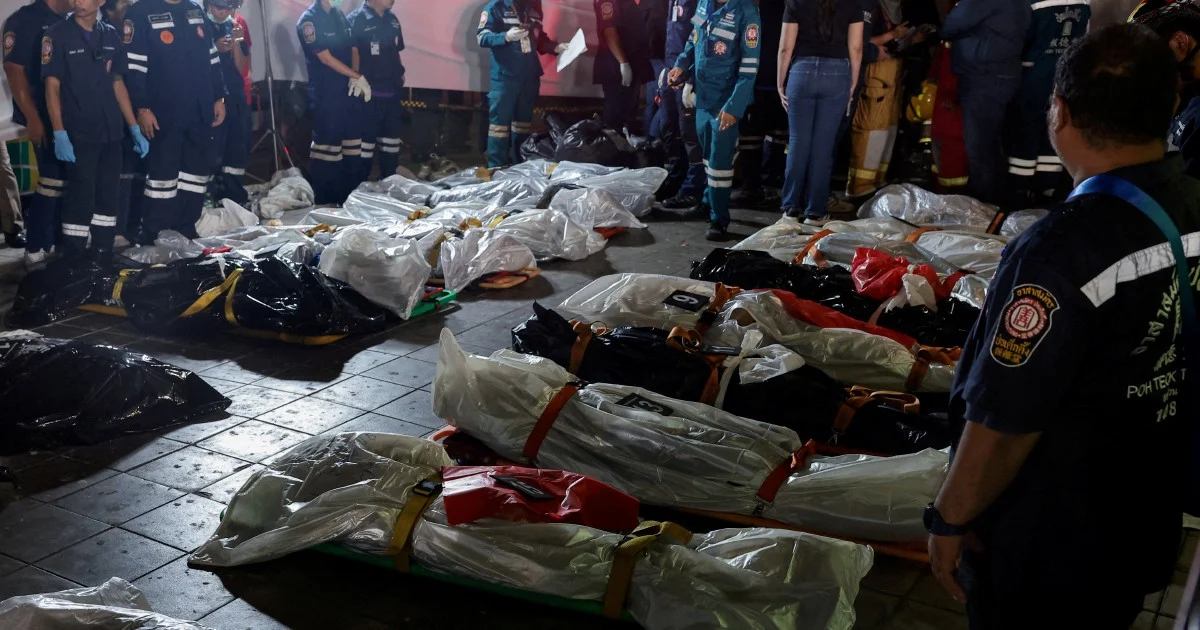
Thailand has been struck by tragedy after a massive fire engulfed a bar in Bangkok on Sunday night, claiming the lives of at least 27 people according to Prime Minister Anutin Charnvirakul. The incident marks one of the deadliest fire disasters to hit the Thai capital in recent years, drawing immediate attention to the safety standards governing the country's sprawling nightlife industry.
The scale of the loss has sent shockwaves through Bangkok and beyond, with emergency services mobilizing rapidly to contain the blaze and conduct search and rescue operations. Initial reports suggest the fire spread with alarming speed through the venue, hampering evacuation efforts and trapping occupants inside. The exact circumstances surrounding the fire's origin remain under investigation, though preliminary assessments will likely focus on structural design, emergency exits, and fire safety equipment availability.
This tragedy echoes previous disasters that have exposed systemic weaknesses in how entertainment venues across Thailand manage fire prevention and emergency protocols. The hospitality sector in the kingdom has faced recurring criticism from safety inspectors and international observers regarding inconsistent adherence to building codes and evacuation procedures. Many bars and clubs, particularly those operating in older structures or converted spaces, have been flagged for inadequate safety features including blocked exits, insufficient fire suppression systems, and minimal staff training for emergencies.
The incident carries significant implications for Thailand's tourism industry, which remains a cornerstone of the national economy. Bangkok's reputation as a premier Southeast Asian destination depends substantially on visitor confidence in public safety. Nightlife venues, concentrated in areas such as Patpong, RCA, and Thonglor, attract thousands of foreign tourists and local revellers daily. A disaster of this magnitude inevitably prompts travellers to reassess their plans and raises questions about regulatory oversight across the sector.
Prime Minister Anutin Charnvirakul's acknowledgment of the casualty toll represents an initial step toward transparency, though many details remain unclear at this stage. The government will face mounting pressure to conduct a thorough investigation, identify accountability, and implement meaningful reforms. Questions will emerge regarding whether venue operators had proper licensing, whether inspections were conducted routinely, and whether building regulations were enforced adequately.
For Southeast Asian governments, including Malaysia, this incident serves as a cautionary reminder of the importance of rigorous safety standards in high-density entertainment spaces. Venues operating across the region often face similar regulatory challenges, where profit motives may occasionally conflict with safety compliance. The proximity of multiple establishments, high occupancy rates, and sometimes limited emergency infrastructure create inherent risks that require consistent oversight.
The investigation phase will prove critical in determining whether this was purely an accident or whether negligence, maintenance failures, or deliberate safety violations contributed to the catastrophe. Survivors' accounts will provide invaluable evidence about evacuation procedures, staff response, and the physical conditions that either facilitated or hindered escape. Forensic analysis of the building itself will reveal whether exits were accessible, whether fire exits were properly marked and unlocked, and whether sprinkler systems functioned as designed.
Beyond the immediate tragedy, Thai authorities will likely announce enhanced inspection regimes for entertainment venues and potentially introduce stricter penalties for non-compliance. The government may also consider mandatory safety training for staff, improved fire detection systems, and revised building codes specifically addressing nightlife venues. Such measures, if implemented comprehensively, could prevent future incidents, though enforcement remains a persistent challenge across Thailand.
The international community will be watching closely as Thailand's response unfolds. Regional partners, including members of ASEAN, share a vested interest in ensuring that tourism destinations maintain adequate safety standards. Neighbouring countries like Malaysia may be prompted to review their own protocols, particularly in areas with high concentrations of bars, clubs, and entertainment venues. Cross-border learning from disasters often proves more effective than abstract safety guidelines.
For the families of victims and survivors processing this trauma, the weeks ahead will involve grief, recovery, and the agonising search for answers. Beyond individual suffering, the broader impact extends to the workers employed in Bangkok's nightlife sector, many of whom depend on these venues for livelihoods and may face economic disruption as businesses temporarily close or implement safety upgrades.
The bar fire serves as a stark reminder that prosperity and growth in the tourism and hospitality sectors must always be balanced against fundamental human safety. As Thailand's government and the private sector grapple with the aftermath, the onus will be on implementing not just reactive measures, but proactive, transparent systems that prevent such tragedies from recurring. The lesson extends throughout Southeast Asia, where rapid urbanization and booming tourism can sometimes outpace adequate safety infrastructure.

