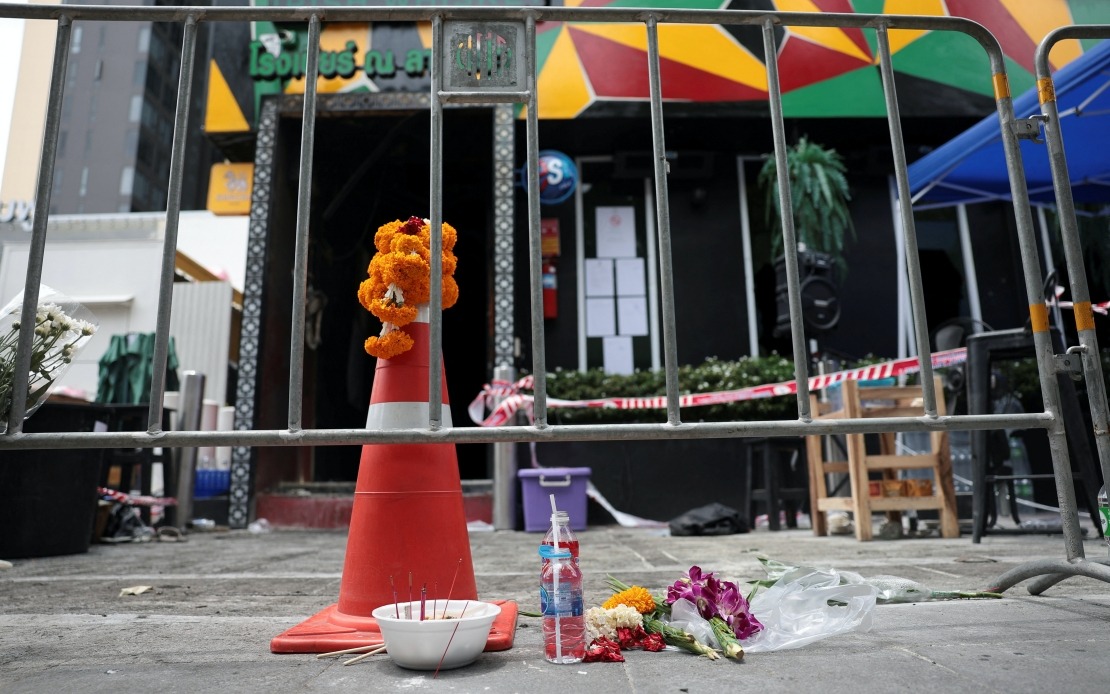
The deadly fire that swept through a Bangkok bar in the Lat Phrao district early Monday morning claimed 33 lives, but Thai authorities have clarified that victims died from inhaling noxious fumes rather than being consumed by flames. Metropolitan Police Bureau Commissioner Police Lieutenant General Sayam Boonsom disclosed on Thursday that forensic examinations revealed carbon monoxide and cyanide in the bodies of the deceased, indicating that asphyxiation from toxic gases was the primary cause of death rather than direct thermal injury.
The distinction carries significant implications for how the tragedy unfolded and the conditions inside the venue as fire spread through the crowded establishment. When carbon monoxide and cyanide enter the bloodstream, they interfere with the body's ability to transport and utilise oxygen at the cellular level, a process that can prove fatal within minutes. This rapid mechanism of death suggests that people inside the bar would have lost consciousness quickly, potentially before they could locate exits or escape routes. The finding underscores how ventilation systems and the accumulation of combustion byproducts become deadly factors in enclosed spaces during fires.
Investigations are now focusing on multiple potential contributing factors to the tragedy. Police have identified unauthorised structural modifications to the building, blocked or inadequate emergency exits, and possible electrical malfunctions as leading lines of inquiry. The preliminary findings suggest that the venue may have been retrofitted with internal structures that interfered with safety systems or obstructed evacuation pathways, creating a death trap for patrons trapped inside when the fire erupted shortly after midnight.
Though forensic officers have completed their examination of the fire scene, the investigation remains active and expanding in scope. Police have already questioned more than 106 witnesses, gathering testimony about conditions inside the bar and circumstances preceding the fire. This extensive witness pool reflects both the crowded nature of the venue and the need to piece together a comprehensive account of how the disaster unfolded and what warning signs, if any, may have preceded the blaze.
Prosecutors are preparing multiple charges against those found responsible. Anticipated offences include causing death and injury through negligence, carrying out unauthorised building alterations, and negligently causing fire. Investigators are also examining whether the entertainment venue operated in violation of licensing regulations or exceeded the scope of its permitted activities. These varied charges suggest that responsibility may be distributed among building owners, managers, operators, and potentially contractors involved in unauthorised modifications.
The investigation extends to examining whether the bar complied with fire safety codes and entertainment venue regulations. The focus on safety violations points to systemic failures in inspection, compliance, and enforcement mechanisms that should have prevented such hazards from persisting. In Thailand's entertainment sector, particularly in Bangkok where thousands of bars and clubs operate, questions about regulatory oversight and the adequacy of safety inspections have emerged as crucial issues in the aftermath of this disaster.
The human toll continues to be substantial. As of Thursday, 14 people were still receiving intensive care with serious injuries, while 44 others had already been discharged from hospitals. Beyond the 33 fatalities and over 70 injured, the psychological trauma experienced by survivors and families of the deceased represents an ongoing consequence of the tragedy. Many survivors and witnesses will require support as they process the traumatic events of that night.
This incident resonates throughout Southeast Asia, where rapid industrialisation and urban growth have sometimes outpaced the development of adequate safety infrastructure and regulatory compliance in the entertainment sector. For Malaysia and other regional nations, the Bangkok fire serves as a sobering reminder of the critical importance of rigorous building inspections, unobstructed emergency exits, proper ventilation systems, and stringent enforcement of safety codes in public gathering places. Nightclubs, bars, and entertainment venues attract thousands of patrons nightly, many of whom may be unfamiliar with the physical layout and emergency procedures.
The investigation's emphasis on unauthorised structural modifications highlights a recurring problem in Southeast Asia's urban landscapes, where building owners sometimes circumvent regulations to maximise revenue through unlicensed expansions or renovations. Without proper oversight, such modifications can compromise fire safety systems, block escape routes, and create combustible environments. The Bangkok authorities' investigation should yield important lessons for regulators across the region about strengthening inspection regimes and enforcement mechanisms.
Meanwhile, the decision not yet to file charges suggests that investigators are still gathering evidence and determining the precise chain of responsibility. Police indicated that charges would be pursued, but only after a thorough examination of all evidence and witness testimony. The complexity of assigning responsibility in a fire that involved multiple potential contributing factors means the investigation may take weeks or months to conclude. When charges are eventually filed, they will likely target multiple parties and may include corporate entities, individual managers, and contractors involved in the venue's operations and modifications.

